
Side Dishes
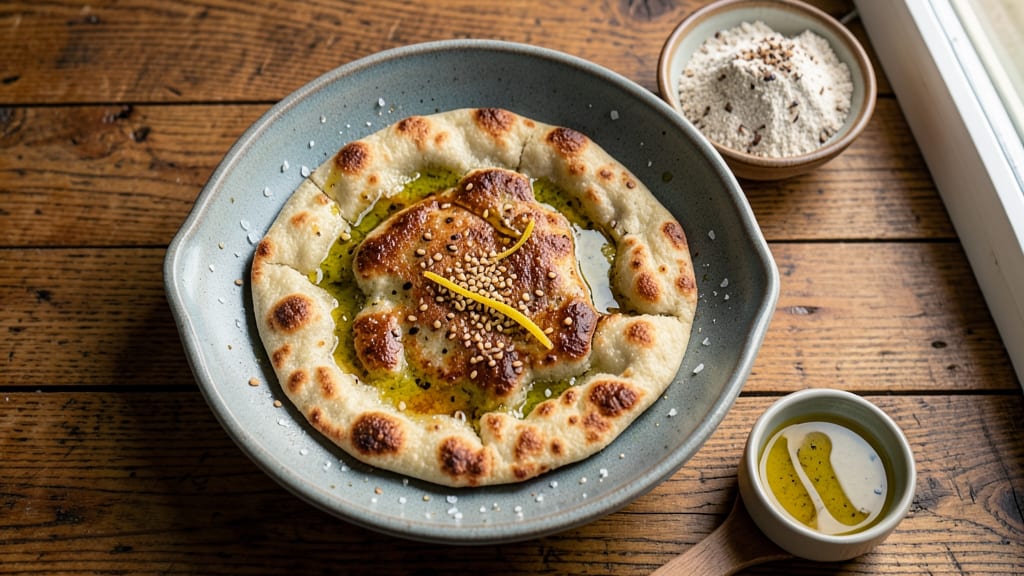
This almond flour flatbread recipe delivers the perfect balance of crispy edges and tender centers—all while being naturally gluten-free and packed with nutty flavor. The secret lies in blending almond flour with a touch of coconut oil for a delicate yet sturdy dough that holds its shape beautifully.
Unlike traditional flatbreads, this version requires no yeast or waiting for dough to rise, making it ideal for quick weeknight meals or special occasions.
The beauty of almond flour flatbread is its incredible versatility—it pairs equally well with soups, stews, or Mediterranean dishes. What makes this recipe stand out is the crispy texture achieved through a high-heat baking technique, while the nutty undertones from the almond flour add depth to every bite.
Whether you're gluten-sensitive or simply looking for a grain-free option, this flatbread delivers restaurant-quality results at home.
With just five simple ingredients and a 15-minute prep time, you'll have warm, golden flatbreads ready to enjoy. The dough is easy to work with, and the baking process is straightforward—no special equipment required.
Once baked, these flatbreads stay crispy for hours, making them perfect for meal prep or serving as a side dish that impresses.
For extra flavor, try brushing with olive oil and sprinkling with sesame seeds or herbs before baking. This recipe is not only gluten-free but also vegetarian-friendly, offering a delicious alternative to traditional bread without compromising on taste or texture. Let's get started!
Ingredients for almond flour flat bread
Five ingredients transform into crispy, golden flatbreads with nutty depth and zero gluten.
| Ingredient | Amount | Notes |
|---|---|---|
| Almond Flour 🥜 | 2 cups | Finely ground, unsweetened preferred |
| Coconut Oil 🥥 | ¼ cup | Melted, full-fat for best texture |
| Warm Water 💧 | ½ cup | Room temperature for smooth dough |
| Salt 🧂 | ½ tsp | Fine sea salt for balanced flavor |
| Extra-Virgin Olive Oil 🫒 | 1 tbsp | For brushing and extra richness |
| Sesame Seeds 🌾 | 1 tbsp | Optional, for crunchy topping |
| Fresh Rosemary 🌿 | ½ tsp | Chopped, for aromatic touch |
The almond flour is the star—Bob’s Red Mill brand is my go-to for consistency, but any finely ground unsweetened variety works. Costco or bulk bins often have the best prices, and you’ll need about 8 oz total. Skip the sweetened kind, or you’ll taste sugar in every bite. Coconut oil should be unrefined and full-fat—refined versions lack the rich texture. Warm the water slightly (just enough to dissolve the salt) so the dough comes together smoothly. Pro tip: if your kitchen’s humid, chill the dough 10 minutes before rolling.
No coconut oil? Avocado oil or melted ghee works in a pinch, though texture will differ slightly. Short on almond flour? Substitute half with sunflower seed flour for a milder taste. The rosemary is optional but adds that Mediterranean touch—dried works at one-third the amount. Sesame seeds can be swapped for poppy seeds or everything bagel seasoning. For extra crispiness, brush the baked flatbreads with another thin layer of olive oil while still warm. And if you’re feeling fancy, add a pinch of garlic powder to the dough.
Flatbreads stay crispy for 2-3 days if stored in an airtight container with parchment between layers. Reheat in a 350°F oven for 5 minutes to revive crispiness. Freeze unbaked dough balls for up to 3 months—just bake straight from frozen. For meal prep, bake a double batch and freeze half. These reheat beautifully, making them perfect for quick lunches or sides. The nutty flavor actually deepens overnight, so leftovers taste even better!
Why You'll Love This Recipe
- No-Fuss Mixing: I swear, this dough comes together in three minutes—just almond flour, coconut oil, and warm water. No eggs, no yeast, no waiting. Honestly, I’ve made this while my coffee was still brewing.
- Nutty Crunch Magic: That first bite? The almond flour gives it a delicate crunch, while the olive oil finish makes it taste like a fancy bakery. (Yes, even on a Tuesday night.) It’s the kind of flavor that makes you forget it’s “just” flatbread.
- Wrap Anything, Anytime: Packed lunches? Dinner with friends? Brunch with avocado and eggs? This bread handles it all—sturdy enough for hearty fillings but soft enough to fold. My kids use it for “pizza boats” (yes, it works).
- Pantry Staple Savior: A bag of almond flour lasts forever, and this recipe costs pennies per serving. Plus, leftovers toast up perfectly the next day. I keep a stack in my freezer for when I’m too tired to bake. (Spoiler: It’s always worth it.)
Step-by-step instructions for almond flour flatbread
Here's how to create crispy, nutty flatbreads that rival traditional dough—easy, gluten-free, and packed with flavor.
Combine Dry and Wet Ingredients for Smooth Dough
In a large mixing bowl, whisk together the 2 cups almond flour and 0.5 tsp salt until evenly distributed. This ensures the salt dissolves completely into the flour for balanced flavor in every bite. In a separate small bowl, melt the 0.25 cup coconut oil (it should be completely liquid but not hot) and mix it with the 0.5 cup warm water and 0.5 tsp chopped fresh rosemary. The rosemary adds an aromatic touch that pairs beautifully with the nutty almond base.
Pour the wet mixture into the dry ingredients and stir vigorously with a silicone spatula for 3-4 minutes until a thick, cohesive dough forms. You'll notice the dough is denser than traditional flatbread dough—this is normal due to the almond flour's high fat content. If it feels too dry, add 1 teaspoon more warm water at a time until it comes together. The dough should hold its shape when pressed between your fingers but still be pliable.
Knead and Rest for Maximum Crispiness
Transfer the dough to a clean, lightly floured surface and knead gently for 2-3 minutes until smooth. Avoid overworking the dough—almond flour develops gluten differently than wheat flour, and excessive kneading can make the flatbread tough. Shape the dough into a 1-inch thick disc and wrap it tightly in plastic wrap. Let it rest at room temperature for 30 minutes while you preheat your oven.
This resting period is crucial for gluten-free baking. It allows the almond flour to hydrate fully and the coconut oil to distribute evenly, which prevents cracking during baking. I like to place the dough on a wire rack inside a bowl to catch any excess oil that might leak out during resting.
Preheat and Shape for Perfect Texture
Preheat your oven to 375°F with a pizza stone or baking sheet inside for 20 minutes. This high heat is essential for achieving that beautiful crispy exterior while keeping the interior tender. While the oven heats, divide the rested dough into 4 equal portions (about ¼ cup each) and roll each portion between two sheets of parchment paper into 6-inch rounds about ¼-inch thick. The parchment prevents sticking and makes handling easier.
For extra flavor, brush each round with 1 tablespoon extra-virgin olive oil and sprinkle with 1 tablespoon sesame seeds (divided evenly). The olive oil adds richness and helps create a golden crust, while the sesame seeds provide a delightful crunchy contrast. If you prefer, you can also sprinkle with everything bagel seasoning or dried herbs for variation.
Bake to Golden Perfection
Carefully transfer the rolled flatbreads to the preheated pizza stone or baking sheet. Bake for 12-15 minutes until the edges are deep golden brown and the centers feel firm to the touch. Watch closely after 10 minutes—almond flour flatbreads can go from perfectly cooked to overdone quickly. The goal is crispy edges with a slightly chewy, tender interior.
For even crispier flatbreads, I recommend broiling for 1-2 minutes at the end of baking time. Keep a close eye on them during this step—they'll darken rapidly. Remove from the oven and let cool on a wire rack for 5 minutes before serving. The flatbreads will continue to crisp up as they cool, making them perfect for dipping in hummus, serving with soups, or using as a base for flatbread pizzas.
Pro Tips For Making Almond Flour Flat Bread
- MEASURE THE OIL PRECISELY: Almond flour soaks up fat like a sponge, and coconut oil is no exception. Use just 1 tablespoon melted coconut oil per 1 cup almond flour—any more and your dough will turn greasy instead of crisp. I learned this the hard way after making a batch that stuck together like wet sand.
- PULSE THE DOUGH, DON’T OVERWORK: In a food processor, pulse the almond flour, salt, and warm water in 3-4 second bursts. The dough should clump like wet sand, not turn into a paste. Overmixing releases too much almond flour starch, which makes the bread dense. Trust the texture—it’s supposed to look uneven.
- PRESS THIN, COOK FAST: Roll the dough to ¼-inch thickness (about 6mm) for even cooking. If you press too thick, the center stays doughy; too thin, and it burns before crisping. Heat your skillet or pan to medium-high (375°F/190°C) and cook for 2-3 minutes per side—no peeking until you’re ready to flip.
- LET THE OIL DO THE WORK: Brush the cooked flatbread with extra-virgin olive oil while it’s still hot off the pan. The heat opens the oil’s pores, making it absorb faster and giving that restaurant-style crispness. Skip this, and your bread stays soft but bland. A light drizzle (½ tsp per flatbread) is all you need.
Essential equipment for this dish
Pizza Stone Essentials
A pizza stone is my top recommendation for achieving that perfect crispy crust. I use the Ooni Cast Iron Pizza Stone because it mimics a wood-fired oven, but budget-friendly options like the Amazon Basics Pizza Stone work well too.
Preheat your stone for 20 minutes before baking to ensure even heat distribution. If you don’t have a stone, a heavy baking sheet or even a cast iron skillet will work in a pinch—just place it in the oven while preheating. 🔥
Rolling Tools
For rolling out your flatbreads, a rolling pin with a smooth, textured surface is ideal—I love the OXO Good Grips Silicone Rolling Pin because it prevents sticking and makes rolling effortless.
If you’re short on space, a glass bottle with a smooth base (like a Le Creuset wine bottle) works just as well. The key is to roll between two sheets of parchment paper to avoid tearing the delicate dough.
Avoid wooden rolling pins—they can absorb moisture and make the dough stick.
Measuring Cups
Accurate measurements are crucial for this recipe, especially with almond flour, which can vary in density. I recommend using stainless steel measuring cups (like Farberware’s set) for precision. For the coconut oil, use a liquid measuring cup with clear markings to ensure you melt exactly ¼ cup.
A digital kitchen scale is a game-changer if you’re serious about baking—just 85 grams of almond flour per ¼ cup ensures consistency every time. 💡
Mixing Bowls
A large mixing bowl with high sides (like the Pyrex Prepware set) keeps ingredients contained while you stir. For the wet ingredients, a small ramekin or shot glass works perfectly for melting the coconut oil.
If you’re mixing by hand, a silicone spatula (I use OXO’s) helps scrape every last bit of dough from the bowl. Avoid metal utensils—they can react with the coconut oil and leave a metallic taste.
Baking Sheet Upgrade
If you’re not using a pizza stone, invest in a perforated baking sheet (like Nordic Ware’s Half-Sheet Pan) to allow air circulation and even browning.
For extra crispiness, place a wire rack on top of your baking sheet before baking—this lifts the flatbread slightly, promoting airflow and a crisper texture. A thermometer (like Thermoworks’ Smoke) ensures your oven reaches 375°F accurately, which is critical for almond flour baking. ⚡
Optional: Herb Scissors
For chopping fresh rosemary, a pair of sharp herb scissors (like KitchenAid’s) makes quick work of the task. If you don’t have them, a chef’s knife works fine—just chop ½ tsp finely. For sprinkling sesame seeds, a small fine-mesh strainer keeps your hands clean and ensures even distribution.
A pastry brush (like Westbloc’s) is perfect for brushing olive oil on the flatbreads before baking. 🌿
Nutrition facts
Frequently asked questions
Can I make this flatbread without coconut oil?
Yes! For a neutral flavor, substitute with avocado oil or melted ghee. If you prefer a slightly richer taste, try olive oil—just reduce the total liquid by 1 teaspoon since olive oil is more moisture-dense. The key is using a fat that stays solid at room temperature for the best texture.
Why is my almond flour flatbread cracking?
Cracking usually happens when the dough is too dry or hasn't rested long enough. Make sure your almond flour is finely ground (no large chunks) and add 1 extra teaspoon of water if needed. Always let the dough rest for the full 30 minutes—this allows the almond flour to hydrate properly. If cracks appear during baking, brush with more olive oil while warm to seal them.
How do I store these flatbreads to keep them crispy?
Store in an airtight container with parchment paper between layers to prevent sogginess. For maximum crispiness, reheat in a 350°F oven for 5 minutes or toast in a dry skillet over medium heat for 1-2 minutes per side. They'll stay fresh for 2-3 days this way. For longer storage, freeze the unbaked dough balls for up to 3 months.
Can I make this gluten-free flatbread thicker like naan?
For a thicker, softer texture, increase the coconut oil to ⅓ cup and add 1 extra tablespoon of warm water. Roll the dough ⅜-inch thick instead of ¼-inch, and bake at 350°F for 10-12 minutes until golden. Brush with melted ghee after baking for extra richness. This version works perfectly with curries or as a wrap.
What's the best way to add cheese to these flatbreads?
For a cheese flatbread, sprinkle ¼ cup shredded mozzarella or feta on top before baking. For extra gooeyness, add a layer of ricotta or goat cheese between two flatbread rounds and bake until melted. Try Parmesan and garlic powder for a savory twist, or goat cheese and honey for sweet applications. Add cheese in the last 3 minutes of baking to prevent burning.