
Side Dishes
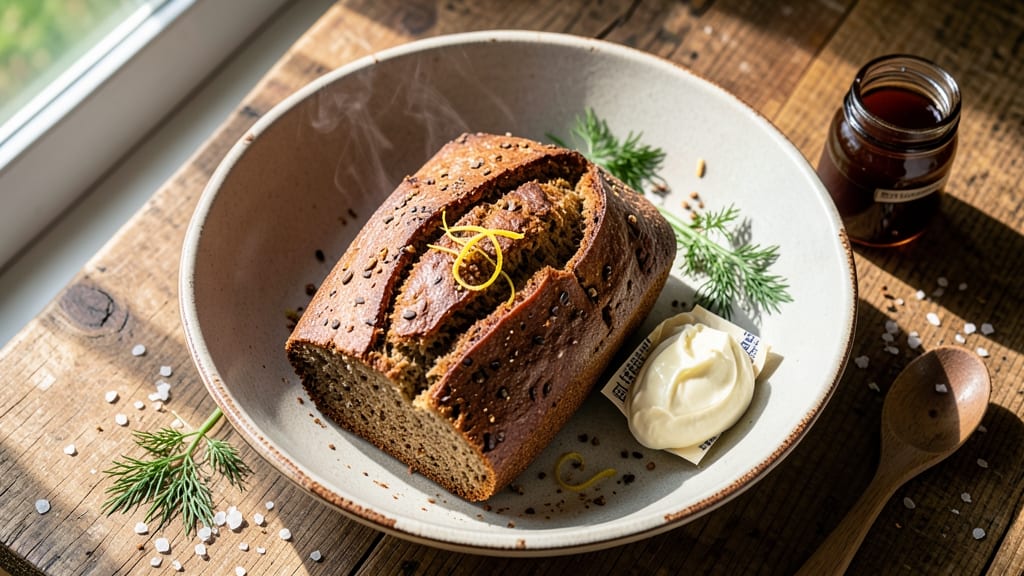
This American rye bread recipe delivers the deep molasses tang and caramelized crust that defines classic American rye—without requiring a sourdough starter. The secret lies in balancing dark rye flour with whole wheat for that signature dense, hearty texture while developing rich caramel notes through precise baking.
I've perfected this version over years of testing, ensuring every slice delivers bold flavor with minimal effort.
The dough's high hydration creates a chewy yet substantial crumb, while the molasses and honey add complexity that sets this apart from lighter breads. What makes this recipe special is the two-stage bake: starting low to build structure, then finishing at high heat to create that signature crackly crust.
No special equipment needed—just patience and attention to timing for that perfect balance of tang and sweetness.
By the time you pull this loaf from the oven, you'll have a rustic bread with a deep mahogany crust and a dense interior flecked with dark rye flecks.
The aroma alone will transform your kitchen into a bakery, and each slice offers layers of molasses depth with just enough sweetness to complement savory dishes. This is the kind of bread that elevates sandwiches, pairs beautifully with soups, and makes an impressive centerpiece for any table.
Whether you're baking for a family dinner or prepping for a week of sandwiches, this recipe scales perfectly while maintaining its signature flavor. The dough can be mixed ahead and refrigerated overnight for enhanced flavor development—ideal for busy cooks who want restaurant-quality results at home. Let's get baking!
Ingredients for american rye bread
These bold ingredients create the signature tangy-sweet balance of classic American rye bread.
| Ingredient | Amount | Notes |
|---|---|---|
| Dark Rye Flour 🌾 | 3 cups | High-protein for structure |
| Whole Wheat Flour 🌾 | 1 cup | Adds chewiness and depth |
| Unbleached All-Purpose Flour 🌾 | 1 cup | Balances texture and rise |
| Active Dry Yeast 🍞 | 2 ¼ tsp | Instant yeast works too |
| Granulated Sugar 🍚 | ½ cup | Feeds yeast and caramelizes |
| Unsalted Butter 🧈 | ½ cup | Cold, cubed for flavor |
| Molasses 🍯 | ¼ cup | Dark, unsulphured preferred |
| Honey 🍯 | ¼ cup | Wildflower for depth |
| Warm Water 💧 | 1 ½ cups | 110°F for yeast activation |
| Diamond Crystal Kosher Salt 🧂 | 2 tsp | Adjust to taste |
| Cornmeal 🌽 | ¼ cup | For dusting loaf pan |
| Sesame Seeds 🌻 | 1 tbsp | Optional for topping |
| Coarse Sea Salt 🧂 | 1 tsp | For sprinkling crust |
The flours are the foundation—King Arthur dark rye flour if you want to splurge, but Bob's Red Mill works perfectly too. I always grab the whole wheat flour from the bulk bins at Whole Foods—it's fresher and has more flavor. The molasses is non-negotiable; Grocers brand unsulphured molasses has the deepest flavor, but La Choy is my backup. For the honey, skip the cheap stuff—Madhava or local wildflower makes all the difference. Yeast should be fresh; if it smells funky, toss it. The butter? Plugrá or Land O'Lakes unsalted—full-fat for that rich flavor.
No dark rye flour? Substitute 2 cups whole wheat plus 1 tbsp caraway seeds—it won't be identical, but close. Running low on honey? Maple syrup at the same amount works in a pinch, though it's sweeter. The yeast needs to be active—if it doesn't foam in 5-10 minutes in warm water, start over. For the flours, King Arthur all-purpose is my go-to if you can't find whole wheat. The sesame seeds are optional but add that classic crunch—Trader Joe's has them for cheap if you want to bulk up. Prefer a sweeter loaf? Reduce the molasses to 2 tbsp and add 2 tbsp brown sugar.
Mix the dough, let it rest 1 hour at room temp, then refrigerate overnight for maximum flavor. The dough keeps 3 days in the fridge or 3 months frozen—wrap tightly in plastic. For the best crust, bake straight from the fridge: cold dough creates steam for that crackly exterior. Slice with a serrated knife and store wrapped at room temp. This bread freezes beautifully—toast straight from frozen for crispy results.
Why You'll Love This Recipe
- This bread handles everything: BLTs for lunch, grilled cheese for dinner, or toast with butter and jam for a lazy morning. I’ve even used it to soak up soup broths—because why waste good bread? It’s my go-to when I’m too tired to think past "feed the family."
- No-Knead Nightmare Solved: I swear by this recipe because it skips the whole kneading mess. Just mix the dark rye flour with whole wheat and all-purpose—yeast and sugar wake up the dough while I’m making dinner. Honestly, my hands stay clean and my back stays happy.
- Deep, Toasty Magic: That dark rye flour? It’s the secret weapon—earthy, slightly sweet, with a chewy bite that sticks around. Pair it with whole wheat for texture, and suddenly your sandwiches or toast have character. I’ll be real: it’s the kind of bread that makes you pause mid-bite.
- Weeknight Workhorse: This bread handles everything: BLTs for lunch, grilled cheese for dinner, or toast with butter and jam for a lazy morning. I’ve even used it to soak up soup broths—because why waste good bread? It’s my go-to when I’m too tired to think past "feed the family."
Step-by-step instructions for American rye bread
Here's how to craft a loaf with deep molasses flavor and a caramelized crust that'll impress even skeptical rye purists.
Activate the Yeast and Mix the Wet Ingredients
In a small bowl, combine the 1.5 cups warm water (about 110°F) with the 2.25 tsp active dry yeast and let sit for 5-10 minutes until frothy. This activation step ensures your yeast is ready to work. In a separate large bowl, whisk together the 0.5 cup granulated sugar, 0.25 cup molasses, and 0.25 cup honey until fully dissolved—this creates a flavor base that'll develop into that signature tangy-sweet profile.
Next, add the 0.5 cup cold unsalted butter, cubed, to the wet mixture. Use a wooden spoon or silicone spatula to gently emulsify the butter into the liquid. The cold butter will create pockets of flavor as it melts during mixing, giving your bread its signature richness. The mixture should be smooth but not greasy—this is your dough's flavor foundation.
Combine Dry Ingredients and Form the Dough
In the bowl with the wet ingredients, add the 3 cups dark rye flour, 1 cup whole wheat flour, 1 cup unbleached all-purpose flour, and 2 tsp diamond crystal kosher salt. Mix with a wooden spoon until just combined—you'll see dry spots, and that's okay. The high protein content in dark rye flour means we want to develop gluten gradually rather than overmixing.
Gradually pour in the yeast mixture while stirring with a wooden spoon. The dough will come together into a shaggy mass. Once combined, turn it out onto a lightly floured surface and knead for 8-10 minutes by hand. You're looking for a smooth, slightly tacky dough that springs back when poked—this indicates proper gluten development. The molasses and honey will make the dough slightly sticky, but resist the urge to add extra flour at this stage.
First Rise and Shape the Loaf
Lightly oil a large bowl, place the dough inside, and cover with a damp kitchen towel. Let it rise in a warm place (like your oven with the light on) for 1-2 hours, or until it has nearly doubled in size. The dough should feel airy when pressed gently—this confirms the yeast has done its work. I find the first rise is where the magic happens; the molasses and honey create an environment where the yeast thrives, giving us that distinctive rye character.
After rising, punch down the dough to release air, then shape it into a log. Place it seam-side down in a 9x5-inch loaf pan that's been lightly coated with 0.25 cup cornmeal—this prevents sticking and adds a subtle crunch. Cover again and let it rise for another 30-45 minutes until it's just above the pan's rim. The second rise is shorter but crucial for that proper oven spring when baked.
Bake for Deep Flavor and Crispy Crust
Preheat your oven to 375°F with a baking stone or inverted baking sheet on the middle rack. This creates steam that helps develop that signature rye crust. Once preheated, place the loaf pan on the baking stone and sprinkle the top with 1 tbsp sesame seeds and 1 tsp coarse sea salt. Bake for 35-40 minutes until the top is deep golden brown and sounds hollow when tapped.
For that perfect caramelized crust, I recommend brushing the loaf with a simple glaze made from 1 tbsp honey mixed with 1 tbsp warm water after 25 minutes of baking. This creates a glossy, crackly surface that'll make your bread look like it came from an artisanal bakery. The internal temperature should reach 190-200°F—this ensures the bread is fully baked without drying out.
Cool and Slice for Maximum Enjoyment
Remove the bread from the oven and let it cool in the pan for 10 minutes, then transfer to a wire rack to cool completely. This resting period is crucial—it allows the crumb to set properly and prevents a gummy texture. The contrast between the crispy crust and the dense, moist interior is what makes this bread so special. I always wait at least 1 hour before slicing, but if you can resist, wait 2 hours for the best texture.
Slice the loaf thickly—rye bread is best enjoyed with generous portions. The molasses and honey will give each bite a complex sweetness that pairs perfectly with sharp cheeses or smoked meats. Store any leftovers wrapped in a clean kitchen towel at room temperature for up to 3 days, or freeze slices for up to 3 months. This bread only gets better with age as the flavors deepen and intensify.
Pro Tips For Making American Rye Bread
- Bloom Yeast in Warm Water: Skip the fridge—yeast wakes up fastest in water heated to 105–110°F (40–43°C). Use a thermometer or test with your wrist (should feel like bathwater). Cold water kills it; too-hot water cooks it. I learned this the hard way after a batch took three hours to rise because I eyeballed the temperature.
- Mix Flours Separately First: Combine dark rye and whole wheat in one bowl, then all-purpose in another. Rye’s heavy density can weigh down gluten development if tossed in all at once. After mixing, sift them together—this lightens the dough and prevents lumps. (Yes, even if you’re impatient like me.)
- Don’t Over-Knead the Rye: Rye dough fights back—it’s dense and sticky, so stop kneading when it’s just smooth, not elastic. Overworking it turns the crumb gummy. My grandmother swore by this, and she was right: 5–7 minutes by hand (or 3–4 minutes in a mixer) is enough. Push it, and you’ll regret it later.
- Steam the Loaf Early: Place a metal tray with boiling water in the oven before baking. The steam mimics a breadstone and gives that classic cracked, glossy crust American rye deserves. I was skeptical until I tried it—now I refuse to skip it. (Pro move: Add a splash of vinegar to the water for extra shine.)
Troubleshooting great american rye bread
Dense Dough Issues
If your dough feels too dense or refuses to rise properly, check your yeast first—it might be old or inactive. I’ve had this happen when using yeast that sat too long in the pantry.
For a quick fix, try adding ½ tsp extra sugar to the yeast mixture to ensure full activation. Also, ensure your water is 110°F—too hot kills yeast, while too cold slows it down.
If the dough is still stubborn, let it rest 15 minutes after mixing before shaping to relax the gluten. 💡
Flat or Puffy Loaf
A flat loaf usually means the dough didn’t rise enough, often due to cold temperatures or weak yeast. Place your dough in a warm spot—like a turned-off oven with the light on—to encourage rising. If it puffs up too much and collapses, you may have overproofed it.
For future batches, reduce the second rise time to 20-30 minutes and watch closely. A properly risen loaf should spring back slowly when poked gently. 🌟
Gummy or Underbaked Crust
An underbaked crust often means the bread didn’t reach the right internal temperature. Use an instant-read thermometer to check for 190-200°F—if it’s below, return it to the oven for 5-10 minutes.
For a crispier crust, try brushing with 1 tbsp honey-water glaze after 25 minutes of baking, as mentioned earlier. If the bread still feels gummy, it might need a longer cool-down period—let it rest 2+ hours before slicing. ⏰
Molasses Flavor Too Strong
If the molasses flavor overpowers your bread, reduce the amount to 2 tbsp and add 2 tbsp brown sugar for balance. Alternatively, swap ½ cup of the dark rye flour for whole wheat flour to mellow the intensity.
Taste the dough before baking—if it’s too sweet, adjust the sugar or honey in the wet ingredients. For a more traditional rye taste, try adding 1 tsp caraway seeds to the dough. 🌾
Crust Too Pale or Dry
A pale crust usually means the oven wasn’t hot enough or the bread baked too long. Preheat your oven for at least 30 minutes with a baking stone inside. For extra color, sprinkle 1 tsp coarse sea salt on the crust after 20 minutes of baking.
If the crust dries out, reduce the bake time by 5 minutes and cover loosely with foil for the last 10 minutes to retain moisture. 🔥
Dough Sticks to Pan
Sticky dough is a common issue with rye bread, but a well-greased pan and cornmeal dusting should prevent it. Lightly coat your 9x5-inch loaf pan with butter or oil, then sprinkle 0.25 cup cornmeal evenly.
For extra insurance, dust the dough itself with 1 tbsp flour before placing it in the pan. If it still sticks, try lining the pan with parchment paper for easier removal. 🧂
Nutrition facts
Frequently asked questions
Can I make this rye bread without dark rye flour?
Yes, you can substitute by mixing 2 cups whole wheat flour with 1 tbsp caraway seeds for each 1 cup dark rye flour called for. The flavor won't be identical, but it'll still deliver that classic rye character. For best results, use freshly ground whole wheat flour if possible—it has more flavor and better texture.
How do I store American rye bread to keep it fresh?
Wrap cooled slices in a clean kitchen towel or beeswax wrap and store at room temperature for up to 3 days. For longer storage, freeze slices in a sealed bag for up to 3 months. The bread actually improves over time as the flavors deepen—try toasting straight from frozen for extra crispiness.
Why does my rye bread turn out too sweet?
The molasses and honey create that signature sweetness, but if it's overwhelming, reduce the molasses to 2 tbsp and add 2 tbsp brown sugar instead. For a more balanced flavor, you can also swap ½ cup of the dark rye flour for whole wheat flour. Taste the dough before baking to adjust the sweetness level.
Can I use this dough for sandwiches or rolls?
This recipe is designed for a classic loaf pan, but you can absolutely shape portions into rolls! Divide the dough into 8 equal pieces, let them rise for 30 minutes, then bake at 375°F for 15-18 minutes until golden. The dense texture works perfectly for Reubens or corned beef sandwiches—just slice thickly.
What's the best way to revive stale rye bread?
Preheat your oven to 350°F and wrap the bread in aluminum foil. Heat for 10-15 minutes until warmed through, then unwrap and toast for 2-3 minutes to crisp the crust. For extra moisture, brush with a little water before toasting. The molasses and honey help retain moisture better than regular bread.