
Side Dishes
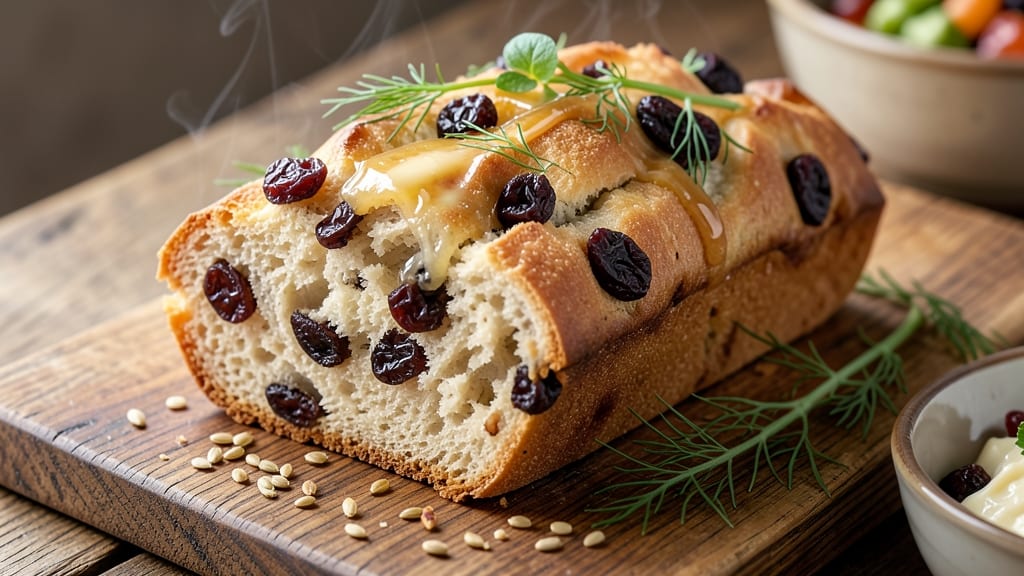
This Amy's raisin fennel bread recipe delivers a perfect balance of sweet, chewy raisins and aromatic fennel seeds that transform ordinary bread into something extraordinary. 🌟 The secret lies in the slow fermentation, which develops deep flavor while keeping the crumb tender and moist.
I've baked this bread countless times for holiday gatherings, and it never fails to impress—whether served warm with butter or toasted for breakfast the next morning.
The recipe begins with a simple dough of flour, yeast, and honey, where the fennel seeds infuse the mixture with their signature anise-like warmth. Raisins plump up during proofing, creating pockets of sweetness in every bite.
The kneading process is straightforward, and the dough's resting time ensures a light, airy texture that's impossible to resist.
Baking this bread yields a golden crust with a crisp exterior and a soft, slightly sticky interior—ideal for slicing thick or serving as a hearty side. The fennel seeds add a subtle licorice note that pairs beautifully with the raisins, making each slice a flavorful experience.
Perfect for breakfast, sandwiches, or as a gift-worthy loaf, this recipe is a game-changer for home bakers.
With just a few simple ingredients and a little patience, you'll have a loaf that rivals artisanal bakery bread. The best part? It's foolproof and adaptable—add citrus zest for brightness or swap raisins for dried cranberries if you prefer a tart twist.
Let's get started on creating your own batch of this beloved classic.
Ingredients for amy's raisin fennel bread
Simple flour, honey, and fennel seeds create this magical raisin bread—perfect for holiday gatherings or breakfast toast.
| Ingredient | Amount | Notes |
|---|---|---|
| All-Purpose Flour 🌾 | 5 cups | Plus 1 tbsp for dusting |
| Active Dry Yeast 🍞 | 2 ¼ tsp | Or 1 packet (2.25 tsp) |
| Granulated Sugar 🍚 | ¼ cup | For yeast activation |
| Warm Water 💧 | 1 ¼ cups | 110°F (43°C) ideal |
| Honey 🍯 | ¼ cup | For sweetness and moisture |
| Unsalted Butter 🧈 | ½ cup | Softened, not melted |
| Large Egg 🥚 | 1 whole | Room temperature preferred |
| Whole Milk 🥛 | ¼ cup | Warmed slightly |
| Fennel Seeds 🌿 | 2 tbsp | Toasted for deeper flavor |
| Raisins 🍇 | 1 ½ cups | Plump in warm water first |
| Diamond Crystal Kosher Salt 🧂 | 1 ½ tsp | Adjust to taste |
| Olive Oil 🫒 | 1 tbsp | For dough finishing |
| Coarse Cornmeal 🌽 | ½ cup | For bread pan |
The fennel seeds are the star here—toast them lightly in a dry pan first to deepen their anise flavor. Penzeys Spices has the best whole seeds, but any grocery store bulk section works. Raisins? Golden raisins if you want extra sweetness, but regular plump up just fine. For the flour, King Arthur Bread Flour gives the best texture, but all-purpose works in a pinch. The yeast should be fresh—if it's over a few months old, proof it in warm water with a pinch of sugar first to test its strength.
No honey? Maple syrup works 1:1—just know it'll make the bread slightly darker. Short on milk? Warm water plus 1 tbsp melted butter mimics the richness. The dough gets sticky—don't overwork it. If it's too wet, add 1 tbsp more flour. For extra flavor, zest of 1 lemon brightens the fennel's licorice notes. Making substitutions? Dried cranberries add tartness, but raisins keep the classic sweetness. The butter must be softened—microwave 20 seconds to just melt it if it's too cold.
This dough needs time—let it rise 1.5-2 hours until puffy. Shape it gently to avoid deflating. For a crispier crust, brush with extra olive oil before baking. Freshly baked bread keeps 3 days wrapped at room temperature, or 3 months frozen. Toast slices for 2 minutes to revive the crust. The fennel seeds stay potent for 6 months in a dark jar—grind fresh for each batch if you're feeling fancy.
Why You'll Love This Recipe
- No-Knead Magic: I swear by this dough—just mix, let it rise, and forget it. The yeast and honey do all the work while I sip coffee, no rolling or fussing required. Honestly, my lazy weekends just got a whole lot better.
- Sweet & Earthy Crunch: That honey-glazed crust paired with plump raisins and licorice-kissed fennel? It’s like a hug in bread form. The warm water activates the yeast perfectly, giving it a tender crumb that begs for another slice.
- Breakfast to Brunch Hero: Toast it with butter for a quick breakfast or slice it into a rustic loaf for holiday brunches. The fennel’s anise notes play so well with cheese boards or alongside jam—my go-to for lazy mornings and special days alike.
- Budget-Friendly Staple: Flour, yeast, sugar—you’ve got this in your pantry already. A single batch feeds my family for days, and the leftovers? Perfect for French toast or croutons. Between us, this bread saves me money and time.
Step-by-step instructions for Amy's raisin fennel bread
This anise-kissed loaf delivers a perfect balance of chewy crumb and sweet fennel bites—let's make it happen!
👨🍳 Step 1: Activate the Yeast and Toast the Fennel Seeds
In a small bowl, whisk together the 1.25 cups warm water (about 110°F), 0.25 cup granulated sugar, and 2.25 tsp active dry yeast. Let it sit for 5-10 minutes until frothy—you'll see bubbles forming and a yeasty aroma. This tells you your yeast is alive and ready to work its magic.
While that bubbles away, toast the 2 tbsp fennel seeds in a dry skillet over medium heat for 2-3 minutes until fragrant and golden. Watch them closely—they burn fast! Transfer to a small bowl and let cool slightly. That nutty aroma will infuse every bite of your bread. Real talk: this step makes all the difference in flavor depth.
🍳 Step 2: Mix the Wet Ingredients and Combine with Dry
In a stand mixer fitted with the dough hook attachment, combine the 0.5 cup softened unsalted butter, 1 whole large egg, 0.25 cup whole milk, and the toasted fennel seeds. Mix on low speed for 1 minute until creamy and fully incorporated. The butter should be soft but not melted—this ensures proper dough texture.
In a separate large bowl, whisk together the 5 cups all-purpose flour, 1.5 tsp diamond crystal kosher salt, and the 1.5 cups raisins. I like to give the raisins a quick pulse in a food processor first to break them up slightly—they'll distribute more evenly. With the mixer running on low speed, gradually add the flour mixture to the wet ingredients until just combined. Don't overmix—stop when the dough comes together into a shaggy mass.
🥘 Step 3: Knead the Dough Until Silky Smooth
Switch to the dough hook attachment and knead the dough for 5-7 minutes on medium speed until it becomes smooth and elastic. You'll know it's ready when it forms a windowpane—press your fingers into the dough and gently pull apart. If it stretches without tearing, you're golden. If it's still sticky, add 1 tbsp flour at a time until it pulls away cleanly.
Here's where it gets fun—shape the dough into a ball, place it in a lightly oiled bowl, and cover with a clean kitchen towel. Let it rise in a warm place for 1-2 hours or until doubled in size. I like to turn my oven on low (170°F) with a bowl of hot water inside to create a warm, cozy environment. Patience here ensures that perfect rise and airy crumb we're after.
🔥 Step 4: Shape, Proof, and Bake to Perfection
Punch down the risen dough and divide it into 4 equal portions. Roll each portion into a 12-inch rope and shape into a loose braid. Place each braid seam-side down in a 9x5-inch loaf pan that's been lightly greased with 1 tbsp olive oil and sprinkled with 0.5 cup coarse cornmeal (this prevents sticking and adds a lovely crunch). Cover with a towel and let proof for another 30-45 minutes until puffy.
Preheat your oven to 375°F. Brush the tops of the braids with a little more olive oil and sprinkle with a pinch of diamond crystal kosher salt. Bake for 30-35 minutes until golden brown and the internal temperature reaches 190°F. You'll know it's done when it sounds hollow when tapped on the bottom. Let cool in the pan for 10 minutes before transferring to a wire rack.
⏰ Step 5: Rest and Slice for Maximum Flavor
This is the most important step—let the bread cool completely for at least 1 hour before slicing. I know it's tempting to dig in immediately, but waiting ensures those sweet raisin pockets stay intact and the crumb sets properly. The longer you wait, the better the texture becomes.
Slice with a serrated knife and serve warm with a pat of softened butter or a drizzle of honey. Each bite should deliver that perfect balance of chewy bread, sweet raisins, and aromatic fennel. Store leftovers wrapped in a bread bag at room temperature for up to 3 days or freeze for longer storage. Trust me, this bread tastes even better the next day!
Pro Tips For Making Amy'S Raisin Fennel Bread
- Bloom the Yeast First: Skip mixing yeast directly into dry ingredients—it’s lazy and unreliable. Instead, dissolve it in warm water (110°F) with a pinch of sugar first, then wait 5-10 minutes until it’s frothy. I learned this the hard way when my dough took three hours to rise because the yeast was sluggish—now it’s always ready to go.
- Soak Raisins Properly: Don’t just toss raisins in honey and call it a day. Warm the honey slightly (just enough to pour easily) and soak raisins for 15 minutes before adding to the dough. This plumps them up and makes them actually sweet, not dried-out chewy bits. Trust me, your bread will taste like it’s from a bakery.
- Knead Until Silky: The dough should feel smooth, elastic, and just slightly tacky—not dry, not sticky. If it’s crumbly, add 1 tablespoon water; if it’s too wet, sprinkle a little flour. I used to rush this step, but now I knead for 8-10 minutes by hand (or 5-6 minutes with a mixer) until it springs back when poked. That’s when you know it’s ready.
- Proof at Room Temp: Resist the urge to speed things up in the fridge—proofing in a warm (75°F) spot for 1-1.5 hours gives the yeast time to do its magic without overproofing. Cover the bowl loosely with a towel, and check for doubled size before shaping. Overproofed dough collapses, and nobody wants a sad, flat loaf.
Wine and beer pairings for this amy's raisin fennel bread
Sweet Wine Pairings
The natural sweetness of the raisins and the subtle licorice notes from the fennel seeds make this bread a perfect match for Moscato d'Asti or Riesling. I love a crisp, semi-sweet German Riesling with a touch of honey—it mirrors the bread's sweetness while balancing the fennel's anise kick.
A chilled glass enhances the bread's texture, making each bite feel like a luxurious experience. 🍷
Dry Red Alternatives
For a bolder pairing, try a light-bodied red wine like Pinot Noir or Beaujolais. The fruity notes complement the raisins, while the wine's acidity cuts through the bread's richness.
I recommend a cool-climate Pinot Noir from Oregon—its bright cherry flavors play beautifully against the fennel's herbal depth. Serve slightly chilled for an elegant touch.
Craft Beer Pairings
A honey-brown ale or wheat beer with citrus notes works wonderfully. Look for beers with vanilla or caramel undertones—like Allagash White or New Belgium Fat Tire. The beer's effervescence cleanses your palate between bites, while the malt sweetness echoes the bread's raisins.
For a stronger match, try a Belgian Dubbel with its rich, spiced profile. 🍺
Non-Alcoholic Options
Don't overlook sparkling apple cider or ginger beer for a refreshing contrast. A dry sparkling cider from Washington State highlights the fennel's brightness, while ginger beer adds a zesty kick that balances the bread's sweetness.
For a festive touch, serve with iced tea sweetened with honey—it's a crowd-pleaser at any gathering.
Coffee and Tea Pairings
If you prefer warm drinks, a lightly sweetened chai tea or espresso with a splash of milk works beautifully. The spices in chai—like cinnamon and cardamom—echo the fennel's warmth, while espresso's bitterness grounds the bread's sweetness. Try a flat white for a creamy, velvety finish that complements the bread's texture.
Seasonal Adaptations
In summer, opt for sparkling rosé or iced herbal tea with mint. The rosé's crisp acidity refreshes the palate, while mint tea adds a cooling contrast. For winter, a mulled wine with cinnamon and orange zest enhances the bread's cozy, spiced flavors.
The key is matching the drink's temperature and sweetness to the bread's richness. ✨
Nutrition facts
Frequently asked questions
Can I substitute raisins for something else in this bread?
If you prefer tartness, use dried cranberries or chopped dried apricots. For extra richness, try chocolate chips or chopped dates. Just remember that golden raisins give the classic sweetness—any substitution will change the flavor profile. Adjust the amount if your fruit is larger or smaller than raisins.
Why does my dough smell like licorice?
The fennel seeds are the star here! Their natural anise-like aroma is what gives this bread its signature flavor. If you love the taste, keep toasting them until golden. If you prefer a milder version, reduce the seeds to 1 tbsp instead of 2 tbsp. The smell intensifies as they toast, so watch closely to avoid burning.
How do I know when the bread is fully baked?
Look for three key signs: golden brown crust, a hollow sound when tapped on the bottom, and an internal temperature of 190°F. The bread should pull away cleanly from the pan edges. If it's browning too fast, tent it loosely with foil. Overbaking dries out the crumb, so aim for the 30-35 minute window.
Can I make this bread without a stand mixer?
Yes! Mix the ingredients by hand in a large bowl, then knead the dough on a floured surface for 8-10 minutes until smooth. Use your knuckles to test elasticity—it should spring back when pressed. The dough will be sticky, so wet your hands slightly to prevent sticking. Just be patient and knead thoroughly for the best texture.
How should I store leftover fennel bread?
Wrap cooled slices in a bread bag or plastic wrap and store at room temperature for up to 3 days. For longer storage, freeze slices in an airtight container for up to 3 months. To revive, toast frozen slices for 3-4 minutes in a 350°F oven until warmed through. The crust stays crispy when properly stored!