
Side Dishes
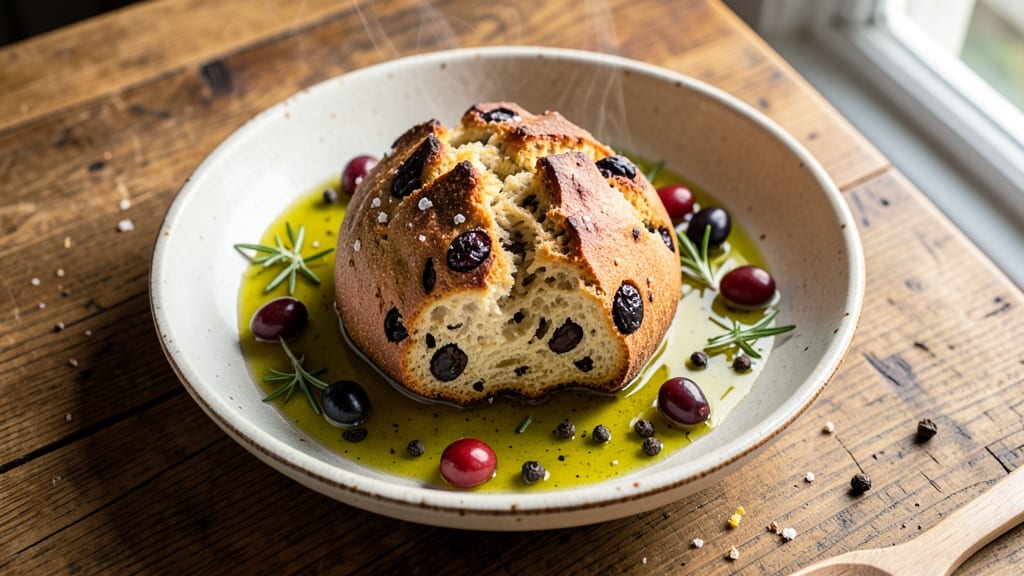
This artisan olive bread recipe transforms simple ingredients into a rustic masterpiece with a crusty crunch and herbed olive swirls that elevate every bite. The secret lies in the balance of olive paste—intensely flavorful yet subtle—woven through the dough for bursts of Mediterranean richness.
I've perfected this technique over years of baking, ensuring the crust achieves that coveted golden crackle while the interior remains tender and airy.
The process begins with a straightforward dough made from high-quality flour, water, and yeast, but it's the olive component that truly sets this bread apart.
Whether you use finely chopped olives or a smooth olive paste, this recipe delivers layers of briny, fruity depth that pairs beautifully with rosemary or fresh herbs. The key to success is patience—allowing the dough to ferment slowly develops maximum flavor and texture.
By the time it emerges from the oven, you'll have a loaf with a shatteringly crisp exterior and a soft, open crumb studded with herbed olive swirls.
The aroma alone will have your kitchen smelling like a Tuscan bakery, while the taste delivers that perfect harmony of salty, savory, and herby notes. This bread isn't just a side dish—it's a centerpiece that deserves its own spotlight.
Store it at room temperature for up to three days or freeze for longer shelf life, making it ideal for meal prep or gifting. Perfect for pairing with soups, charcuterie boards, or simply enjoying with a smear of your favorite cheese. Let's get baking this artisan masterpiece!
Ingredients for artisan olive bread
Simple ingredients transform into a rustic masterpiece with Mediterranean flair and golden crust.
| Ingredient | Amount | Notes |
|---|---|---|
| All-Purpose Flour 🌾 | 5 cups | High-protein for chewy texture |
| Active Dry Yeast 🍞 | 2 ¼ tsp | Or 1 packet (2.25 tsp) |
| Granulated Sugar 🍬 | 1 tbsp | Feeds yeast for activation |
| Large Eggs 🥚 | 2 whole | Room temperature preferred |
| Extra-Virgin Olive Oil 🫒 | ¾ cup | High-quality, fruity variety |
| Warm Water 💧 | 1 ¼ cups | 110°F for yeast activation |
| Kosher Salt 🧂 | 2 tsp | Diamond Crystal preferred |
| Olive Paste 🫒 | ½ cup | Or finely chopped Kalamata olives |
| Fresh Rosemary 🌿 | ¼ cup | Chopped, finely minced |
| Garlic Cloves 🧄 | 3 cloves | Minced, for herb mixture |
| Cornmeal 🌽 | ¼ cup | For dusting baking sheet |
| Coarse Sea Salt 🧂 | 2 tsp | For sprinkling crust |
The olive paste is everything here. Trader Joe's has a great jarred version, but I prefer making my own by blending Kalamata olives with a splash of olive oil—it's more flavorful and less processed. If you're using whole olives, pitted and finely chopped works best. For the rosemary, grab fresh sprigs from the grocery store's produce section—they smell amazing and hold up well during fermentation. The garlic should be fresh, not that jarred stuff. And don't skip the high-protein flour—it gives that perfect chewy texture. I always pick up my flour at Whole Foods or the bulk bins at Sprouts for better quality.
No olive paste? Blend 1 cup pitted Kalamata olives with 1 tbsp olive oil—it's a game-changer. Running short on rosemary? Thyme or oregano at half the amount works in a pinch. The yeast needs to be fresh—if it's past its expiration date, toss it. For the water, warm but not hot (110°F is ideal)—too hot kills the yeast. The dough will be sticky, but that's normal. If you're worried about handling it, wet your hands slightly to prevent sticking. And if you don't have cornmeal, semolina or all-purpose flour works too for dusting.
This bread is best baked fresh, but it keeps well for 3 days at room temperature wrapped in a clean kitchen towel. For longer storage, freeze it unwrapped for 1 month—just thaw at room temperature before serving. The crust gets even more amazing the next day, so I always make an extra loaf. Slice it thick for that rustic look, and serve it warm with a smear of your favorite cheese or olive oil. The aroma alone will have your whole house smelling like a Tuscan bakery.
Why You'll Love This Recipe
- No-Knead Magic: I swear by this dough—just mix, let it rise, and bake. No stand mixer, no overworking, just hands-on simplicity that actually works.
- Olive Oil Luxury: That rich extra-virgin olive oil doesn’t just flavor—it makes the crust golden and the crumb tender. Honestly, it tastes like you spent hours when it took me 10 minutes.
- Weeknight Wonder: Toss it in a basket for breakfast toast, slice it for sandwiches, or serve it warm with dinner. My kids even ask for it plain—no jam, no butter, just bread.
- Budget-Friendly Staple: A loaf costs less than takeout but lasts days. Freeze extras for quick meals, and the yeast stretch makes it perfect for feeding a crowd without breaking the bank.
Step-by-step instructions for artisan olive bread
Here's how to craft a rustic loaf with an irresistible herbed olive swirl inside.
Activate the Yeast and Mix the Dough
In a large bowl, combine the 1.25 cups warm water with the 1 tbsp granulated sugar and 2.25 tsp active dry yeast. Let it sit for 5-10 minutes until frothy—this means your yeast is alive and ready to work. If it doesn't bubble, your yeast might be dead, and you'll need to start over.
In a separate bowl, whisk together the 5 cups all-purpose flour, 2 tsp kosher salt, the 2 whole large eggs, and the 0.75 cup extra-virgin olive oil. Pour the yeast mixture into the dry ingredients and stir with a wooden spoon until a shaggy dough forms. The dough will be sticky, but that's perfect—this high-fat content creates a tender crumb.
Knead Until Silky Smooth
Turn the dough onto a lightly floured surface and knead for 8-10 minutes by hand, or use a stand mixer with a dough hook on medium speed for 5-6 minutes. You're looking for a dough that's smooth, elastic, and just slightly tacky—it should spring back when poked. If it feels too sticky, add flour 1 tablespoon at a time until it comes together without sticking to your fingers.
Real talk: This step builds the gluten that gives your bread its structure. Don't rush it—under-kneaded dough leads to dense bread, and over-kneaded dough makes it tough. Aim for that perfect balance where the dough feels like soft, pliable modeling clay.
Prepare the Olive-Herb Swirl
While your dough rests, make the herbed olive filling. In a small bowl, mix together the 0.5 cup olive paste, 0.25 cup finely minced fresh rosemary, and 3 minced garlic cloves. This mixture should be thick but spreadable—if it's too dry, add 1 tsp of the reserved olive oil. Set aside until ready to use.
Here's the thing—this filling is what makes your bread special. The olive paste adds moisture and richness, while the rosemary and garlic bring bold Mediterranean flavors. Don't skip the mincing; finely chopped herbs distribute evenly and pack more flavor punch.
Shape and Proof the Dough
Divide the dough into 6 equal pieces (about 8 ounces each). Roll each piece into a 12-inch log about 2 inches wide. Using a sharp knife or dough scraper, gently cut a ¼-inch deep slit down the center of each log. Spread 1 tablespoon of the olive-herb mixture into each slit, then fold the edges over to seal it inside. Roll the log gently to distribute the filling evenly.
Place the shaped logs on a baking sheet dusted with 0.25 cup cornmeal, leaving about 1 inch between each. Cover with a clean kitchen towel and let them proof at room temperature for 1 hour or until they've puffed up about 50%. The dough should feel springy when pressed gently—this means it's ready for the oven.
Bake to Golden Perfection
Preheat your oven to 375°F. While it heats, sprinkle the 2 tsp coarse sea salt evenly over the loaves. Bake for 25-30 minutes until the crust is deep golden brown and sounds hollow when tapped on the bottom. If the tops brown too quickly, tent them loosely with aluminum foil to prevent over-browning.
This is where the magic happens—the crust develops that beautiful crunch while the interior stays soft and chewy. The olive swirls should be warm and fragrant when you slice into them. Let the bread cool on a wire rack for 10 minutes before serving—this prevents a gummy texture and lets the flavors settle.
Pro Tips For Making Artisan Olive Bread
- Bloom the Yeast First: Skip mixing yeast directly into flour—it’s lazy and unreliable. Instead, dissolve it in warm water (about 110°F) with a pinch of sugar for 5-10 minutes until frothy. This guarantees your bread rises properly, not just maybe rises.
- Use Cold Eggs: I learned this the hard way—room-temperature eggs make dough too sticky and weaken gluten. Crack them straight from the fridge into your mixing bowl. The cold yolks firm up faster and keep the dough manageable.
- Don’t Over-Knead: Olive oil bread is forgiving, but too much kneading turns it dense. Stop when the dough bounces back slowly (about 8-10 minutes by hand). Overworking it kills the air pockets you worked so hard to create.
- Score Early, Score Deep: Wait until the bread’s just puffed in the oven before scoring—too soon and it won’t open properly. Use a razor blade or sharp knife, and cut all the way to the pan for clean, dramatic slashes. (Yes, even if you’re nervous.)
Storing and reheating your leftovers
Room Temperature Storage
Wrap your freshly baked artisan olive bread in a clean kitchen towel or beeswax wrap to maintain moisture and prevent drying. Store it in a cool, dark place like a bread box or countertop for up to 3 days.
The crust will continue to crisp up as it sits, and the olive-herb filling stays rich and flavorful. I always keep a loaf on my counter—it’s perfect for quick snacks or charcuterie boards. 🌾
Freezer Preservation
For longer storage, freeze your bread unwrapped on a baking sheet for 1 hour to create an air barrier, then transfer to a ziplock freezer bag or airtight container. It keeps for up to 3 months without losing its texture.
To serve, thaw at room temperature for 1-2 hours or warm in a 350°F oven for 10 minutes to restore that bakery-fresh crunch. The olive paste stays moist even after freezing, so you won’t lose any flavor. ❄️
Reheating for Maximum Crisp
Revive stale bread by wrapping it in aluminum foil and warming in a 375°F oven for 8-10 minutes. The foil traps steam, making the crust crisp again without drying out the interior.
For a quicker fix, toast slices in a toaster oven or skillet over medium heat until golden. I love this method for serving with soups—it adds that fresh-baked aroma instantly. 🔥
Reviving Dried Crusts
If your bread’s crust has lost its crunch, try this trick: Place the loaf in a paper bag and heat in a 300°F oven for 5 minutes. The steam from the bag will soften the interior while the crust re-crispifies.
For extra flavor, sprinkle a pinch of coarse sea salt before reheating. This works especially well if you’ve stored the bread for a few days—it’s like giving it a second life. 💫
Portioning for Meal Prep
Slice your bread into thick 1-inch pieces and store them in a single layer on a baking sheet before freezing. This prevents soggy slices when you reheat them later. For sandwiches, freeze the bread unassembled—it toasts better than pre-sliced loaves.
I often prep a batch on Sundays to use all week for lunches or appetizers. The olive paste stays vibrant even after freezing, so you won’t sacrifice flavor. 📅
Nutrition facts
Frequently asked questions
Can I substitute olive paste with whole olives in this recipe?
Yes! For the same flavor impact, blend 1 cup pitted Kalamata olives with 1 tbsp olive oil until smooth. This homemade paste gives more vibrant flavor than store-bought versions. If using whole chopped olives, reduce the amount to ¼ cup since they're less concentrated.
Why does my artisan olive bread turn out dense instead of airy?
Most likely, your dough wasn't kneaded enough or proofed properly. Aim for 8-10 minutes of kneading by hand until the dough springs back when poked. Also, ensure your yeast is fresh and the water is 110°F—too hot kills yeast, preventing proper rising. Let dough proof until doubled in size (about 1 hour).
How do I make this bread without a stand mixer?
No problem! Knead by hand on a lightly floured surface for 8-10 minutes until the dough becomes smooth and elastic. Wet your hands slightly to prevent sticking. For the olive-herb filling, use a fork to mash the olives and garlic, then mix in the rosemary. The manual method works perfectly—just be patient!
Can I add other herbs besides rosemary?
Try thyme, oregano, or basil at the same amount (¼ cup). For a stronger flavor, add ½ tsp red pepper flakes or 1 tsp lemon zest to the olive mixture. Herbs like dill or parsley work too, but they have milder flavors. The key is finely mincing for even distribution.
What's the best way to slice artisan olive bread?
Use a sharp serrated knife and cut into 1-inch thick slices for maximum texture contrast. For a rustic look, slice at an angle after baking. Let the bread cool completely first—warm bread sticks to knives and creates a gummy texture. A hot knife dipped in water can help with clean cuts.