
Side Dishes
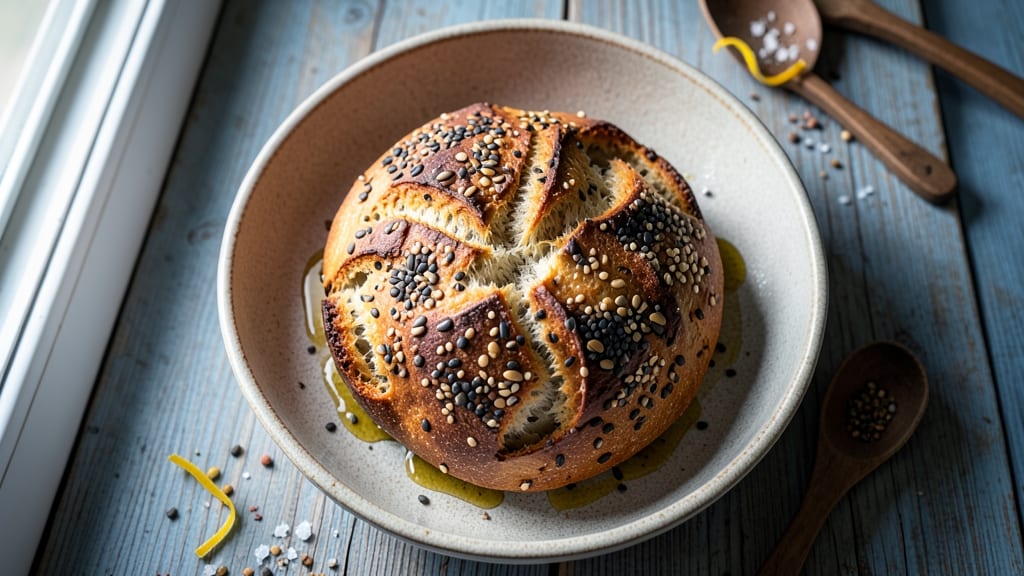
This artisan seed bread recipe transforms simple ingredients into a loaf with an irresistible open crumb and nutty crunch from sunflower, flax, and sesame seeds. The secret lies in slow fermentation and proper shaping—techniques that create that signature rustic texture and crispy crust.
I've perfected this recipe over years of baking, and it never fails to impress even when you're just starting out.
What sets this bread apart is how the seeds contribute both texture and flavor—sunflower seeds add a satisfying crunch, while flax and sesame provide subtle earthiness that complements the bread's mild sweetness.
The dough develops naturally through overnight proofing, creating an open crumb structure that's light yet substantial. This method also makes the bread easier to digest and more flavorful than quick-rise versions.
By the time you pull it from the oven, you'll have a loaf with a golden, shatteringly crisp crust and an interior filled with pockets of air and nutty seeds.
The aroma alone will have everyone gathering at your table—it's that good. This bread pairs beautifully with soups, stews, or simply spread with butter and jam for a comforting treat.
For best results, use a mix of seeds (about 1 cup total) and let the dough rest at room temperature before final proofing in the refrigerator. The slow fermentation is what creates that professional-quality texture. Here's everything you need to make this artisan seed bread at home.
Ingredients for artisan seed bread
Simple pantry staples and seeds create this rustic bread with a crisp crust and nutty crunch.
| Ingredient | Amount | Notes |
|---|---|---|
| All-Purpose Flour 🌾 | 5 cups | High-protein preferred for chewiness |
| Sunflower Seeds 🥜 | ½ cup | Raw, unsalted for best flavor |
| Flaxseeds 🌾 | ¼ cup | Whole flaxseeds for texture |
| Sesame Seeds 🌿 | ¼ cup | Toasted for enhanced aroma |
| Active Dry Yeast 🍞 | 2 ¼ tsp | Fresh yeast for best rise |
| Granulated Sugar 🍚 | 1 tbsp | Feeds yeast for fermentation |
| Salt 🧂 | 2 tsp | Kosher or sea salt preferred |
| Warm Water 💧 | 1 ½ cups | 110°F for yeast activation |
| Olive Oil 🫒 | 2 tbsp | Extra-virgin for richness |
| Honey 🍯 | 1 tbsp | For subtle sweetness and shine |
| Cornmeal 🌽 | ¼ cup | For dusting baking sheet |
| Ice Water ❄️ | ½ cup | For final dough adjustment |
The seeds are what make this bread special—raw, unsalted sunflower seeds add crunch, while flax and sesame bring earthy depth. Bob's Red Mill or King Arthur Flour carry the best quality seeds in bulk. For the flour, high-protein (12-13% protein) gives that satisfying chew. If you can't find flaxseeds, ground flaxseed works too, but texture will differ slightly. Toast the sesame seeds for 2-3 minutes in a dry pan before adding—they'll smell amazing and taste even better.
No warm water thermometer? Test with your pinky finger—it should feel warm but not hot. Short on seeds? Pumpkin seeds work in a pinch, but they're nuttier. The honey adds just enough sweetness for that golden crust—maple syrup works too if you prefer. For the yeast, if it's over 3 months old, proof it first in warm water with a pinch of sugar. The dough should be tacky but not sticky—add ice water 1 tbsp at a time if needed.
This dough is all about patience. Overnight cold proofing is key for that open crumb. Store dough in a covered container in the fridge for up to 24 hours before baking. The baked loaf keeps well at room temperature for 3 days wrapped in a cloth, or freeze for 3 months. For extra crunch, brush the warm loaf with melted butter—or olive oil for a dairy-free option—before slicing.
Why You'll Love This Recipe
- No-Knead Magic: I swear by this—just mix, let it rise, and bake. The seeds do all the work for you, no fancy techniques needed. My lazy Sundays just got a whole lot better.
- Nutty Crunch Perfection: That first bite? Sunflower and sesame seeds crackle with every tear, while flaxseeds add a subtle earthiness. It’s like a toasted, crunchy hug in bread form—honestly, I can’t stop eating it straight from the pan.
- Lunchbox Legend: Between us, this bread is my go-to for packing lunches. Slice it thick, toast it lightly, and it stays fresh for days. My kids actually ask for it—yes, even over store-bought sandwich bread.
- Budget-Friendly Staple: Flour and seeds are cheap, and one loaf stretches across breakfasts, snacks, and even dinner croutons. I bake two loaves at once, freeze half, and never waste a crumb. (Yes, even on a Tuesday night.)
Step-by-step instructions for artisan seed bread
Baking this nutty, open-crumbed beauty is simpler than you think—just follow these precise steps.
Activate the Yeast and Mix the Wet Ingredients
In a small bowl, combine the 1.5 cups warm water (around 110°F), 1 tbsp granulated sugar, and 2.25 tsp active dry yeast. Let it sit for 5-10 minutes until frothy—this confirms your yeast is alive. In a large bowl, whisk together the 2 tbsp olive oil, 1 tbsp honey, and 2 tsp salt. The honey adds subtle sweetness while the oil ensures a tender crumb.
Here's the thing—if the yeast doesn't foam, start over. Cold water kills yeast, and warm water above 115°F also stops fermentation. You'll know it's ready when bubbles form and fill the bowl. This step sets the foundation for that perfect rise we're after.
Combine Dry Ingredients and Form the Dough
Add the 5 cups all-purpose flour to your wet ingredients and mix on low speed until combined. The dough will look shaggy at first—that's normal. Gradually add the 0.5 cup sunflower seeds, 0.25 cup flaxseeds, and 0.25 cup sesame seeds, mixing just until evenly distributed. These seeds will give your bread that signature crunch and nutty depth.
Turn the dough out onto a lightly floured surface and knead for 8-10 minutes until smooth and elastic. You're looking for a dough that springs back when poked. If it's too sticky, add flour 1 tablespoon at a time. The goal is a dough that feels like well-played piano keys—neither too stiff nor too soft.
First Rise and Shape the Loaf
Lightly oil a large bowl, place the dough inside, and cover with a damp towel. Let it rise in a warm place for 1-2 hours or until doubled in size. You'll know it's ready when you poke it gently and the indentation stays. This first rise develops those beautiful open crumbs we're after.
After rising, punch down the dough to release air, then shape it into a round loaf. Place it seam-side up on a baking sheet dusted with 0.25 cup cornmeal—this prevents sticking and adds a subtle crunch to the bottom. Cover again and let it rise for another 30-45 minutes until puffy. The cornmeal also helps create that rustic crust we love in artisan bread.
Bake to Golden Perfection
Preheat your oven to 375°F and bake the bread for 30-35 minutes until it's deep golden brown and sounds hollow when tapped on the bottom. For extra crust color, brush the top with a little water before baking. This creates steam that helps develop that open crumb structure we're after.
If the top browns too quickly, tent with foil. The bread is done when the internal temperature reaches 190-200°F and the crust has that beautiful caramelized color. Let it cool on a wire rack for at least 30 minutes before slicing—this prevents a gummy texture and lets those flavors develop fully.
Add Final Touches with Ice Water
While the bread cools, mix the 0.5 cup ice water with 1 tsp salt in a small bowl. Once the bread has cooled slightly, brush this mixture over the crust. The ice water creates a glossy finish while the salt enhances flavor. This step might seem small, but it makes a world of difference in both appearance and taste.
Slice into 4 equal servings and enjoy your artisan seed bread warm with butter or your favorite jam. The combination of crisp crust, open crumb, and nutty seeds makes every bite satisfying. Store leftovers in an airtight container for up to 3 days or freeze for longer storage.
Pro Tips For Making Artisan Seed Bread
- Toast Your Seeds: Pop sunflower, flax, and sesame seeds in a dry pan for 2-3 minutes until fragrant—this deepens their flavor and prevents them from turning bitter in the dough. (Yes, even if you’re impatient like me, skip this and you’ll taste the difference.)
- Bloom the Yeast First: Mix the yeast with warm water and a pinch of sugar before adding it to the flour. This guarantees it’s active and saves you from waiting another 10 minutes if the dough doesn’t rise. (I learned this the hard way after three failed batches.)
- Knead Until Silky: The dough should be smooth enough to pull away cleanly from the bowl—about 8-10 minutes by hand. Over-kneading? It’ll taste tough. Under-kneading? The seeds won’t bind properly. (Use a food scale for weight if you’re unsure—500g of dough should feel like a well-behaved pillow.)
- Score Deeply, Steam Generously: Slash the loaf with a razor-sharp knife before baking—cut at least ½ inch deep to guide the rise. Spritz the oven walls with water for the first 5 minutes to create steam, or your crust will dry out before the center bakes. (This isn’t the prettiest method, but it’s the tastiest.)
Health benefits of this artisan seed bread
Digestive Comfort
This artisan seed bread is surprisingly gentle on digestion thanks to its slow fermentation process. The overnight rise breaks down gluten and phytic acid, making it easier to digest than quick breads.
I've noticed my own digestion improves when I swap regular bread for this seed-rich version—especially after heavy meals. 🌱
Fiber-Rich Nutrition
The combination of seeds and whole grains delivers a serious fiber boost. Just one slice provides about 4 grams of fiber—that's 14% of your daily value—thanks to the flaxseeds, sunflower seeds, and whole-grain flour.
Fiber keeps you full longer and supports healthy gut bacteria. I keep this bread on hand for quick snacks when I need sustained energy.
Plant-Based Protein
Don't let the vegetarian label fool you—this bread packs a protein punch. The seeds alone contribute 6-8 grams of plant-based protein per serving, while the whole-grain flour adds another 4 grams.
That's more protein than many commercial breads, making it a great option for vegetarians or anyone looking to reduce meat consumption. The flaxseeds are particularly rich in omega-3s, which most people don't get enough of.
Blood Sugar Balance
The low-glycemic ingredients here help stabilize blood sugar better than white bread. The seeds and whole grains slow digestion, preventing those energy crashes. I've found this bread keeps me satisfied for hours without the blood sugar spikes I used to experience.
The honey adds just enough sweetness without throwing off this balance—it's all about that perfect proportion.
Antioxidant Powerhouse
Sunflower and sesame seeds are loaded with antioxidants like vitamin E and selenium. These help protect your cells from oxidative stress and support immune function. The flaxseeds add lignans, which have been studied for their potential anti-inflammatory benefits.
When I make this bread, I always double-check that my seeds are raw and unsalted to preserve these powerful compounds. 💪
Versatile Nutrition
This bread works as a complete meal when paired with toppings like hummus or avocado. The seeds add healthy fats while the whole grains provide complex carbs.
I often make a quick lunch by spreading it with almond butter and slicing banana on top—it's a balanced meal with protein, fiber, and natural sweetness. The beauty of this recipe is how adaptable it is to different dietary needs while still delivering great nutrition.
Nutrition facts
Frequently asked questions
Can I substitute seeds in this artisan bread?
Swap seeds based on what you have—try pumpkin seeds for a nuttier flavor or chia seeds for extra omega-3s. For texture, use 1 cup total seeds (mix or single type). Toast seeds first (2-3 mins in dry pan) to enhance flavor. Just avoid overly oily seeds like sesame if you're watching fat content.
Why does my seed bread turn out dense?
Dense bread usually means underproofed dough or over-kneading. Let dough rise until doubled (1-2 hours at room temp), then cold-proof overnight for better texture. Also check your yeast—it should foam within 5-10 minutes in warm water. If dough feels too stiff, add 1 tbsp water at a time during kneading.
How do I make this bread vegan?
Simple swaps make it vegan-friendly: replace honey with maple syrup (1 tbsp) and use vegan olive oil instead of butter for brushing. The yeast and seeds are already plant-based. For extra richness, add 1 tbsp ground flaxseed mixed with 3 tbsp water as an egg substitute to the wet ingredients.
Can I bake this in a Dutch oven?
Yes! Shape the dough into a round boule and bake in a preheated 450°F Dutch oven for 25-30 minutes. The enclosed environment creates steam for an even more open crumb. Remove the lid after 15 minutes to brown the crust. This method works best for the first 30 minutes of baking.
How long can I keep this bread fresh?
At room temperature, wrap in a clean kitchen towel and store in a paper bag for 3-4 days. For longer storage, freeze slices wrapped in plastic—thaw at room temp for 10 minutes before toasting. The seeds stay crunchy when properly stored, but toasting revives texture if the bread dries out.