
Side Dishes
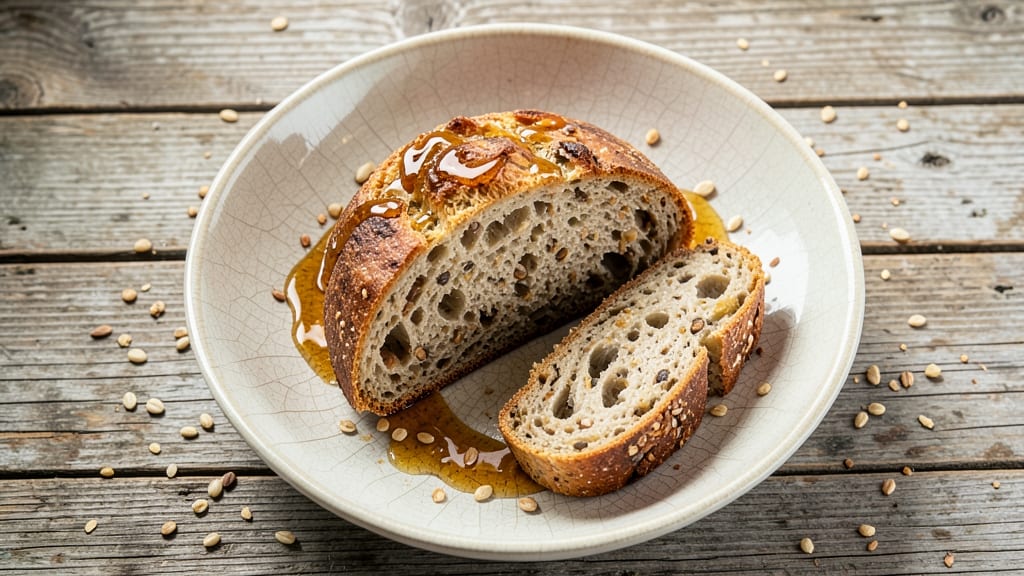
This 8-grain bread recipe delivers a nutty crust and hearty texture that transforms any meal. The combination of wheat, rye, barley, and five other grains creates a complex flavor profile that's both satisfying and versatile.
I developed this recipe after years of baking, perfecting the balance between structure and tenderness that makes every slice irresistible.
The secret lies in the grain blend—each type contributes uniquely: wheat provides structure, rye adds depth, and barley brings a subtle malty note. Optional additions like sunflower seeds or rosemary can elevate the flavor further.
The dough requires proper kneading and proofing, but the results are worth the effort—a loaf with a crisp crust and a crumb that's both dense and airy.
Once baked, this bread develops an aromatic richness that fills your kitchen with warmth. Perfectly suited for toast with butter, paired with soups, or served alongside hearty stews, it becomes the centerpiece of any meal. The texture remains fresh for days, making it ideal for meal prep or gifting.
For best results, use a mix of whole and cracked grains for optimal texture. The baking process requires patience, but the reward is a loaf that's as beautiful as it is delicious. Whether you're a seasoned baker or just starting, this recipe delivers professional-quality results with simple techniques.
Ingredients for 8 grain bread
Eight grains, one loaf—this is your pantry transformed into something extraordinary.
| Ingredient | Amount | Notes |
|---|---|---|
| All-Purpose Flour 🌾 | 4 cups | For structure and binding |
| Whole Wheat Flour 🌾 | 2 cups | Adds heartiness and fiber |
| Rye Flour 🌾 | 1 cup | Deepens flavor profile |
| Barley Flour 🌾 | ½ cup | Subtle malty note |
| Spelt Flour 🌾 | ½ cup | Nutty flavor enhancement |
| Oat Flour 🌾 | ½ cup | Softens texture slightly |
| Buckwheat Flour 🌾 | ¼ cup | Earthy complexity |
| Cornmeal 🌾 | ¼ cup | Adds slight crunch |
| Active Dry Yeast 🍞 | 2 ½ tsp | Check expiration date |
| Granulated Sugar 🍚 | 1 tbsp | Feeds yeast activation |
| Salt 🧂 | 2 tsp | Diamond Crystal preferred |
| Warm Water 💧 | 1 ½ cups | 110°F for yeast activation |
| Extra-Virgin Olive Oil 🫒 | 2 tbsp | For dough elasticity |
| Sunflower Seeds 🥜 | ½ cup | Optional for crunch |
| Fresh Rosemary 🌿 | 1 tbsp | Chopped, optional aroma |
The grain blend is where the magic happens. King Arthur or Bob's Red Mill flours work best for consistency—pre-ground is fine, but if you're ambitious, toast whole grains first for deeper flavor. Rye and buckwheat are non-negotiable for that signature depth, but if you can't find buckwheat flour, substitute quinoa flour at half the amount. The sunflower seeds? Trader Joe's has the best-priced bulk bin—just don't overdo it or your texture gets gummy. Fresh rosemary is ideal, but dried works at one-third the amount if you're in a pinch. Store all grains in airtight containers to keep them fresh.
No rye flour? Substitute whole rye berries (soak and grind them yourself)—it's a pain but worth it. Running low on buckwheat? Flaxseed meal adds a similar earthiness. The yeast is the heart of this dough, so check the expiration date—old yeast means weak rises. For the water, 110°F is perfect—too hot kills the yeast, too cold and it won't activate. If your kitchen's drafty, use a microwave-safe bowl to warm the water first. The olive oil matters here too—avoid light or refined oils that lack flavor. And if you're feeling fancy, add a pinch of cardamom to the dough for warmth.
This dough needs time—2 hours of rising at room temp, then another 12 hours in the fridge for maximum flavor. Shape it gently to avoid tearing, and let it proof in a lightly greased loaf pan. For storage, wrap the cooled loaf in a clean kitchen towel and keep it at room temp for 3 days. Slice and toast it fresh—never reheat whole loaves or it gets gummy. Freeze slices for up to 3 months by wrapping them individually in parchment. The crust stays crisp for days if you store it in a paper bag—seriously, it's a game-changer.
Why You'll Love This Recipe
- No-Fuss Mixing: I swear by the 5-minute "dump-and-stir" method—just toss those flours (rye, spelt, barley) with the wet ingredients and let the dough handle itself. Honestly, my hands are rarely sticky, and the kneading? Almost nonexistent.
- Earthy Depth: That rye and barley combo? It’s like a warm hug for your sandwiches—slightly tangy, nutty, and complex enough to make plain toast feel luxurious. Between us, I’ve never missed white bread since.
- Weeknight Workhorse: Slice it fresh for grilled cheese, toast it for breakfast, or pack it for lunches—it’s the one loaf that does it all. I keep a batch in the freezer because, let’s be real, some weeks dinner is just soup and this bread.
- Budget-Friendly Staple: Whole grains stretch my grocery budget without sacrificing flavor, and a single batch feeds my family for days. Leftovers? Toast them, freeze them, or turn them into croutons—no waste, all win.
Step-by-step instructions for 8-Grain bread
This hearty loaf comes together with patience and precision—each grain adds its own magic.
Activate the Yeast and Mix the Dough
In a large bowl, combine the 1.5 cups warm water (about 110°F), 1 tbsp granulated sugar, and 2.5 tsp active dry yeast. Let it sit for 5-10 minutes until frothy—this confirms the yeast is alive and ready to work. If it doesn’t bubble, your yeast might be old, and you’ll need to start over.
In a separate large mixing bowl, whisk together the 4 cups all-purpose flour, 2 cups whole wheat flour, 1 cup rye flour, 0.5 cup barley flour, 0.5 cup spelt flour, 0.5 cup oat flour, 0.25 cup buckwheat flour, 0.25 cup cornmeal, 2 tsp salt, and 2 tbsp extra-virgin olive oil. Pour in the yeast mixture and stir with a wooden spoon until a shaggy dough forms. The texture will be thick and sticky, but that’s exactly what we want for maximum flavor development.
Knead Until Silky and Elastic
Turn the dough onto a lightly floured surface and knead for 8-10 minutes by hand, or use a stand mixer with a dough hook on medium speed for 5-6 minutes. You’ll know it’s ready when the dough springs back slowly when poked and feels smooth to the touch. If it’s too sticky, wet your hands slightly to prevent sticking—this dough is dense, so don’t over-flour it.
Real talk: This isn’t your typical light bread dough. The multiple flours and seeds make it heavier, so it won’t rise as dramatically. That’s okay—it’s what gives this loaf its incredible texture and depth of flavor. Once kneaded, place the dough back in the bowl, cover with a damp towel, and let it rise in a warm spot for 1-2 hours, or until it’s doubled in size. You’ll see it puff up noticeably, but not as dramatically as sourdough.
Shape and Second Rise for Structure
Punch down the dough gently to release air, then shape it into a 9x5-inch loaf pan (greased or lined with parchment paper). Press the dough down firmly to fill the pan completely—this ensures an even bake and prevents a dense center. Sprinkle the 0.5 cup sunflower seeds and 1 tbsp chopped fresh rosemary evenly over the top, pressing them lightly into the dough so they don’t float away during baking.
Cover the pan loosely with plastic wrap or a towel and let the dough rise again for 30-45 minutes. It should rise just slightly—about ½ inch above the pan’s rim. This second rise is crucial for developing the final texture. Preheat your oven to 375°F while the dough rises. The oven should be fully heated before the bread goes in, or you’ll end up with a dense loaf.
Bake Until Golden and Hollow-Sounding
Bake the loaf for 35-40 minutes until the top is deep golden brown and sounds hollow when tapped on the bottom. The crust should be crisp, and the internal temperature should reach 190-200°F when checked with an instant-read thermometer. If the top browns too quickly, tent the loaf with foil to prevent over-browning while it finishes baking.
Here’s the thing—this bread is dense and hearty, so it won’t rise like a classic sandwich loaf. That’s the beauty of it! The grains and seeds add texture and nutrition without sacrificing flavor. Let the bread cool in the pan for 10 minutes, then transfer it to a wire rack to cool completely. The longer you wait, the easier it’ll be to slice—this bread is best served at room temperature for maximum enjoyment.
Slice and Serve for Maximum Flavor
Once fully cooled, slice the loaf with a serrated knife for clean cuts. The interior should be moist but not gummy, with visible flecks of seeds and grains throughout. Serve it warm with butter, jam, or as part of a charcuterie board. The nutty crust and hearty texture make it perfect for sandwiches, toast, or simply enjoyed on its own.
This bread keeps well at room temperature for 3-4 days in an airtight container or wrapped in foil. For longer storage, slice and freeze the loaf—it reheats beautifully in the toaster or oven for fresh, crusty slices whenever you crave it.
Pro Tips For Making 8 Grain Bread
- WEIGH YOUR FLOURS: Mixing flours by volume leads to dense, uneven bread. Grab a kitchen scale—rye and spelt especially pack differently than all-purpose. I learned this after three batches where the crust looked perfect but the crumb was like hockey pucks.
- HYDRATE GRADUALLY: Whole wheat and barley flours soak up water like sponges. Start with 60% of the liquid, let the dough sit 10 minutes, then add the rest. Skipping this step means a gummy, sticky mess that won’t rise properly—trust me, I’ve been there.
- STEAM THE LOAF: The first 15 minutes in the oven? Crank the heat to 425°F and place a metal tray on the rack below. The steam keeps the crust from drying out too fast while the dense grains bake through. Without it, you’ll end up with a tough, cracked exterior.
- KNEAD LESS, REST MORE: This isn’t your grandma’s bread dough. The dense flours don’t need much handling—just 3-4 minutes by hand or 2 minutes in a mixer. Let it autolyse (rest 20-30 minutes before adding yeast) instead of overworking it. Over-kneading turns the crumb into a brick.
Best sauces and condiments for this 8 grain bread
Butter and Honey
This classic pairing is a match made in heaven with your 8-grain bread. Warm the loaf slightly, then spread 2 tbsp unsalted butter (I love Plugrá) and drizzle with 1 tbsp local honey—the nutty crust soaks up the richness beautifully.
For extra depth, add a pinch of flaky sea salt (like Maldon) to enhance the flavors. This combo is perfect for breakfast or as a simple snack. 🍯
Olive Oil and Herbs
Drizzle 2 tbsp extra-virgin olive oil (try California Avocado Ranch) over slices and sprinkle with chopped fresh rosemary or thyme. The earthy notes of the bread complement the oil’s fruity undertones, creating a bright, aromatic experience.
This is my go-to for charcuterie boards or as a quick appetizer. For a twist, add a few red pepper flakes for a subtle kick. 🌿
Whole-Grain Mustard
Mix 1 tbsp whole-grain mustard (like French’s Dijon) with 1 tsp honey and 1 tsp olive oil for a tangy-sweet spread. The mustard’s sharpness cuts through the bread’s richness, while the honey balances it out.
This pairing works wonders for sandwiches or as a dip for crusty slices. Store the mixture in an airtight container in the fridge for up to 5 days. 🥫
Garlic and Herb Compound Butter
Softened ½ cup butter mixed with 2 minced garlic cloves, 1 tbsp chopped parsley, and a pinch of salt creates a luxurious spread. The garlic’s pungency pairs beautifully with the bread’s nutty depth.
Roll the mixture into a log, wrap in parchment paper, and chill for 1 hour before slicing. Perfect for toast or melting over grilled meats. 🧄
Spiced Nut Butter
Blend ½ cup roasted peanut butter (like Smucker’s Natural) with ½ tsp cinnamon and a pinch of cayenne for a sweet-spicy twist. Spread on toasted slices and top with sliced banana or dark chocolate shavings.
The warmth of the spices complements the bread’s hearty texture, making it a fantastic breakfast option. Store the nut butter in a glass jar in the pantry. 🥜
Smoked Paprika Aioli
Whisk ½ cup mayonnaise (I prefer Duke’s) with 1 tsp smoked paprika, 1 tsp lemon juice, and ½ tsp garlic powder. The smoky, tangy aioli elevates the bread’s nutty crust, especially when paired with grilled chicken or avocado slices.
Store in an airtight container for up to 3 days in the fridge. 🌶️
Nutrition facts
Frequently asked questions
Can I substitute any of the grains in this 8-grain bread?
Yes, but choose wisely! The key is maintaining balance. For example, swap buckwheat flour with quinoa flour (use half the amount) or replace rye flour with whole rye berries (soak and grind first). Avoid removing too many flours at once—each grain contributes unique texture and flavor. If you want to add more seeds (like sesame or pumpkin), reduce another grain by ¼ cup to keep the dough workable.
Why does my 8-grain bread turn out dense instead of light?
This bread is designed to be hearty, not light and airy! The multiple flours and seeds create a denser texture. For best results, ensure you knead properly (until smooth but not tough) and don't skip the 12-hour cold proof—it develops flavor and structure. If it's still too dense, check your yeast (must be fresh) and make sure your oven is fully preheated to 375°F before baking.
How do I store this bread to keep it fresh longer?
Wrap the cooled loaf in a clean kitchen towel and store at room temperature for 3-4 days. For longer storage, slice and freeze individual portions in parchment paper—they'll stay fresh for up to 3 months. To revive, toast frozen slices directly in the toaster. Never store it in the fridge—this makes bread stale faster!
Can I make this bread without a stand mixer?
This dough is perfect for hand-kneading. Wet your hands slightly to prevent sticking, and knead on a lightly floured surface for 8-10 minutes until smooth and elastic. The dense nature of the dough means it won't be as stretchy as white bread dough, but it should feel cohesive. For extra strength, let it rest for 10 minutes between kneading sessions if needed.
What's the best way to reheat sliced 8-grain bread?
For crispy crust and warm interior, use the toaster or toaster oven for 2-3 minutes at 375°F. If you prefer oven reheating, wrap slices in foil and bake at 350°F for 5-7 minutes. Avoid microwaving—it makes the crust soggy. For maximum freshness, always toast from frozen if storing slices in the freezer.