
Side Dishes
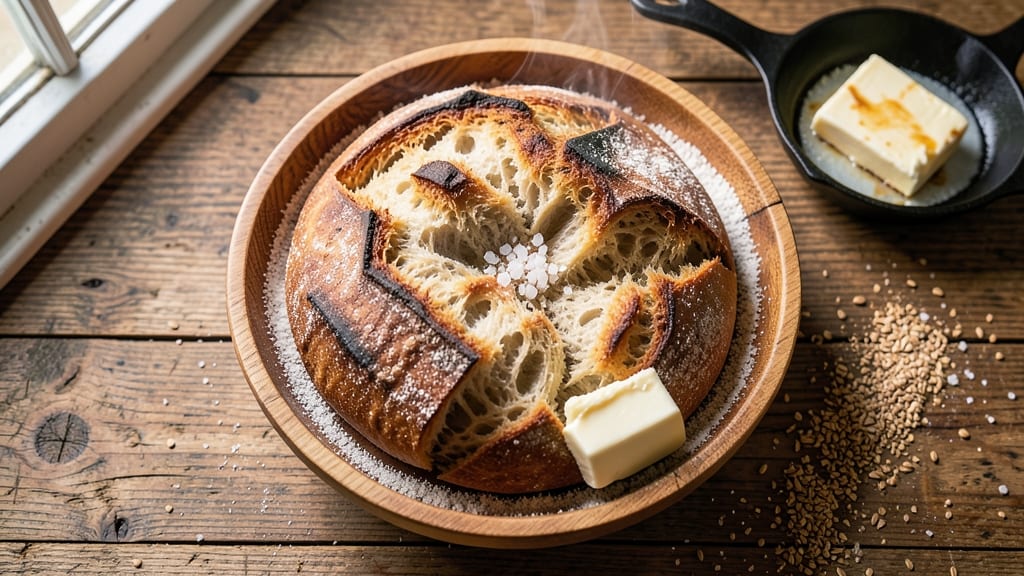
This Alaskan sourdough bread recipe delivers the rustic, tangy crust and wild berry swirls that define Alaska’s baking tradition. The cold climate and long winters shaped a bread culture where sourdough’s natural fermentation thrives—creating a loaf with deep flavor and satisfying chew.
What makes this recipe special is the balance of traditional techniques and Alaskan-inspired twists, like the wild berry swirl that adds a burst of local flavor without overpowering the bread’s signature tang.
The process begins with a robust sourdough starter, nurtured over days to develop the complex, slightly sour flavor that defines Alaskan bread. From there, the dough undergoes a slow fermentation—critical for achieving that signature open crumb and crispy crust.
Cold proofing overnight enhances the bread’s texture, ensuring a light yet hearty loaf that’s perfect for sharing or slicing thick for sandwiches. The wild berry swirl, made from frozen or fresh berries, adds a sweet-tart contrast that’s uniquely Alaskan, inspired by the region’s abundant wild harvests.
Baking this bread is where the magic happens. The high heat of your oven creates a golden, tangy crust that’s crisp yet tender, while the steam inside keeps the crumb soft and airy.
The result is a loaf with a satisfying crunch and a flavor profile that’s both nostalgic and bold—a staple for any table. Whether you’re serving it with butter, jam, or alongside a hearty stew, this bread brings a taste of Alaska’s baking heritage to your kitchen.
For those new to sourdough, don’t let the process intimidate you. This recipe breaks down each step clearly, from starter care to shaping and scoring, so you can achieve professional results at home.
The wild berry swirl is optional but adds a touch of local inspiration—perfect for celebrating Alaska’s rich culinary traditions. Let’s get started on crafting your loaf.
Ingredients for alaskan sourdough bread
Four loaves of Alaskan-inspired bread with tangy crust and wild berry swirls—just these ingredients.
| Ingredient | Amount | Notes |
|---|---|---|
| Active Sourdough Starter 🍞 | 2 cups | Unfed, bubbly, 100% hydration |
| All-Purpose Flour 🌾 | 5 cups | Bread flour preferred for chew |
| Whole Wheat Flour 🌾 | 1 cup | Adds rustic texture |
| Granulated Sugar 🍚 | ½ cup | Feeds starter and caramelizes crust |
| Salt 🧂 | 2 tsp | Kosher or sea salt preferred |
| Unsalted Butter 🧈 | ½ cup | Cold, cubed for lamination |
| Wild Blueberries 🫐 | 1 ½ cups | Fresh or frozen, thawed |
| Honey 🍯 | 2 tbsp | For berry swirl sweetness |
| Water 💧 | 2 ½ cups | Lukewarm, filtered preferred |
| Instant Yeast 🍄 | ¼ tsp | Optional, for extra rise |
| Cornmeal 🌽 | ¼ cup | For dusting baking sheet |
| Ice Water ❄️ | ½ cup | For final dough shaping |
The sourdough starter is the heart of this bread. King Arthur or San Francisco Sourdough starters work best, but any active, bubbly starter will do. If you're new to sourdough, King Arthur's Sourdough Discard Starter is a great shortcut—just feed it for 5-7 days before using. The wild berries? Frozen works just as well as fresh—thaw them first, but don't drain. For the flours, King Arthur Bread Flour gives that perfect chew, but all-purpose in a pinch. The honey should be raw and local if you can find it—Alaskan wildflower honey adds a subtle floral note that pairs beautifully with the berries.
No wild blueberries? Mixed frozen berries or even raspberries work in a pinch—just adjust the honey to taste. Running low on butter? Coconut oil or vegetable shortening keeps the lamination, though butter gives the best flavor. The instant yeast is optional but helps if you're in a hurry—this is a slow-ferment recipe, so skip it if you're comfortable with longer proofing. For the water, filtered or spring water is ideal, but tap water works if it's not hard. If your dough feels too sticky, add flour 1 tbsp at a time—this bread should be tacky but manageable.
Store the starter in the fridge when not in use—it'll keep for weeks. The dough can be shaped and cold-proofed overnight in the fridge for up to 24 hours, which enhances flavor. Once baked, this bread stays fresh for 3-4 days at room temperature, wrapped in a clean towel. For longer storage, slice and freeze the loaf—3 months in a sealed bag. The berry swirl keeps best if you bake the bread the same day, but you can prep the dough and swirl separately, then combine before baking.
Why You'll Love This Recipe
- Four-Ingredient Flexibility: I swear by this mix—just swap the whole wheat for extra bread flour if you’re in a pinch. The starter does the heavy lifting, so even if my kitchen’s a mess, the dough comes together in minutes.
- Tangy Crust, Golden Heart: That sugar caramelizes into a crackly crust while the whole wheat keeps the crumb tender. Honestly, the first slice out of the oven changes my whole day.
- Weeknight & Picnic Hero: Toss a loaf in my bag for hikes or pack it for lunch—it stays fresh for days. (Yes, even when I forget it in the car for hours.)
- Budget-Friendly Staple: A single starter batch feeds me for weeks, and flour’s cheap. I make two loaves, freeze one, and never stress about stale bread again.
Step-by-step instructions for Alaskan sourdough bread with wild berry swirls
Here's how to create a rustic loaf with a tangy crust and sweet berry pockets—perfect for Alaskan baking.
Prepare the Starter and Mix the Dough
In a large mixing bowl, combine the 2 cups Active Sourdough Starter, 5 cups All-Purpose Flour, 1 cup Whole Wheat Flour, 0.5 cup Granulated Sugar, and 2 tsp Salt. Mix until just combined—you should still see some dry flour patches. This prevents overdevelopment of gluten, which would make the bread too dense.
Next, add the 0.5 cup Unsalted Butter (cold, cubed) and mix until the butter is fully incorporated. The butter should be evenly distributed but still visible in small clumps. This creates pockets of flavor and moisture that give the bread its signature tender crumb. If the dough feels too dry, add 1-2 tablespoons of the 2.5 cups Water gradually until it comes together.
Incorporate the Yeast and Begin the First Rise
To the dough, add the 0.25 tsp Instant Yeast and mix again until fully combined. Then, slowly add 1.5 cups of the 2.5 cups Water while mixing with a wooden spoon or your hands. The dough should be soft but not sticky—if it's too wet, add 1-2 tablespoons of All-Purpose Flour to bring it together.
Cover the bowl with a damp kitchen towel and let the dough rise at room temperature for 1.5 to 2 hours, or until it has nearly doubled in size. You'll know it's ready when the dough springs back slowly when poked with a finger. This rise develops flavor and allows the gluten to relax slightly for easier shaping later.
Create the Berry Swirl and Shape the Dough
In a separate small bowl, mix the 1.5 cups Wild Blueberries with the 2 tbsp Honey. This sweetens the berries and helps them hold their shape during baking. Once the dough has risen, turn it out onto a lightly floured surface and gently press it into a rectangle about 12x8 inches. Spread the berry mixture evenly over the dough, leaving a 1-inch border around the edges.
Roll the dough tightly into a log, sealing the seam well. This creates the classic swirl pattern while keeping the berries contained. Once sealed, place the dough seam-side down on a parchment-lined baking sheet and cover it again with the damp towel. Let it rise for another 30 to 45 minutes until it has puffed slightly and looks fuller.
Laminate the Dough for a Tangy Crust
Preheat your oven to 375°F. While the oven heats, prepare the dough for lamination by gently pressing it down to deflate slightly. Use a sharp knife to score the top of the dough in a simple crosshatch pattern—this helps steam escape during baking and prevents cracking. Brush the surface lightly with 1 tablespoon of ice water to create a thin, crispy crust.
Bake the bread for 35 to 40 minutes, until the crust is deep golden brown and sounds hollow when tapped on the bottom. The internal temperature should reach 190°F at the center. If the top browns too quickly, tent the bread loosely with aluminum foil to prevent over-browning while it finishes baking.
Cool and Serve for Maximum Flavor
Remove the bread from the oven and transfer it to a wire rack to cool completely. This step is crucial—rushing to slice it while still hot will make the crumb gummy and the crust soggy. Let it cool for at least 1 hour, or preferably 2 hours, before slicing. The bread will continue to develop its full flavor and texture as it cools.
Once cooled, slice the bread into 1-inch thick pieces to reveal the beautiful wild blueberry swirls. Serve warm with a pat of unsalted butter or a drizzle of honey to enhance the natural sweetness of the berries. The crust should be crisp and tangy, while the interior remains soft and slightly chewy—a perfect balance of textures and flavors.
Pro Tips For Making Alaskan Sourdough Bread
- Autolyse First: Mix just the flour and starter—no salt or sugar—then let it sit for 30 minutes. I learned this the hard way: skipping this step makes the dough tougher, especially with whole wheat, which absorbs water like a sponge. The gluten relaxes, and the final crumb stays soft longer.
- Weigh Your Whole Wheat: Whole wheat flour is heavier than all-purpose, and scooping it leads to uneven batches. Use a kitchen scale for precision—this recipe’s texture depends on the ratio. I used to eyeball it, and the bread always came out either dense or crumbly.
- Steam the Oven: Place a metal tray on the oven rack before preheating, then add 1 cup of boiling water when you load the bread. The steam mimics a bakery’s environment and prevents the crust from drying out too fast, especially in Alaska’s dry air. No steam? A damp towel over the loaf works in a pinch.
- Poke, Don’t Press: When checking dough readiness, use your fingertips to gently poke the surface—press too hard, and you’ll deflate the air pockets. A proper poke leaves a slow, springy bounce-back. I was aggressive early on, and my loaves lost height. Light touch only.
Perfect pairings for this dish
Butter Spreads
Nothing complements Alaskan sourdough like a rich, local butter spread. I love using Alaskan grass-fed butter—its creamy texture and subtle sweetness pair perfectly with the bread's tangy crust.
For a gourmet touch, try honey-infused butter: mix ½ cup softened butter with 2 tbsp local honey and a pinch of sea salt. Spread generously on warm slices for a luxurious breakfast. 🧈
Berry Compotes
The wild berry swirl in this bread begs for complementary compotes. Simmer 1 cup wild blueberries with 2 tbsp sugar and 1 tsp lemon juice until thickened—about 10 minutes. Serve as a topping or spread on toasted bread.
For a savory twist, try a blackberry-balsamic reduction: cook 1 cup blackberries with 1 tbsp balsamic vinegar and 1 tsp thyme until syrupy. 🫐
Smoked Salmon
Alaska’s smoked salmon is a natural match for this bread. Pair slices with cold-smoked salmon from local producers, topped with a dollop of crème fraîche and fresh dill. The smoky, briny flavors cut through the bread’s sweet-tart berry swirl beautifully.
For a hearty option, add thinly sliced pickled onions and a sprinkle of everything bagel seasoning. 🐟
Local Honey Drizzle
Finish your plate with a drizzle of Alaskan wildflower honey—its floral notes enhance the berries and crust. I like to warm 2 tbsp honey with a pinch of cinnamon and drizzle over toasted bread.
For extra flair, add a sprinkle of toasted hazelnuts or pumpkin seeds for crunch. This simple touch elevates the bread to restaurant-quality. 🍯
Cheese Pairings
For a savory option, pair this bread with aged cheddar or brie. The sharpness of Alaskan cheddar balances the bread’s sweetness, while brie melts beautifully for a warm sandwich.
Try a berry-cheese plate: slice the bread, top with brie, and add a few wild berries. Broil briefly until the cheese is bubbly and golden. 🧀
Coffee & Tea
Alaskan sourdough’s rich flavor pairs wonderfully with bold beverages. A dark roast coffee—like Alaskan-grown beans—highlights the bread’s depth, while chamomile tea complements the berry swirl’s sweetness. For a festive touch, serve with spiced chai or a hot toddy during colder months. ☕
Nutrition facts
Frequently asked questions
What makes Alaskan sourdough bread different from regular sourdough?
Alaskan sourdough stands out for its longer fermentation times and cold climate adaptations. The extended proofing in cooler temperatures develops deeper tanginess and a denser crumb, perfect for Alaska's harsh winters. The wild berry swirl also adds a unique sweet-tart contrast that's inspired by local foraging traditions.
Can I substitute the wild blueberries with other fruits?
Yes! Try raspberries, blackberries, or even dried cranberries for the swirl. For best results, adjust the honey to 3 tbsp if using tart fruits. Avoid overly juicy fruits like strawberries—they can make the dough too wet. Frozen berries work perfectly too, just thaw them first.
Why does the recipe call for both sourdough starter AND yeast?
The 0.25 tsp instant yeast acts as an insurance policy for consistent rise, especially in cooler climates. The sourdough starter provides the signature tang, while the yeast ensures reliable fermentation. You can omit the yeast if your starter is very active, but expect slightly longer proofing times (3-4 hours total).
How do I know when my sourdough starter is ready?
Your starter should be doubled in size with bubbly activity on top within 4-6 hours after feeding. It should also smell pleasantly tangy (not rotten or overly sweet). For this recipe, use starter that's 100% hydration and unfed for at least 4 hours before mixing.
Can I make this bread in a Dutch oven for a crisper crust?
Preheat your Dutch oven with the lid on for 30 minutes at 450°F. Transfer the shaped dough to a parchment-lined Dutch oven, cover, and bake for 20 minutes. Remove the lid and bake 15-20 more minutes until golden. This method creates a thicker, crackly crust that's perfect for hearty sandwiches.