
Side Dishes
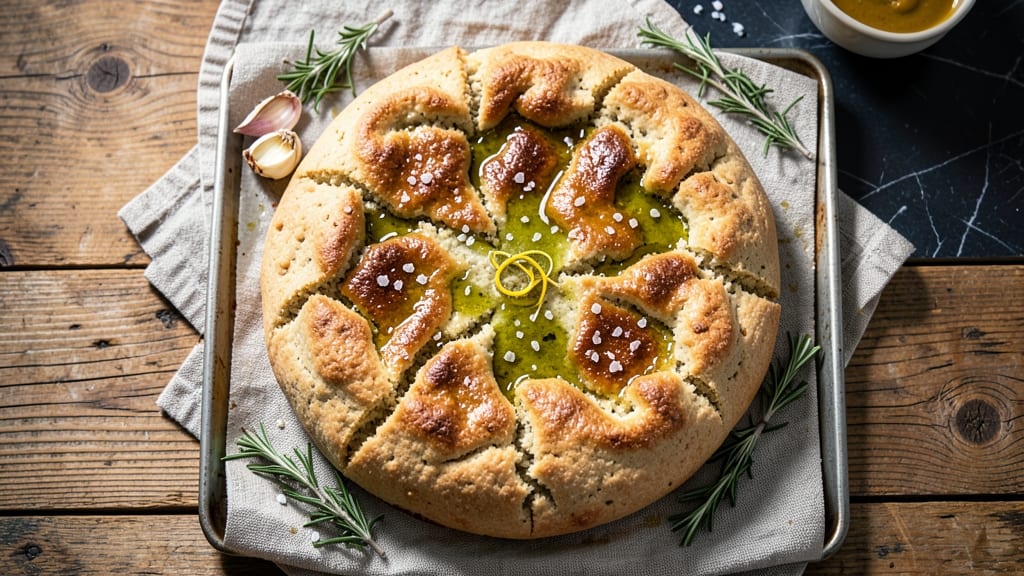
This almond flour focaccia bread recipe delivers the perfect balance of nutty crunch and pillowy softness—ideal for gluten-free diets or anyone craving a lighter loaf.
The secret lies in blending almond flour with olive oil and yeast for a tender yet sturdy crumb, topped with aromatic herbs and a drizzle of golden oil. Baking at 375°F ensures a crisp exterior while keeping the inside impossibly tender.
What sets this recipe apart is its versatility—use it for sandwiches, serve with soups, or enjoy it fresh from the oven. The almond flour adds natural sweetness and richness, while the olive oil infuses every bite with Mediterranean flair.
Unlike traditional focaccia, this version stays moist for days, making it perfect for meal prep or gifting.
The dough comes together in just 15 minutes, then proofs for an hour before baking for 25-30 minutes until golden and fragrant. Top with rosemary, flaky sea salt, or sesame seeds for extra depth.
Each slice offers a satisfying contrast of crisp edges and soft, airy centers—proof that gluten-free baking can be just as indulgent.
Whether you're avoiding gluten or simply love nutty flavors, this focaccia transforms ordinary meals into something special. The nutty aroma alone will have everyone asking for seconds. Ready to bake?
Ingredients for almond flour focaccia bread
Gather these gluten-free staples to bake focaccia with nutty crunch and soft centers.
| Ingredient | Amount | Notes |
|---|---|---|
| Almond Flour 🌰 | 3 cups | Finely ground, unsweetened |
| Extra-Virgin Olive Oil 🫒 | ¾ cup | High quality, fruity |
| Active Dry Yeast 🍞 | 1 tbsp | Instant yeast preferred |
| Warm Water 💧 | ¾ cup | 110°F for yeast activation |
| Granulated Sugar 🍚 | 1 tbsp | For yeast activation |
| Salt 🧂 | 1 ½ tsp | Fine sea salt preferred |
| Fresh Rosemary 🌿 | ¼ cup | Chopped, stems removed |
| Flaky Sea Salt 🧂 | ½ tsp | For topping |
| Sesame Seeds 🌱 | 2 tbsp | Optional for crunch |
| Dried Thyme 🌿 | 1 tsp | Or 1 tbsp fresh thyme |
| Maple Syrup 🍯 | 1 tbsp | For subtle sweetness |
Almond flour makes this recipe shine—Bob's Red Mill or Anthony's Goods are my go-tos, but any finely ground, unsweetened kind works. The olive oil should smell fresh and fruity; California avocado brand is my favorite for that rich flavor. Fresh rosemary is ideal, but dried thyme works in a pinch if you're short on time. The yeast needs to be fresh—if it's past its expiration, toss it. For the maple syrup, grab pure grade B; it's got more flavor than the cheaper stuff. And that flaky sea salt? Maldon is worth the splurge for that perfect crunch.
No almond flour? Sunflower seed flour is a decent swap, though the texture will be slightly denser. Short on olive oil? Avocado oil works, but it lacks that Mediterranean depth. Fresh herbs not an option? Dried oregano at half the amount mimics the earthy notes. The maple syrup can be swapped for agave nectar if you prefer. For the yeast, if it's been sitting in your pantry for months, test it first—drop a pinch in warm water with sugar; if it bubbles in 5 minutes, it's good to go. The sugar? Brown sugar works too, but maple gives that subtle caramel note that pairs perfectly with almond.
This dough keeps for 2 days in the fridge, wrapped tightly in plastic. For longer storage, freeze the shaped loaf for up to 3 months. To reheat, wrap in foil and warm at 350°F for 10 minutes. The focaccia tastes best fresh from the oven, but those crispy edges stay crisp for hours. I always make a double batch—one for the table, one for freezing. The herbs and seeds can be added right before baking, so don't stress about prepping them early. Just let the dough proof at room temperature for that perfect rise.
Why You'll Love This Recipe
- No Yeast Hassle: I swear by this recipe because it skips the finicky yeast step—just mix almond flour, warm water, and a pinch of sugar, then let it sit. No proofing, no waiting, no stress. Honestly, it’s the kind of bread that doesn’t demand your full attention, yet still delivers.
- Rich, Nutty Crunch: That first bite? The almond flour gives it a toasty, almost buttery depth you won’t find in regular focaccia. Drizzle it with olive oil before baking, and the crust gets crisp enough to shatter—like a low-carb, grown-up version of garlic bread.
- Meal Prep Magic: Between us, this is my go-to for lunches. Toss it in the freezer, and it thaws in minutes—perfect for sandwiches or toast. I’ll be real: my kids grab it straight from the fridge for snacks, and I don’t even have to reheat it.
- Budget-Friendly Luxury: Almond flour’s pricey, but a little goes a long way here. One batch stretches for days, and the olive oil adds richness without breaking the bank. Plus, it’s the kind of bread that makes fancy dinners feel effortless—just tear, drizzle, and serve. (Yes, even on a Tuesday night.)
Step-by-step instructions for almond flour focaccia bread
Here's how to create a nutty, pillowy focaccia that's crisp on the outside and soft inside.
Activate the Yeast for Maximum Rise
In a small bowl, combine the 0.75 cup warm water, 1 tbsp granulated sugar, and 1 tbsp active dry yeast. Let it sit for 5-7 minutes until it becomes foamy and bubbly—this means your yeast is alive and ready to work. If it doesn't bubble, your yeast might be old or the water too hot.
While waiting, I like to check the water temperature—it should feel warm to the touch but not hot. If it's too hot, you'll kill the yeast before it even gets started. Once it's bubbly, we're ready to move on to the dough. This activation step is crucial because almond flour doesn't contain gluten, so we rely on the yeast to create structure and lightness.
Mix the Dough for Perfect Texture
In a large mixing bowl, whisk together the 3 cups almond flour, 1.5 tsp salt, 1 tsp dried thyme, and 1 tbsp maple syrup. The almond flour should be sifted first to avoid lumps—this ensures even distribution and better texture. Make a well in the center and pour in the yeast mixture along with the 0.75 cup extra-virgin olive oil.
Using a wooden spoon or spatula, gently mix everything together until just combined. You'll notice the dough will be thick and sticky—this is normal with almond flour. Don't overmix; we're not developing gluten like in traditional bread. The dough should hold together when pressed but still feel soft and pliable. If it's too dry, add a teaspoon of warm water at a time until it reaches the right consistency.
Fold in Fresh Rosemary for Aromatic Flavor
Add the 0.25 cup chopped fresh rosemary to the dough and gently fold it in using your hands. Be careful not to press too hard—we want to preserve the herb's delicate leaves. The rosemary will infuse the dough with its piney aroma, giving your focaccia that signature Mediterranean flavor. If you're using fresh thyme instead of dried, now's the time to add it too.
Once mixed, transfer the dough to a lightly greased 9x13-inch baking pan. Use your hands to spread it evenly, pressing gently to fill the corners. The dough should be about ½-inch thick—thinner in the center and slightly thicker at the edges. This shape will create those beautiful dimples and crispy edges we love in focaccia. Don't worry if it looks messy; we'll fix that after the first rise.
First Rise for Lightness and Flavor Development
Cover the pan tightly with plastic wrap or a damp towel and let the dough rise at room temperature for 1 hour. You'll see it puff up slightly and develop small bubbles—this is the yeast doing its magic. The rise will be subtle compared to wheat flour dough, but it's still important for that tender crumb. If your kitchen is cold, place the pan in a slightly warmer spot to help the yeast work more efficiently.
While waiting, I like to preheat my oven to 375°F. This gives me time to prepare the focaccia for baking while the oven heats up properly. The first rise is where most of the flavor develops, so don't rush this step. The dough should be noticeably puffier and smell lightly of yeast and rosemary when ready.
Create Dimples and Bake to Golden Perfection
After the first rise, use your fingers to gently press dimples into the dough, about 1 inch apart. This creates those classic focaccia pockets that soak up olive oil and toppings beautifully. Drizzle the dough with about 2 tablespoons of extra-virgin olive oil, letting it pool in the dimples. Sprinkle evenly with the 0.5 tsp flaky sea salt and 2 tbsp sesame seeds for that perfect crunchy finish.
Bake in the preheated oven for 25-30 minutes until the focaccia is deep golden brown at the edges and smells heavenly. It should be firm to the touch but still soft in the center. If you're worried about over-browning, tent the pan with foil after 15 minutes. The internal temperature should reach 190-200°F—this ensures it's fully baked without being dry.
Cool and Serve for Maximum Enjoyment
Remove the focaccia from the oven and let it cool in the pan for 10 minutes. This resting time allows the steam to redistribute, making each slice even more tender. I know it's tempting to dig in immediately, but patience here makes all the difference. The focaccia will continue to crisp up as it cools, giving you that perfect texture contrast.
Once cooled, slice into squares or rectangles and serve warm. The crust should be crispy and nutty from the almond flour, while the inside remains soft and pillowy. Each bite should deliver that aromatic rosemary flavor with a hint of sweetness from the maple syrup. Store any leftovers wrapped in foil at room temperature for up to 3 days, or freeze for longer storage.
Pro Tips For Making Almond Flour Focaccia Bread
- Measure Almond Flour Right: Spoon it into your cup—don’t scoop. Almond flour packs tightly, and you’ll end up with a dense, gummy mess if you overfill. Use a kitchen scale if you’re serious about this; 1 cup of almond flour weighs about 100g, but scooping can add 20g or more without you noticing.
- Bloom Yeast in Oil: Mix the yeast with 1 tablespoon of warm olive oil first, then add water. The fat helps the yeast activate faster and prevents that sad, flat focaccia when your yeast struggles in plain water. Stir it in and let it sit for 5 minutes—you’ll see bubbles before adding the rest.
- Don’t Overmix the Dough: Stir just until the almond flour is mostly incorporated, then stop. Overworking it turns the dough into a paste, and your focaccia will be dense instead of light and airy. Think "lumpy but combined," not "smooth batter."
- Preheat Pan and Oven: Get your baking dish in the oven while it preheats—this ensures the focaccia doesn’t start cooking unevenly. A hot pan also helps the olive oil pool better, giving you that classic focaccia shine and crisp. Skip this, and you’ll end up with a sad, soggy bottom.
Creative variations of this almond flour focaccia bread
Herb Variations
Swap fresh rosemary for thyme, oregano, or basil to create distinct flavor profiles. For a Provençal twist, mix ½ cup chopped thyme with ¼ cup chopped tarragon—the anise notes complement almond flour beautifully.
I love adding 1 tbsp lemon zest to brighten the dough if using citrus-forward herbs like basil. 🌿
Sweet Toppings
Transform this into a dessert focaccia by adding 2 tbsp honey or 1 tbsp maple syrup to the dough, then topping with chopped walnuts and cinnamon before baking.
For a sticky version, drizzle ¼ cup melted butter over the proofed dough and sprinkle with ½ cup dark chocolate chips—bake until golden for a decadent treat.
Savory Add-Ins
Boost the savory factor with ¼ cup sun-dried tomatoes (chopped) or 2 tbsp capers folded into the dough. For a Mediterranean touch, add ¼ cup kalamata olives and 2 tbsp chopped red onion to the dimples before baking.
I also love sprinkling 1 tbsp smoked paprika over the dough for a subtle smoky depth. 🌶️
Global Twists
For a Japanese-inspired version, replace rosemary with 1 tbsp grated ginger and 1 tbsp sesame oil in the dough, then top with 1 tbsp furikake seasoning before baking.
A Mexican adaptation swaps almond flour for ½ cup coconut flour and adds 1 tsp cumin to the dough, topped with chopped cilantro and a sprinkle of chili powder after proofing.
Crunchy Toppings
Enhance texture with ¼ cup toasted pine nuts or 2 tbsp chopped pistachios instead of sesame seeds. For extra crunch, press ¼ cup crushed potato chips (like Kettle Brand) into the dimples before baking—this adds a salty, crispy contrast.
I also love sprinkling 1 tbsp nutritional yeast for a cheesy, umami boost without dairy. ✨
Make-Ahead Adaptations
Prep the dough ahead by mixing everything except yeast, then refrigerate overnight. The next day, activate the yeast and proceed as directed. For freezer-friendly focaccia, shape the dough, wrap tightly, and freeze for up to 3 months.
Thaw in the fridge overnight, then proof and bake as usual. This works especially well for holiday gifting—just bake fresh before serving. 💫
Nutrition facts
Frequently asked questions
Why does almond flour focaccia need extra olive oil?
Almond flour absorbs moisture differently than wheat flour, so we use 0.75 cup olive oil to create that signature tender crumb and crispy crust. The oil also enhances the nutty flavor while keeping the bread moist for days. Think of it as the secret to that perfect focaccia texture!
Can I make this gluten-free focaccia without yeast?
Yes! Swap the yeast for 1 tsp baking powder and ½ tsp baking soda to create a quick-bake version. Reduce the water to 0.5 cup and bake at 375°F for 20-25 minutes until golden. The texture will be denser but still delicious—great for those avoiding yeast or gluten.
How do I prevent the focaccia from cracking?
Cracking happens when the dough rises too quickly. To avoid it, proof the focaccia in a warm (not hot) oven with the light on for 30 minutes before baking. Also, dimple the dough gently—too much pressure can cause tears. A light spray of water before baking helps create steam for a smoother rise.
Is this focaccia safe for nut allergies?
No, this recipe contains almond flour and is not safe for nut allergies. For a nut-free version, substitute with sunflower seed flour or coconut flour (adjust liquids as needed). The texture will differ, but it's a great alternative for allergy-friendly baking.
Why did my focaccia turn out dense instead of light?
Overmixing the dough or skipping the proofing step often causes density. Almond flour lacks gluten, so handle it gently—just combine ingredients until just mixed. Also ensure your yeast is fresh (test it first!) and the water is 110°F (not boiling). A longer proof (up to 2 hours) can help too.