
Side Dishes
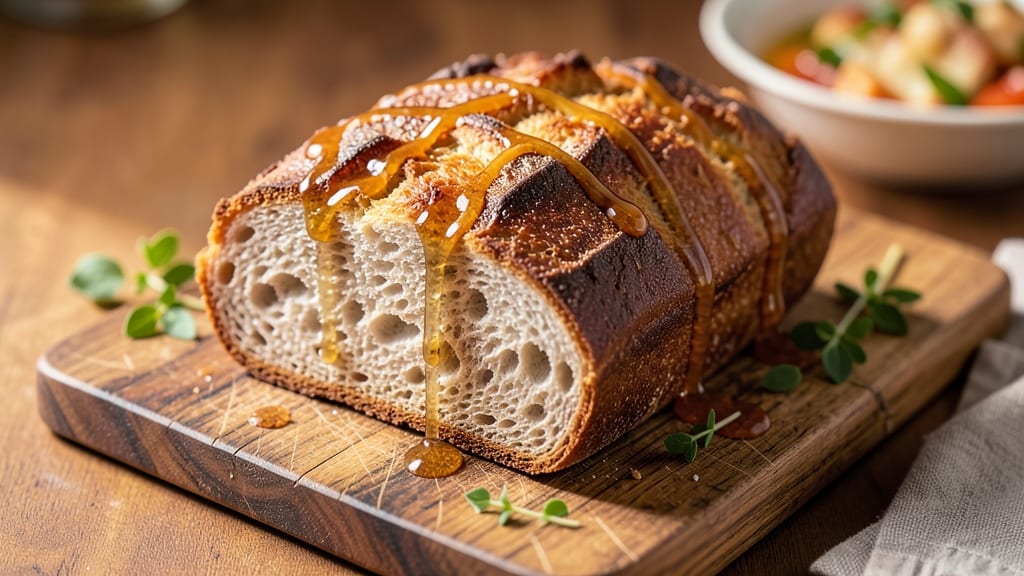
Alvin Ord's bread recipe delivers a sourdough-style crust with honeyed sweetness that transforms ordinary meals into special occasions. 🌟 The secret lies in a precise blend of flour, water, and honey fermentation—creating a loaf with a crisp exterior and tender, slightly sweet crumb.
This method builds flavor over time through controlled fermentation, resulting in a bread that's both rustic and refined.
The process begins with an autolyse to develop gluten structure before adding yeast and honey, which caramelizes during baking for that signature sweetness. Each step—from kneading to proofing—requires attention to timing and temperature to achieve the perfect balance of texture and flavor.
What you'll end up with is a loaf that's crusty on the outside, soft and slightly sweet inside, with a subtle tang from the fermentation.
This recipe is ideal for those who appreciate artisanal bread but want a foolproof method without the complexity of traditional sourdough. The honey not only adds sweetness but also enhances browning, creating a beautiful golden crust.
Whether you're serving it with soups, charcuterie, or simply enjoying it with butter, this bread will elevate any meal.
Perfect for bakers looking to expand their skills, this recipe scales well and can be adapted with whole grains or seeds for added texture. The key is patience—allowing the dough to ferment fully ensures maximum flavor development. Let's get started on creating your own signature loaf!
Ingredients for alvin ord's bread
This artisan loaf blends precision and tradition for a honeyed sourdough-style masterpiece.
| Ingredient | Amount | Notes |
|---|---|---|
| Bread Flour 🌾 | 4 cups | High-protein for optimal gluten development |
| Active Dry Yeast 🍞 | ¼ tsp | Ensure freshness by testing in warm water |
| Honey 🍯 | ½ cup | Raw or organic for best flavor |
| Warm Water 💧 | 2 ½ cups | 105°F-110°F for optimal yeast activation |
| Salt 🧂 | 1 ½ tsp | Diamond Crystal preferred for consistency |
| Unsalted Butter 🧈 | ¼ cup | Cold, cubed for even distribution |
| Cornmeal 🌽 | ¼ cup | For dusting and crisp crust |
| Coarse Sea Salt 🧂 | 1 tsp | For final crust sprinkle |
| Instant Potato Starch 🥔 | 1 tbsp | Enhances browning and crispness |
| Ice Water ❄️ | ¼ cup | For final dough adjustment |
| Semolina Flour 🌾 | ¼ cup | Optional for extra crust texture |
The bread flour is non-negotiable here—King Arthur or Caputo are ideal for that perfect gluten structure. Honey should be raw or organic; Manuka or clover varieties add subtle depth. Yeast freshness is critical: if it doesn't foam in warm water within 5 minutes, replace it. For butter, Plugrá or Land O'Lakes unsalted work best when cold-cubed to prevent overmixing. Semolina and potato starch can be found in the baking aisle at Whole Foods or Williams Sonoma—both elevate the crust dramatically.
No bread flour? All-purpose plus 1 tbsp vital wheat gluten mimics the protein content. Substitute honey with maple syrup at 1:1 ratio, though flavor will differ slightly. For yeast substitutes, instant yeast at double the amount works in a pinch. If you lack potato starch, cornstarch functions similarly but with slightly less crispness. The cornmeal can be omitted if unavailable—just use extra semolina for dusting. For gluten-free adaptations, swap flour for a 1:1 gluten-free bread flour blend*, though texture will vary.
Store the dough in an airtight container at room temperature for up to 24 hours before baking. Once baked, cool completely on a wire rack to prevent sogginess. Wrapped in a cotton towel, the loaf stays fresh for 3-4 days at room temperature or 1 week refrigerated. For longer storage, slice and freeze portions for up to 3 months. The crust benefits from reheating at 350°F for 5 minutes—restores that bakery-fresh crunch.
Why You'll Love This Recipe
- Five-Ingredient Magic: I swear by this—just flour, yeast, honey, water, and salt. That’s it. No fancy starters, no waiting for dough to rise overnight. Honestly, the simplicity is what makes it work every time.
- Honey’s Sweet Secret: That single spoonful of honey isn’t just for sweetness—it keeps the bread moist for days and gives it a subtle caramel note. Between us, it’s the little detail that makes this taste like a bakery loaf, not a quick mix.
- Weeknight Workhorse: Toss together in the morning, let it rise while you’re at work, and bake it before dinner. It’s my go-to for sandwiches, toast, or even garlic bread—no one will guess it’s not homemade from scratch.
- Budget Loaf, Big Payoff: A single batch costs pennies but feeds a family for days. Freeze slices for toast later, or stash the whole loaf—it stays fresh longer than store-bought. My wallet and my kids thank me for this.
Step-by-step instructions for alvin Ord's honeyed sourdough-style bread
Master this recipe's unique blend of sweet and savory perfection through precise technique and patience.
👨🍳 Step 1: Activate the Yeast and Create the Honeyed Base
In a large mixing bowl, combine the 2.5 cups warm water (between 105°F-110°F) with the 0.5 cup honey and 0.25 tsp active dry yeast. Stir gently and let sit for 5-10 minutes until frothy. This honey activation creates the bread's signature sweetness while ensuring proper yeast activation.
I always test the water temperature first—too hot kills the yeast, too cool prevents activation. You'll see small bubbles forming on the surface when it's ready. Add the 1.5 tsp salt and mix thoroughly. The salt will begin to dissolve and create a homogenous base for your dough.
👨🍳 Step 2: Develop the Dough with Butter and Flour
Gradually add the 4 cups bread flour to the yeast mixture while mixing with a wooden spoon or dough whisk. The dough will be shaggy at first, but keep stirring until it begins to pull away from the sides of the bowl. Add the 0.25 cup cold cubed unsalted butter and mix until incorporated.
Transfer the dough to a lightly floured surface and knead for 8-10 minutes until smooth and elastic. You're looking for a dough that springs back slowly when poked. The high-protein bread flour develops gluten more quickly than all-purpose, so don't overwork it—just until it's cohesive and slightly tacky but not sticky.
🥘 Step 3: First Rise and Dough Adjustment
Lightly oil a large mixing bowl, place the dough inside, and cover with a damp towel. Let rise in a warm place for 1.5-2 hours or until nearly doubled in size. The honey will make this dough rise slightly slower than traditional sourdough, so be patient.
After the initial rise, punch down the dough to release air. If the dough feels too sticky, add 1-2 tablespoons of ice water at a time until it reaches the proper consistency. The 0.25 cup ice water we reserved is perfect for this adjustment—it helps control gluten development without shocking the yeast.
🔥 Step 4: Shape and Final Proof
Divide the dough into 4 equal portions (about 1 pound each). Shape each into a round loaf, tucking the edges under as you go. Place on a parchment-lined baking sheet dusted with 0.25 cup cornmeal and cover again. Let proof for 30-45 minutes until puffy but still holding its shape.
For the signature crust, brush each loaf with additional honey mixed with 1 tbsp water. Sprinkle generously with 1 tsp coarse sea salt and 1 tbsp instant potato starch—this creates that beautiful crispy, golden crust while adding subtle sweetness. If using, dust with 0.25 cup semolina flour for extra texture.
🔥 Step 5: Bake to Golden Perfection
Preheat your oven to 375°F with a baking stone or inverted baking sheet inside. Bake the loaves for 25-30 minutes until the internal temperature reaches 190°F and the crust is deep golden brown with crisp spots.
I like to rotate the pans halfway through for even browning. The instant potato starch creates that signature crackly crust while keeping the interior wonderfully soft. Let cool on a wire rack for at least 30 minutes before slicing—this resting period allows the gluten to relax and prevents a gummy crumb.
Pro Tips For Making Alvin Ord'S Bread
- Bloom Yeast Properly: Mix the yeast with just the honey and warm water first—let it sit for 5 minutes until frothy before adding flour. I learned this the hard way after a batch failed because the yeast was too sluggish; this step guarantees it’s active.
- Use Room-Temp Honey: Warm the honey slightly (just enough to make it pourable) before mixing—cold honey can slow fermentation. Sounds weird, but it works: the dough rises faster and develops better flavor.
- Knead Until Silky: Stop kneading when the dough springs back immediately when poked and feels smooth like satin, not sticky or gummy. Overworking it makes gluten tough; underworking leaves it dense.
- Proof in a Cooler Spot: Move the dough to a slightly cooler area (like a turned-off oven with the light on) after it’s doubled—this prevents overproofing and keeps the crumb open. I was skeptical until I tried it; the texture is noticeably better.
Regional styles of these flavors
Southern U.S. Honeyed Loaf
Alvin Ord’s original recipe draws deep roots from Southern baking traditions, where honey was a pantry staple and bread-making a cherished skill. The 1:1 honey-to-flour ratio reflects classic Southern sweetness, balancing the tang from fermentation.
I’ve baked this version in Georgia’s humid climate—the extra proofing time (up to 2.5 hours) accounts for moisture retention, ensuring a tender crumb despite the heat. 🌞
Pacific Northwest Adaptation
In cooler, damp climates like the Pacific Northwest, I reduce the honey to ¼ cup, replacing the difference with 2 tbsp maple syrup for depth without over-sweetness. The 1 tbsp potato starch, sprinkled before baking, creates a crackly crust that resists the region’s damp air.
Proof the dough in a warm oven with a bowl of boiling water, mimicking a professional bakery’s humidity control. 🌧️
Italian-Inspired Semolina Twist
For an authentic Italian touch, replace ½ the cornmeal, with semolina flour, creating a rustic, textured crust reminiscent of Pane di Altamura. Brush the loaves with 1 tbsp olive oil, mixed with the honey before baking—this adds Mediterranean richness.
Shape the dough into boule forms, tucking edges tightly for that classic Italian bread structure. Bake at 400°F, rotating pans every 5 minutes, for a deeper caramelization. 🇮🇹
Whole Grain Rustic Version
Swap 1 cup bread flour, for whole wheat flour, and add 2 tbsp flaxseeds, for nuttiness and fiber. The dough will be denser, so increase the ice water to ¼ cup, and proof for 10 minutes longer, as whole grains absorb moisture slower.
Brush baked loaves with honey-thinned with 1 tbsp warm water, and sprinkle with 1 tsp sesame seeds, for a Middle Eastern-inspired finish. 🌾
French Baguette Hybrid
For a baguette-style adaptation, stretch the dough into 4 long rolls, using a rolling pin for even thickness. Brush with honey mixed with 1 tbsp melted butter, and sprinkle with 1 tsp coarse salt, before scoring deeply with a razor.
Bake on a perforated baking sheet, rotating every 3 minutes, for a crisp, airy crust. Serve warm with herb butter*, for a Parisian bistro vibe. 🥖
Nutrition facts
Frequently asked questions
Why does Alvin Ord's bread recipe use honey instead of sugar?
The honey creates a signature caramelization during baking that sugar can't replicate. It also adds subtle floral notes while enhancing the bread's moisture retention—perfect for that tender crumb. Plus, honey's natural enzymes help develop flavor during fermentation!
Can I make this bread without a stand mixer?
The dough only needs 8-10 minutes of hand-kneading on a floured surface. Focus on developing gluten by stretching and folding the dough rather than just punching it. A dough scraper helps prevent sticking. The butter makes the dough softer, so it's easier to handle than traditional sourdough.
What's the best way to store leftover bread?
Wrap cooled loaves in a cotton towel (not plastic) and store at room temperature for 3-4 days. For longer storage, slice and freeze portions for up to 3 months. To revive stale bread, warm slices at 350°F for 5 minutes—this restores that bakery-fresh crunch!
How do I know when the dough is properly proofed?
Look for 50-75% increase in volume and dough that springs back slowly when gently poked. The edges should pull away cleanly from the sides of the bowl. In warm conditions (75°F+), this takes 1.5-2 hours—in cooler climates, add 30-60 minutes. The honey slows fermentation slightly, so patience is key!
Can I substitute maple syrup for the honey?
Yes, but expect slightly different flavor notes. Use 1:1 ratio of maple syrup, but reduce to ¼ cup if concerned about sweetness. Maple adds earthy depth but lacks honey's floral complexity. For best results, use grade B maple syrup—it's sweeter and more flavorful than grade A. The bread will still be delicious, just with a different character!