
Side Dishes
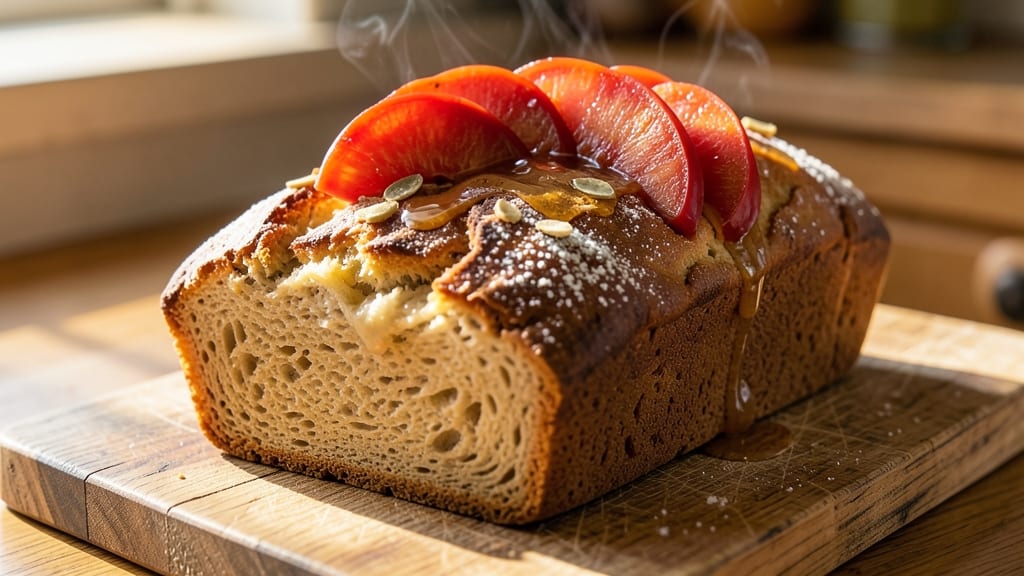
This American persimmon bread recipe delivers a perfect balance of spiced sweetness and buttery crust, with tender fruit swirls that melt in your mouth. 💛 The secret lies in using ripe persimmons—naturally sweet with a honey-like texture—that transform into a fragrant, caramelized center when baked.
Unlike store-bought loaves, this homemade version captures the true essence of fall harvest, with warm cinnamon and nutmeg notes that complement the fruit's rich flavor.
The recipe combines simple pantry staples with a few key techniques to ensure success. You'll start with a basic bread dough that's rolled out and topped with a spiced persimmon mixture, then folded into a golden loaf.
The buttery crust develops a crisp exterior while remaining soft inside, creating the ideal texture contrast. Perfecting the dough's consistency and baking time guarantees a loaf that's moist yet sturdy enough to slice cleanly.
What you'll end up with is a fragrant, spiced loaf that's perfect for breakfast or dessert—think warm slices slathered with butter, paired with morning coffee or afternoon tea.
The persimmons caramelize beautifully, creating pockets of sweetness throughout each bite. This bread keeps well for days, making it ideal for meal prep or gifting to neighbors.
For best results, use fully ripe persimmons that yield slightly when pressed—these will be sweet and smooth, not fibrous. If your fruit isn't quite ripe, don't worry; we'll show you how to properly prepare it for baking. Let's get started on this classic American fall treat!
Ingredients for american persimmon bread
Simple pantry staples meet fall's sweetest fruit—these 12 ingredients create a fragrant, golden loaf.
| Ingredient | Amount | Notes |
|---|---|---|
| All-Purpose Flour 🌾 | 4 cups | Sifted for light texture |
| Granulated Sugar 🍚 | ¾ cup | White or light brown |
| Unsalted Butter 🧈 | 1 cup | Cold, cubed for dough |
| Large Eggs 🥚 | 2 whole | Room temperature |
| Milk 🥛 | ½ cup | Room temperature |
| Active Dry Yeast 🍞 | 0.03 oz | 1 packet (2 1/4 tsp) |
| Ripe Persimmons 🍠 | 1 ½ cups | Peeled, mashed texture |
| Ground Cinnamon 🌿 | 2 tsp | Freshly ground preferred |
| Ground Nutmeg 🌿 | 1 tsp | Freshly grated if possible |
| Salt 🧂 | 1 tsp | Kosher or sea salt |
| Vanilla Extract 🌸 | 1 tsp | Pure vanilla preferred |
| Brown Sugar 🍚 | ¼ cup | Packed, for fruit mixture |
Persimmons are the star here. Look for fruit that's soft to the touch—like a ripe avocado—when shopping at Trader Joe's or Whole Foods. The flesh should be smooth and honey-like, not fibrous. If yours aren't ripe, place them in a paper bag with a banana for 2-3 days. For the dough, King Arthur flour is my go-to—it's reliable for bread baking. The butter should be cold when you start mixing, or you'll end up with a sticky mess. And don't skip the vanilla—it deepens the autumnal flavor.
No ripe persimmons? Substitute with 1.5 cups mashed apple or pear—just add a pinch more cinnamon to compensate. Running low on brown sugar? White sugar works in a pinch, though it won't caramelize as beautifully. The yeast packet is crucial—check the expiration date! If it's old, your bread might not rise properly. For a quicker version, you can use instant yeast at half the amount, but let it dissolve in the warm milk first. And if you're feeling fancy, swap the vanilla for 1 tsp vanilla bean paste for extra depth.
This bread keeps beautifully—3-4 days at room temperature wrapped in a towel, or 1 week refrigerated. For longer storage, freeze the loaf up to 3 months. The best part? It reheats perfectly—wrap a slice in foil and warm in a 200°F oven for 5 minutes. I always make two loaves—one for breakfast, one to gift. The persimmon mixture can be prepped a day ahead and stored in the fridge, saving you time on baking day.
Why You'll Love This Recipe
- No Fuss, Same Day: I swear, this bread comes together while you’re waiting for the oven to preheat. Mix the flour, sugar, and butter—just creaming and folding—then fold in those ripe persimmons (peeled and mashed, no fancy tools). By the time you’re cracking eggs into the milk, the dough’s ready for the pan.
- Sweet Without Syrup: That natural persimmon flavor cuts through the richness of the butter and sugar—no artificial sweetness here. The fruit’s honeyed depth shines through, especially when you toast a slice the next morning. Honestly, it’s the kind of bread that makes store-bought loaves taste like a chore.
- Breakfast or Picnic Hero: Slice it warm with butter for a lazy weekend breakfast, or pack it in lunchboxes—it holds up better than most quick breads. I’ve even used it as a base for French toast (trust me, it’s next-level). The texture stays moist for days, so it’s always ready for whatever you need.
- Pantry Staple, Zero Waste: You’re probably already using these ingredients—flour, sugar, butter, eggs, milk—so no extra shopping. And if your persimmons start to soften before you’re ready, toss them in this instead of letting them go bad. Between us, this is the kind of recipe that turns grocery money into comfort gold.
Step-by-step instructions for American persimmon bread
This spiced fruit swirl bread delivers a perfect balance of tender crumb and buttery crust—every bite is pure comfort.
👨🍳 Step 1: Prepare the Yeast Mixture and Fruit Filling
In a small bowl, combine the 0.5 cup milk with 0.25 cup brown sugar and warm it until it reaches 110°F—just warm to the touch but not hot. Sprinkle the 0.025 oz active dry yeast over the warm milk mixture and let it sit for 5 minutes until foamy. This activates the yeast and ensures your bread rises properly.
While the yeast works, peel and mash the 1.5 cups ripe persimmons until smooth. In a separate small bowl, mix the mashed persimmons with 1 tsp vanilla extract, 2 tsp ground cinnamon, and 1 tsp ground nutmeg. Set this fruit mixture aside—it's the star of your swirl!
🍳 Step 2: Mix the Dough and Knead Until Smooth
In a large mixing bowl, combine the 4 cups all-purpose flour, 0.75 cup granulated sugar, 1 tsp salt, and the yeast mixture. Using a wooden spoon, stir until the dry ingredients are fully incorporated and you have a shaggy dough. Add the 2 whole large eggs and 1 cup cold unsalted butter (cut into cubes) to the bowl.
Switch to your hands and knead the dough for 8-10 minutes until it's smooth and elastic. You'll know it's ready when it springs back when poked. If the dough feels too sticky, add 1-2 tablespoons flour at a time until it comes together nicely. This kneading develops the gluten, giving your bread that perfect structure.
🥘 Step 3: Shape the Dough and Add the Fruit Swirl
Lightly flour a clean surface and divide the dough in half. Roll each half into a 12x8-inch rectangle, about ¼-inch thick. Spread the persimmon fruit mixture evenly over one of the rectangles, leaving a ½-inch border around the edges. Roll up the dough tightly from the long side to create a log.
Seal the seam by pinching the dough together, then roll the log in your hands to smooth out any lumps. Place the sealed log seam-side down in a greased 9x5-inch loaf pan. Cover the pan with a clean kitchen towel and let the dough rise in a warm place for 1-1.5 hours or until it's puffed and reaches the top of the pan. This rising step is crucial for that light, airy texture.
🔥 Step 4: Bake to Golden Perfection
Preheat your oven to 350°F while the dough rises. When the dough has doubled in size, brush the top with a bit of milk to create a golden crust. Bake for 50-55 minutes until the bread is deep golden brown and a toothpick inserted in the center comes out clean. The bread should smell heavenly—like warm cinnamon and ripe fruit.
Remove the bread from the oven and let it cool in the pan for 10 minutes before transferring it to a wire rack. This resting period prevents the bread from collapsing as it cools. Once cooled, slice and serve warm with butter or cream cheese—every slice will reveal that beautiful persimmon swirl!
Pro Tips For Making American Persimmon Bread
- MEASURE PERSIMMON PUREE PRECISELY: I learned this the hard way—using too much persimmon puree makes the bread dense and gummy. Stick to 1 cup max (or the recipe’s exact amount) and weigh it if possible; those little jars of puree are heavier than you’d think.
- CREAM COLD BUTTER FIRST: Skip the soft butter shortcut. Grate the cold butter into the flour—it creates more surface area and lifts the crumb better than cutting it in with a fork. (Yes, it looks like tiny butter snowflakes at first, but trust the process.)
- DON’T OVERMIX THE DOUGH: After adding the milk, stop mixing the second the flour disappears. Overworking it develops gluten, and this bread’s magic is in its tender, cake-like crumb. Two turns of a spatula is all you need—no need to chase the last bit of flour.
- BAKE UNTIL THE CENTER HITS 205°F: The recipe might say "golden brown," but that’s not enough. Use a thermometer—205°F ensures the middle is fully set without drying out. If you skip this, the bread will taste underbaked and gummy. (I know, I know, but it’s worth the extra 5 minutes.)
Troubleshooting perfect results
Dense Dough Issues
If your dough feels too thick or sticky after kneading, you likely added too much flour. The ideal consistency should be smooth and slightly tacky but not wet. I recommend using a digital kitchen scale for accuracy—measure flour by weight (450g) rather than volume to avoid overestimating.
If the dough sticks to your hands, wet them slightly and keep kneading. Remember, the dough should spring back when poked, not flatten immediately. 💫
Under-Risen Bread
Bread that doesn't rise properly often means the yeast was inactive or the environment wasn't warm enough. First, check your yeast's expiration date—old yeast won't activate. Warm the milk to 110°F (not hotter) and let the yeast sit for 5-10 minutes until foamy.
Place your dough in a warm spot (80°F) for rising, like near the oven with the light on or on top of a proofing basket. If it still doesn't rise, try adding 1 tsp sugar to the yeast mixture for extra activation.
Fruit Not Swirling
The persimmon filling might be too watery or not spread evenly, causing it to leak out during baking. For a perfect swirl, ensure your persimmons are fully ripe (no fibrous texture) and mash them thoroughly. Spread the filling evenly on one dough rectangle, leaving a ½-inch border—this prevents leaks.
If the filling still separates, chill the dough for 30 minutes before rolling to firm it up. For extra stability, brush the top with egg wash after shaping to help hold the swirl in place.
Dry or Crumbly Texture
Over-baking or using too much flour during kneading can result in a dry, crumbly loaf. The bread is done when it reaches 190°F internal temperature and a toothpick comes out clean. If yours turns out dry, try adding 1-2 tablespoons milk or melted butter to the dough during kneading.
For future batches, reduce flour by ¼ cup and increase kneading time to 10-12 minutes to develop gluten properly. A humidifier in your kitchen can also help maintain moisture during baking.
Uneven Baking
Hot spots in your oven can cause one side of the bread to bake faster than the other. Rotate the loaf pan halfway through baking (after 25 minutes) for even browning. If your oven runs hot, reduce the temperature to 325°F and bake for 60-65 minutes.
For a foolproof method, use an oven thermometer to verify your oven's actual temperature—many ovens are inaccurate by 25°F or more. A dark-colored loaf pan also helps absorb heat more evenly for consistent browning.
Persimmon Filling Too Tart
Unripe persimmons can make your filling taste bitter or astringent. Always choose fruit that's soft like a ripe avocado—it should yield slightly when pressed. If your persimmons aren't ripe enough, place them in a paper bag with a banana for 2-3 days to speed up ripening.
For extra sweetness, add 1-2 tablespoons honey or maple syrup to the filling. If the tartness persists, balance it with a pinch more cinnamon or nutmeg, which complement the fruit's natural flavors beautifully. 🌶️
Nutrition facts
Frequently asked questions
What's the best way to tell if American persimmons are ripe for baking?
Press gently—they should feel soft like a ripe avocado with no resistance. The skin may darken slightly, and when cut open, the flesh should be smooth and honey-like. If they're still firm, place them in a paper bag with a banana for 2-3 days to speed up ripening.
Can I substitute persimmons with other fruits in this recipe?
Yes! For a similar texture, try 1.5 cups mashed apple or pear—just add an extra ½ tsp cinnamon to enhance the spice notes. Avoid citrus fruits as they'll make the dough too acidic. If using peaches, reduce the sugar by 2 tablespoons since they're naturally sweeter.
Why does my persimmon bread turn out dense instead of light?
Over-kneading or adding too much flour are common culprits. The dough should be smooth but slightly tacky—like playdough. Use a kitchen scale for 450g flour (not scooped cups) and knead for exactly 8-10 minutes. Also check your yeast is fresh and the milk was 110°F when activating it.
How long can I store this bread, and how do I revive stale slices?
Wrap cooled loaves in a towel and store at room temperature for 3-4 days, or refrigerate for 1 week. For longer storage, freeze for up to 3 months. To revive stale slices, wrap them in foil and warm at 300°F for 5-7 minutes—they'll taste fresh-baked again!
What's the secret to getting that perfect golden crust?
Brush the risen dough with a light egg wash (1 egg + 1 tbsp milk) before baking for maximum shine. For extra color, sprinkle with coarse sugar right before the final 10 minutes of baking. A dark-colored loaf pan also helps create that classic bakery-style crust.