
Side Dishes
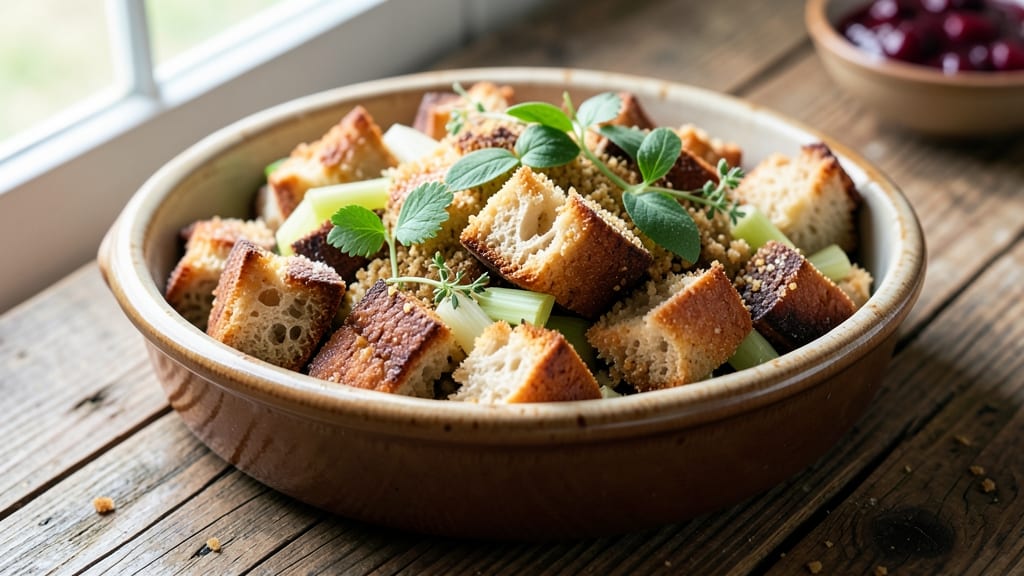
This Amish bread stuffing recipe delivers the comforting, herby crumb that makes Thanksgiving tables shine—just like Grandma used to make, but with a modern twist. 💛 The secret lies in cubed sourdough and rye bread, toasted to golden perfection, then infused with fresh sage, thyme, and savory celery.
It’s the kind of dish that transforms ordinary meals into something special, with a texture that’s crispy on the edges and tender in the center.
The beauty of this recipe is its simplicity: no fancy ingredients, just wholesome staples that come together in one oven dish. You’ll start by drying out the bread cubes thoroughly—this is non-negotiable for that ideal crumb—then build layers of flavor with aromatic vegetables and rich chicken broth.
The result? A stuffing so fragrant it’ll have everyone asking for seconds before it even hits the table.
What sets this apart is the balance of herbs and spices—just enough sage for that classic Amish touch, but with fresh thyme and parsley to brighten the flavor. The bread’s natural tanginess pairs perfectly with the savory notes, creating a harmony that’s both nostalgic and satisfying.
Whether you’re hosting a holiday feast or just craving comfort food, this stuffing delivers restaurant-quality results with minimal effort.
For extra depth, consider adding cooked sausage or a splash of apple cider to the broth, but the base recipe stays true to tradition while being foolproof for home cooks.
Ready in about 45 minutes, it’s the perfect side to complement roasted turkey, ham, or even a simple weeknight dinner. Let’s get started!
Ingredients for amish bread stuffing
Wholesome bread, aromatic herbs, and savory broth create this nostalgic, restaurant-quality stuffing.
| Ingredient | Amount | Notes |
|---|---|---|
| Sourdough Bread 🍞 | 6 cups | Cubed, crusts removed |
| Rye Bread 🍞 | 2 cups | Cubed, crusts removed |
| Fresh Sage Leaves 🌿 | ½ cup | Chopped finely, stems removed |
| Fresh Thyme Leaves 🌿 | ¼ cup | Chopped finely |
| Fresh Parsley Leaves 🌿 | ¼ cup | Chopped finely |
| Celery Stalks 🥬 | 3 whole | Diced finely, stringy kind |
| Yellow Onion 🧅 | 1 whole | Diced finely |
| Unsalted Butter 🧈 | ½ cup | Cold, cubed |
| Chicken Broth 💧 | 2 cups | Low-sodium preferred |
| Eggs 🥚 | 2 whole | Beaten lightly |
| Salt 🧂 | 1 ½ tsp | Kosher or sea salt |
| Black Pepper 🌶️ | 1 tsp | Freshly ground |
| Garlic Cloves 🧄 | 3 cloves | Minced finely |
| Olive Oil 🫒 | 1 tbsp | For greasing pan |
The bread is the foundation—sourdough and rye give that perfect tangy crumb, but any sturdy bread works in a pinch. Whole grain or crusty loaves add texture, while French bread stays soft. For the herbs, fresh is ideal, but dried works at one-third the amount. Penzeys or bulk bins at Whole Foods have the best quality. Sage is non-negotiable for that classic Amish flavor, but don’t overdo it—start with the amount listed and adjust to taste. Celery and onion should be the stringy, flavor-packed kind—not the baby varieties—for maximum savor.
No fresh sage? Dried sage at one-third the amount is fine, but it lacks that bright, piney aroma. Substituting butter with vegetable shortening keeps it crispy, though it won’t taste as rich. For a vegetarian twist, swap chicken broth for vegetable broth plus a splash of apple cider. The eggs bind everything together—don’t skip them, but beat them just until combined to avoid dense stuffing. If you’re prepping ahead, toast the bread cubes and store them in an airtight container with a silica packet to keep them dry overnight.
This stuffing reheats beautifully—450°F for 20-25 minutes until golden and crispy. For make-ahead magic, assemble the stuffing in a baking dish, cover with foil, and refrigerate overnight. Bake straight from the fridge, adding 10-15 extra minutes to the cooking time. Leftovers? Store in an airtight container for 4-5 days, or freeze for up to 3 months. The texture changes slightly after reheating, but it’s still delicious—just add a splash of broth to revive it.
Why You'll Love This Recipe
- No Stale Bread Waste: I keep a bag of day-old sourdough and rye in my freezer just for this—no sad, rubbery loaves ending up in the trash. Toss in whatever stale bread you have; the recipe actually needs that slight dryness for perfect texture.
- Herb-Packed Punch: That trio of fresh sage, thyme, and parsley? It’s like a little green hug in every bite. I swear, the sage alone makes this stuffing taste like it belongs in a fancy restaurant—even though I’m baking it in my grandmother’s cast-iron skillet.
- Weeknight & Holiday Hero: Make a double batch on Sunday, and you’ve got Thanksgiving leftovers for sandwiches and soup all week. (Yes, even on a Tuesday night.) It’s the one side dish that works for both casual dinners and big gatherings—no stress, just flavor.
- Pocketbook-Friendly Luxury: Rye and sourdough stretch farther than fancy bread, and fresh herbs feel special without breaking the bank. I’ll be real: this tastes like a $20 meal but costs me $8 for the whole family. That’s my kind of magic.
Step-by-step instructions for Amish bread stuffing
Here's how to create a hearty, herb-infused stuffing with perfect texture and depth of flavor.
👨🍳 Step 1: Prepare the Bread Mixture
Preheat your oven to 350°F and grease a 9x13-inch baking dish with the 1 tablespoon olive oil. This ensures the stuffing won't stick and creates a crispy bottom layer. While the oven preheats, spread the 6 cups sourdough bread and 2 cups rye bread (cubed without crusts) on a large baking sheet.
Toast the bread cubes for 8-10 minutes until they're golden brown and completely dry. This step is crucial—it prevents a soggy stuffing later. Stir the cubes halfway through for even browning. Once toasted, transfer them to a large mixing bowl and set aside. The warm bread will help absorb the broth more effectively when we add it later.
🍳 Step 2: Sauté the Vegetable Base
In a large skillet over medium heat, melt the ½ cup cold cubed butter until it foams. Add the 1 whole yellow onion (finely diced) and 3 whole celery stalks (finely diced) to the skillet. Sauté for 5-6 minutes until the onion becomes translucent and the celery softens.
Add the 3 cloves minced garlic and cook for another 30 seconds until fragrant. You'll notice the kitchen fills with a warm, earthy aroma—this is where the foundation of your stuffing's flavor develops. Remove the skillet from heat and let it cool slightly before adding to the bread mixture. This prevents scrambling the eggs we'll add next.
🥘 Step 3: Combine All Ingredients
In the bowl with the toasted bread, pour in the sautéed onion and celery mixture. Add the ½ cup finely chopped fresh sage leaves, ¼ cup finely chopped fresh thyme leaves, and ¼ cup finely chopped fresh parsley leaves. Sprinkle over the 1½ teaspoons salt and 1 teaspoon freshly ground black pepper, then gently stir to distribute the herbs evenly.
In a separate bowl, lightly beat the 2 whole eggs until just combined but still slightly thick. Pour the eggs over the bread mixture and toss gently with a wooden spoon. The eggs will help bind everything together, creating that perfect crumbly-yet-moist texture. Add the 2 cups chicken broth gradually, tossing after each addition until the mixture is evenly moistened but not sopping wet.
🔥 Step 4: Bake to Golden Perfection
Transfer the stuffing mixture to the greased baking dish and spread it evenly. The stuffing should be about 1½ inches thick. Bake in the preheated 350°F oven for 30-35 minutes until the top is golden brown and the center reaches 165°F on an instant-read thermometer. If the top browns too quickly, tent it loosely with aluminum foil to prevent over-browning.
For extra crispiness, broil for 2-3 minutes at the end of baking time, watching closely to avoid burning. The stuffing should have a golden crust on top while remaining moist and flavorful inside. Let it rest for 5 minutes before serving to allow the juices to redistribute—this ensures every bite is perfectly moist.
Pro Tips For Making Amish Bread Stuffing
- Dry the bread properly: I learned this the hard way—skipping this step makes your stuffing turn into a soggy brick. Tear the sourdough and rye into 1-inch chunks, spread them on a baking sheet, and let them sit at 250°F for 15-20 minutes until completely dry but not crisp. (Yes, even if you're impatient like me.)
- Toast the herbs lightly: Fresh sage, thyme, and parsley lose their punch when drowned in liquid. Instead of tossing them raw, heat a dry skillet over medium-low and toast the herbs for 30 seconds until fragrant but still bright green. Chop them after topping to preserve that fresh aroma.
- Use a mix of bread textures: The sourdough adds chew, but rye brings depth—don’t overload either. Aim for a 2:1 ratio of sourdough to rye, and save a handful of the rye for topping. The contrast in crumb and flavor makes all the difference.
- Baste with broth, not water: Amish stuffing relies on that rich, savory broth, not plain water. After the initial bake, baste the top with reserved broth every 15 minutes. It keeps the outside crisp while the inside stays moist—no guesswork, just better flavor. (Your future self will thank you.)
Creative variations of these flavors
Herb Variations
Swap out the herbs for regional favorites! Try rosemary and bay leaves for a Mediterranean twist, or add fresh tarragon and chives for a French-inspired flavor. The Amish tradition often includes dried marjoram—use 1 tablespoon if you prefer a drier, more aromatic profile.
For a Southern touch, add ½ teaspoon smoked paprika to the broth before mixing. 🌿
Protein Additions
Boost the stuffing with ½ pound cooked sausage (brown or Italian) crumbled into the bread mixture. For a vegetarian option, fold in 1 cup cooked wild rice or ½ cup chopped mushrooms sautéed with the onions.
The sausage adds richness, while mushrooms bring an earthy depth that pairs beautifully with the herbs. Just reduce the broth by ¼ cup to maintain texture.
Sweet & Savory Twist
Add ½ cup dried cranberries or ¼ cup chopped dried apricots to the bread mixture for a festive sweetness that cuts through the richness. A splash of apple cider (¼ cup) in the broth adds subtle tartness and complements the herbs perfectly.
This variation works especially well for holiday meals but feels special enough for any gathering.
Gluten-Free Option
Use gluten-free bread (like a sturdy sourdough or cornbread blend) and ensure your broth is certified gluten-free. Replace the rye bread with 2 cups gluten-free cornbread cubes for extra texture.
The stuffing will still hold together well with the eggs and butter, but the crumb will be slightly denser. Test with a small batch first to adjust moisture levels.
Make-Ahead Magic
Assemble the stuffing in the baking dish up to 24 hours ahead and refrigerate covered. When ready to bake, add 2-3 tablespoons extra broth to compensate for moisture loss, then bake as directed.
For freezer prep, bake the stuffing, cool completely, wrap tightly in foil, and freeze for up to 3 months. Reheat at 350°F for 20-25 minutes until warmed through.
Nutrition facts
Frequently asked questions
Can I use day-old bread for this recipe?
Day-old bread is actually ideal because it's already dried out, which helps prevent a soggy stuffing. Just cube it and skip the toasting step—this saves time while maintaining perfect texture. For fresh bread, toasting is essential to remove moisture.
How do I keep the stuffing from getting soggy?
The key is thorough drying: toast the bread cubes until golden and crisp, then let them cool completely before mixing. Use two eggs as binders (not more) and add broth gradually. For extra insurance, bake the stuffing alongside the main dish—its heat will keep everything dry.
What's the best way to reheat leftovers?
Spread leftovers in a baking dish, cover with foil, and reheat at 350°F for 20-25 minutes until warmed through. For crispier results, broil for 2-3 minutes at the end. Add 1-2 tablespoons broth if the texture seems dry—this revives the moisture without making it soggy.
Can I make this stuffing without eggs?
Yes, but texture may be crumbly. Replace the eggs with 2 tablespoons cold water plus 2 tablespoons cornstarch mixed into the broth. For extra binding, add ½ cup cooked rice to the bread mixture. The stuffing will still hold together, though it won't be as cohesive as with eggs.
Why does my stuffing taste bland?
Fresh herbs are crucial—dried herbs lose potency. Double-check your measurements: ½ cup fresh sage (not ½ teaspoon dried) makes a difference. Also, let the sautéed onions and celery cook until deeply caramelized (about 8-10 minutes) to develop flavor. A pinch of smoked paprika or extra black pepper can rescue mild batches.