
Side Dishes
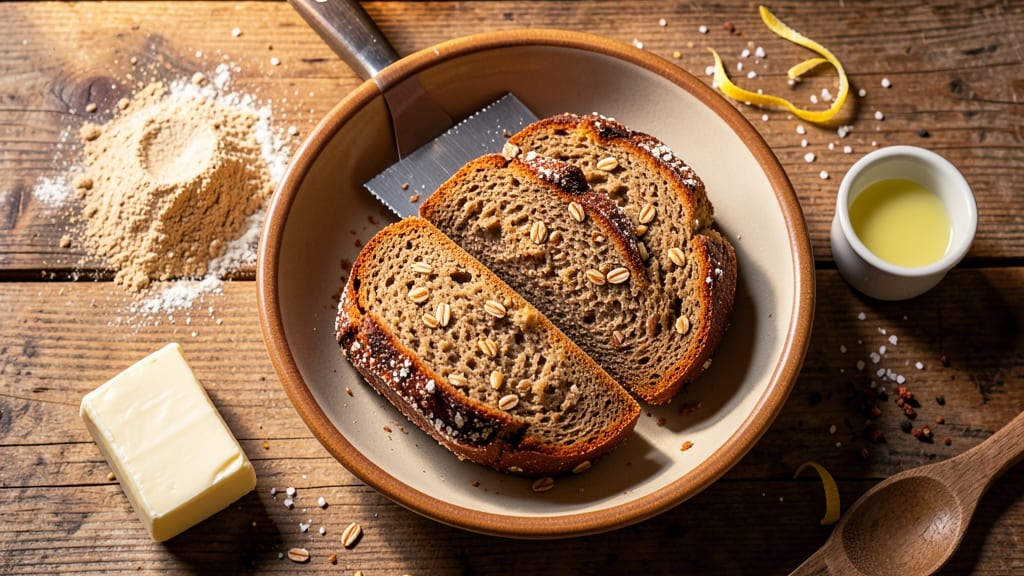
The Amish oatmeal bread recipe delivers that perfect balance of rustic crust and chewy, nutty crumb that makes every slice irresistible. 🌾 This time-honored recipe brings the warmth of Amish baking traditions to your kitchen, using simple ingredients like oats and whole wheat flour for a hearty, wholesome loaf.
The secret lies in the slow fermentation process that develops deep, comforting flavors—think warm cinnamon and nutmeg notes that linger with every bite.
What sets this bread apart is its foolproof technique that ensures a dense yet tender crumb with a golden, crackly crust. No fancy equipment is needed—just a standard loaf pan and a little patience for the dough to rise naturally.
The oats add a satisfying texture, while the addition of honey or molasses (depending on your preference) enhances the bread's natural sweetness without overpowering its rustic charm.
By the time it emerges from the oven, you’ll have a loaf that’s perfect for breakfast with butter and jam, paired alongside soups, or served as a side for hearty meals.
The aroma alone will fill your home with the comforting scent of freshly baked bread, making it a staple for any kitchen. Ready to bake?
This recipe scales beautifully for gatherings, and the dough can even be prepped ahead for a hands-off baking experience. Let’s get started on creating your own homemade loaf that tastes like a slice of tradition.
Ingredients for amish oatmeal bread
Simple pantry staples transform into rustic Amish oatmeal bread with golden crust and nutty crumb.
| Ingredient | Amount | Notes |
|---|---|---|
| Old-Fashioned Rolled Oats 🌾 | 1 cup | Steel-cut or quick oats work too |
| All-Purpose Flour 🌾 | 3 ½ cups | Unbleached preferred for rustic flavor |
| Whole Wheat Flour 🌾 | 1 ½ cups | Adds hearty texture and nuttiness |
| Active Dry Yeast 🍞 | ¼ oz | 1 packet or 2 1/4 tsp |
| Granulated Sugar 🍚 | ¼ cup | Light brown sugar for deeper flavor |
| Unsalted Butter 🧈 | ½ cup | Cold, cubed for best texture |
| Milk 🥛 | 1 cup | Warm to 110°F for yeast activation |
| Large Egg 🥚 | 1 whole | Room temperature for even mixing |
| Honey 🍯 | ¼ cup | Or molasses for deeper sweetness |
| Ground Cinnamon 🌿 | 1 tsp | Freshly ground preferred |
| Ground Nutmeg 🌿 | ½ tsp | Freshly grated for warmth |
| Salt 🧂 | 1 ½ tsp | Diamond Crystal preferred |
| Water 💧 | ½ cup | Warm, not hot |
The oats and whole wheat flour are the heart of this bread—Bob's Red Mill or Quaker Old-Fashioned are my go-tos for consistent texture. If you can't find steel-cut oats, quick oats work perfectly fine. For the yeast, Fresh & Easy or Saf-Instant are reliable brands that activate quickly. The butter should be cold when you add it to the dough; this creates those beautiful flaky layers. If your kitchen gets warm, chill the dough for 30 minutes before shaping. And for the honey, local raw honey adds extra depth of flavor, but any variety works in a pinch.
No honey? Molasses or maple syrup will give you that same rich sweetness. Running short on whole wheat flour? Substitute with more all-purpose flour, but reduce the salt by half a teaspoon to balance the flavor. Freshly ground spices make all the difference here—if you've got whole cinnamon sticks or nutmeg, toast and grind them yourself. For the milk, any variety works, but whole milk gives the best texture. If you're in a hurry, evaporated milk works too, just add a splash of water to thin it out. And if your bread turns out too dense, next time let the dough rise 15 minutes longer—patience pays off with this recipe.
This dough keeps beautifully in the fridge for up to 2 days if wrapped tightly in plastic. For longer storage, freeze shaped loaves for up to 3 months—just thaw overnight at room temperature before baking. The bread reheats wonderfully in a 350°F oven for 10 minutes wrapped in foil, or you can toast slices for that fresh-from-the-oven crunch. I always bake two loaves—one for breakfast and one to freeze for lazy mornings. The aroma alone will wake up your whole house, so set a timer if you're easily distracted by that warm bread smell.
Why You'll Love This Recipe
- No-Knead Magic: I swear by this recipe when I’m too tired to fuss—just mix the dough with rolled oats and yeast, let it rise overnight, and bake. The texture is chef’s kiss: tender crumb with that satisfying chew from the oats, no stand mixer required.
- Sweet-Savory Flex: Here’s what sold me—it’s the same dough whether I sweeten it with sugar for breakfast toast or skip it for savory sandwiches. That whole wheat and oat combo gives it depth, so it works with jam or peanut butter or even a grilled cheese.
- Weeknight Workhorse: Between us, this bread is my secret weapon for lazy mornings and last-minute guests. Bake a loaf on Sunday, and you’ve got toast, French toast, or grilled cheese covered all week. Honestly, I’ve even used it to sop up chili when I forgot to make cornbread.
- Pantry-Friendly Staples: No fancy ingredients here—just flour, oats, and yeast, which means it’s budget-friendly and always doable. I’ve made it with store-brand flour when my good stuff ran out, and it still turned out solid. Plus, the leftovers? Perfect for croutons or breadcrumbs.
Step-by-step instructions for Amish oatmeal bread
Here's how to craft that signature rustic crust and chewy nutty crumb—every slice packed with oat goodness.
👨🍳 Step 1: Activate the Yeast and Prepare the Oatmeal Base
In a small bowl, combine the 0.25 oz active dry yeast, 0.25 cup granulated sugar, and 0.5 cup warm water (around 110°F). Let it sit for 5-10 minutes until foamy—this proves your yeast is alive and ready to work. While waiting, pulse the 1 cup old-fashioned rolled oats in a food processor until they resemble coarse meal. This texture is key for that signature chewy crumb.
I always use a food processor for this step because it ensures even consistency. If you don't have one, you can grind the oats by hand with a rolling pin, but it takes more elbow grease. The goal is to break down the oats while preserving some texture—think of it as creating oat flour with slight texture variation.
🍳 Step 2: Mix the Wet Ingredients and Combine with Dry
In the bowl of a stand mixer fitted with the dough hook attachment, combine the 0.5 cup cold cubed unsalted butter, 1 cup warm milk, 1 whole large egg, and 0.25 cup honey. Mix on medium speed for 2 minutes until the butter is fully incorporated and the mixture is smooth. This step creates the foundation for your dough's rich flavor and tender texture.
In a separate large bowl, whisk together the 3.5 cups all-purpose flour, 1.5 cups whole wheat flour, 1 tsp ground cinnamon, 0.5 tsp ground nutmeg, and 1.5 tsp salt. With the mixer running on low speed, gradually add the dry ingredients to the wet mixture. Once combined, add the activated yeast mixture and the ground oats. Mix on low speed for 3-4 minutes until a shaggy dough forms.
🥘 Step 3: Knead Until Smooth and Elastic
Switch to the dough hook attachment and knead the dough for 8-10 minutes on medium speed until it becomes smooth, elastic, and springs back when gently pressed. You'll know it's ready when it pulls away cleanly from the sides of the bowl and forms a windowpane when stretched thin.
This kneading time is crucial—it develops the gluten structure that gives Amish oatmeal bread its signature chewiness. If your kitchen gets warm, you might need to knead for an extra minute or two. The dough should be slightly tacky but not sticky. If it's too sticky, add 1 tablespoon of the all-purpose flour mixture you set aside earlier.
⏰ Step 4: First Rise and Shaping
Lightly grease a large bowl with oil or butter, then place the dough inside. Cover with a clean kitchen towel and let it rise in a warm place for 1-1.5 hours, or until it has nearly doubled in size. I like to place the bowl on top of my oven with the light on—this creates a warm, consistent environment without overheating.
Once the dough has risen, punch it down to release the air, then turn it out onto a lightly floured surface. Divide the dough into two equal portions and shape each into a 12-inch round. For shaping, I use the "stretch and fold" method: gently stretch the dough outward while folding it toward the center to create surface tension. This helps create that beautiful rustic crust we're after.
🔥 Step 5: Second Rise and Bake to Golden Perfection
Place the shaped loaves on parchment-lined baking sheets, cover with kitchen towels, and let them rise for another 30-45 minutes until puffy. Preheat your oven to 375°F with a baking stone or inverted baking sheet on the lower rack—this creates steam for that coveted crust.
Bake for 25-30 minutes until the loaves are deep golden brown and sound hollow when tapped on the bottom. The internal temperature should reach 190-200°F. For that authentic Amish look, I like to make a few shallow slashes on top with a sharp knife just before baking—this helps control expansion and creates those beautiful crust patterns.
Let the bread cool on a wire rack for at least 30 minutes before slicing. This resting period allows the crumb to set properly, preventing a gummy texture. The result should be a rustic crust with a chewy, nutty interior that's perfect for toast or sandwiches.
Pro Tips For Making Amish Oatmeal Bread
- Toast the Oats First: Skip the raw oatmeal texture—lightly toast your rolled oats in a dry skillet over medium heat for 5-7 minutes until golden and fragrant. This deepens the nutty flavor and prevents that gummy, undercooked bite in the bread. (Yes, even if you’re impatient like me, don’t rush this—it’s the thing that matters most.)
- Use Warm Water for Yeast: Mix your active dry yeast with warm (not hot) water—around 110°F—and let it sit for 5 minutes until foamy before adding it to the dough. Cold water kills yeast; hot water cooks it. I learned this the hard way when my first batch of Amish oatmeal bread turned out dense and flat.
- Knead Just Until Smooth: Resist the urge to overwork the dough—knead by hand or mixer for about 8-10 minutes, or until the dough pulls away from the bowl and feels slightly springy. Whole wheat flour dries out faster, so less is more here. Over-kneading makes the bread tough, and nobody wants that.
- Shape Loaves Tightly: Roll the dough into logs and tuck the ends under firmly—this keeps the loaves from spreading too much in the pan. A loose shape leads to a sad, misshapen loaf. My grandmother swore by this, and she was right: the tighter the shape, the better the rise and texture.
Flavor customization for these flavors
Sweet vs. Savory
This classic recipe leans sweet, but you can easily adapt it to savory with a few simple swaps. For a savory loaf, replace the honey with 1 tablespoon olive oil and omit the cinnamon and nutmeg.
Instead, add 1 teaspoon dried rosemary and ½ teaspoon garlic powder to the dry ingredients. The oats and whole wheat will still provide that satisfying texture, while the herbs add depth. 🌿
Spiced Variations
Want to kick up the warmth? Add ½ teaspoon ground cloves or ¼ teaspoon cardamom alongside the cinnamon and nutmeg. For a citrus twist, zest 1 orange and mix it into the wet ingredients.
The bright acidity cuts through the richness of the butter and honey, adding a fresh dimension. I love this variation for breakfast—it’s like a cozy hug in bread form.
Nutty Enhancements
For extra crunch and nuttiness, fold in ½ cup chopped walnuts or pecans during the final kneading stage. Toast them lightly in a dry pan first to deepen their flavor. If you prefer seeds, ½ cup sunflower or pumpkin seeds work beautifully too.
Just be sure to pulse them briefly in the food processor first to keep them evenly distributed in the dough.
Herb-Infused Twist
Fresh herbs elevate this bread to new heights. Add 2 tablespoons finely chopped fresh rosemary or thyme to the dry ingredients for a fragrant, earthy note. For a brighter profile, mix in 1 tablespoon lemon zest with the herbs.
The herbs pair especially well with the savory version, but they also work in sweet loaves if you’re feeling adventurous. ✨
Whole Grain Boost
Swap out ½ cup of the all-purpose flour for ½ cup rye flour or ½ cup spelt flour to add even more depth. These flours contribute a slightly tangy, hearty flavor that complements the oats perfectly.
If you’re using rye, reduce the yeast by ¼ teaspoon—it’s denser and may need a little less lift. The result is a bread with even more complex, rustic character.
Dairy-Free Adaptation
For a dairy-free version, replace the butter with ½ cup coconut oil (solid) or ½ cup vegan butter, and use unsweetened almond milk instead of regular milk. The coconut oil adds a subtle sweetness that pairs well with the honey, while almond milk keeps the dough tender.
Just be sure to let the coconut oil come to room temperature first for even mixing.
Nutrition facts
Frequently asked questions
Can I make this bread without a stand mixer?
This recipe works perfectly by hand. After combining your wet and dry ingredients, turn the dough out onto a lightly floured surface and knead for 10-12 minutes by hand until smooth and elastic. Use your knuckles to press and fold the dough—this builds the same gluten structure as a mixer. Just be prepared for a bit more arm work during the kneading process.
Why does my dough smell yeasty but isn't rising?
This usually means your yeast didn't activate properly or your kitchen is too cold. First check your yeast—it should foam within 5-10 minutes when mixed with warm water and sugar. If not, your yeast may be expired. Try placing your dough in a warmer spot (like near the oven light) or cover it with a warm towel to help it rise. Also ensure your water was 110°F—too hot kills yeast, too cold slows it down.
How do I store leftovers to keep them fresh?
Wrap cooled loaves tightly in plastic wrap or place in an airtight container at room temperature for 2-3 days. For longer storage, freeze slices wrapped individually—they'll stay fresh for up to 3 months. To revive, toast frozen slices in a 375°F oven for 5-7 minutes or until crispy. The bread actually tastes better toasted after freezing!
What's the best way to reheat sliced bread?
For that fresh-baked taste, wrap slices in foil and warm in a 350°F oven for 5-7 minutes. For quick reheating, use a toaster or toaster oven—just 2-3 minutes until golden. Microwaving works in a pinch (15-20 seconds), but it makes the bread gummy. The oven method gives you that perfect crust texture every time.
Can I substitute steel-cut oats for rolled oats?
Yes, but you'll need to adjust the texture. Steel-cut oats are much coarser and won't grind as finely, so pulse them in a food processor until they resemble coarse meal—about 1-2 minutes. This maintains the bread's chewy texture. If you can't grind them, use ½ cup steel-cut oats plus ½ cup quick oats instead. The flavor will be slightly nuttier with steel-cut oats.