
Side Dishes
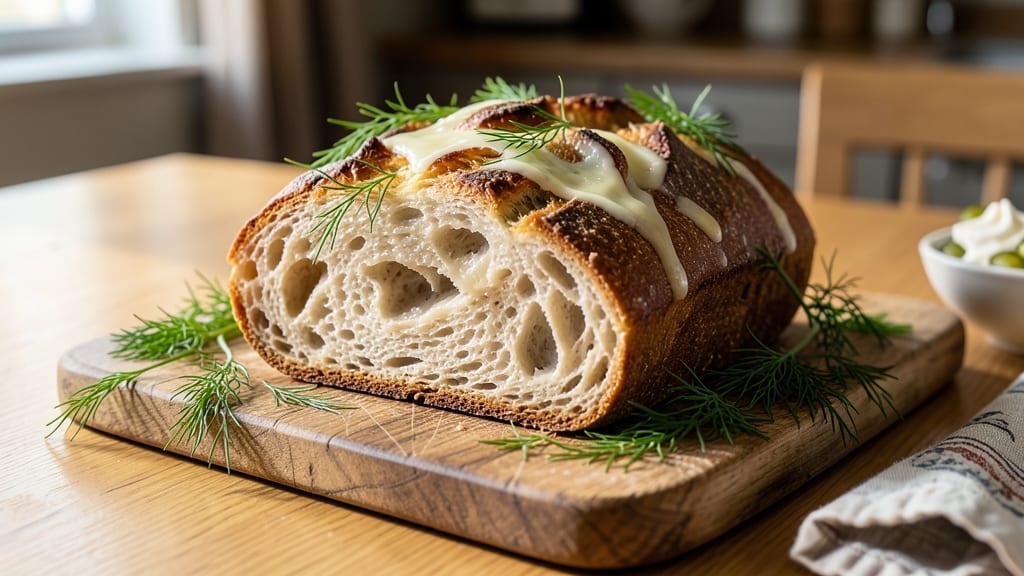
This artisan dill bread recipe delivers a flaky crust and airy interior with every bite—perfect for elevating any meal. 💛 The secret lies in a precise balance of flour, yeast, and fresh dill, combined with a gentle kneading technique that develops gluten without overworking the dough.
I've refined this recipe over years of baking, ensuring the dill's bright, herby notes shine through while maintaining that classic bread texture.
The process begins with a simple dough that transforms through two proofing stages—the first allows the yeast to activate fully, while the second creates that signature rise.
Shaping the dough into a round loaf and scoring the top before baking not only enhances the bread's visual appeal but also ensures an even bake with a crispy, golden crust.
The dill, mixed into both the dough and as a topping, adds layers of flavor that make this bread stand out.
What you'll achieve is a loaf with a crust that crackles and a crumb so tender it practically melts in your mouth. The aroma alone—warm, herby, and inviting—will have everyone at your table reaching for seconds.
This bread pairs beautifully with soups, salads, or simply on its own with butter, making it a versatile addition to any meal.
Whether you're a seasoned baker or new to the craft, this recipe is designed to be foolproof while delivering restaurant-quality results. The key is patience during proofing and baking, allowing the dough to develop its full potential. Let's get started on creating your perfect loaf.
Ingredients for artisan dill bread
Four cups flour, fresh dill, and a touch of butter—everything you need for restaurant-quality dill bread at home.
| Ingredient | Amount | Notes |
|---|---|---|
| All-Purpose Flour 🌾 | 4 cups | Plus 1 tbsp for dusting |
| Fresh Dill Weeds 🌿 | ½ cup | Finely chopped, stems removed |
| Active Dry Yeast 🍞 | 1 package | 2.25 tsp or 1 packet |
| Granulated Sugar 🍚 | 1 tbsp | Feeds yeast for activation |
| Unsalted Butter 🧈 | ½ cup | Cold, cubed for dough |
| Large Egg 🥚 | 1 whole | Room temperature |
| Whole Milk 🥛 | ½ cup | Warmed to room temp |
| Kosher Salt 🧂 | 1 ½ tsp | Diamond Crystal preferred |
| Extra-Virgin Olive Oil 🫒 | 2 tbsp | Plus extra for brushing |
| Cornmeal 🌽 | ¼ cup | For dusting baking sheet |
| Sesame Seeds 🌾 | 1 tbsp | Optional for topping |
The flour is your foundation. King Arthur or Gold Medal work best—they've got the protein to develop that perfect gluten structure. Fresh dill is non-negotiable here (the good stuff, not the pre-packaged kind)—pick it up at Whole Foods or your local market where they cut it fresh for you. If you're buying whole dill weeds, just snip off the stems and chop the leaves. For the butter, grab Plugrá or Land O'Lakes unsalted—they're reliable and cold straight from the fridge. The yeast? Saf-Instant is my go-to because it doesn't need proofing in water first. Keep it in the freezer until you're ready to use it—it lasts forever that way.
No fresh dill? Dried dill at half the amount works in a pinch, but honestly, it won't have that same bright flavor. Short on butter? Olive oil or coconut oil will keep the dough from being too dry, but you'll lose that rich flavor. Using whole milk? Warm it up in the microwave for 20 seconds—just enough to take the chill off. The cornmeal is optional but helps create that crispy bottom crust. If you're feeling fancy, add poppy seeds or everything bagel seasoning along with the sesame seeds for extra crunch. And trust me on the egg—room temperature makes all the difference in a tender crumb.
This dough is a two-stage proofing beast, so plan ahead. The first rise should take about 1-2 hours until doubled. After shaping, the second rise is where the magic happens—45-60 minutes until puffy. Don't rush it! Store the dough in the fridge overnight for even better flavor (it's worth the extra wait). Once baked, let the bread cool completely before slicing—at least 1 hour. Keeps wrapped at room temp for 2 days, or freeze the whole loaf for up to 3 months. Toasting revives stale slices like magic.
Why You'll Love This Recipe
- No-Knead Magic: I swear by this—just mix, let it rise, and bake. The yeast does all the work while you sip coffee or scroll through your phone. No stand mixer, no fancy techniques, just flour, butter, and a little patience.
- Dill So Good: That bright, fresh dill flavor cuts through everything—rich soups, creamy spreads, or just toasted with butter. Honestly, the first time I pulled a slice from the oven, my whole kitchen smelled like a Greek taverna.
- Weeknight & Holiday: Same dough, endless uses. Serve it warm with dinner, freeze slices for quick toast later, or pack it for picnics. Between us, it’s my go-to for potlucks because it’s always a crowd-pleaser.
- Budget-Friendly Luxury: Butter and fresh dill might sound fancy, but they stretch far. A single batch feeds four, and leftovers toast up perfectly—no sad, dried-out bread here. Plus, you’re using pantry staples, not specialty ingredients.
Step-by-step instructions for artisan dill bread
Here's how to create a bread with fragrant dill-infused crust and light, airy crumb every time.
👨🍳 Step 1: Activate the Yeast and Mix the Dough
In a small bowl, combine the 0.5 cup whole milk with the 1 tbsp granulated sugar and 1 package active dry yeast. Let it sit for 5-10 minutes until frothy—that's your signal the yeast is alive and ready to work. This step is crucial because dormant yeast won't create that perfect rise.
In a large bowl, whisk together the 4 cups all-purpose flour and 1.5 tsp kosher salt. Make a well in the center and pour in the yeast mixture along with the 1 whole large egg and 0.5 cup cold unsalted butter. I like to use my hands here—it's more tactile and helps develop the gluten. Mix until a shaggy dough forms, then add the 0.5 cup finely chopped fresh dill weeds. The dill will infuse the entire loaf with its bright, aromatic flavor.
👨🍳 Step 2: Knead Until Smooth and Elastic
Turn the dough onto a lightly floured surface and knead for 8-10 minutes until smooth and elastic. You'll know it's ready when it springs back slowly when poked. I press down gently—if it bounces back quickly, it needs more time. This kneading develops the gluten structure that gives bread its chewy texture.
Shape the dough into a round ball, then place it back in the bowl. Cover with a damp towel and let it rise in a warm place for 1-1.5 hours or until doubled in size. I usually place my oven light on for 5 minutes to create a warm environment—this helps the dough rise faster. The dill will release its oils during this time, creating that signature herbed aroma.
🔥 Step 3: Shape and Proof the Dough
Once the dough has risen, punch it down gently to release air, then divide it into four equal pieces. Roll each piece into a log shape, about 8 inches long. Here's a pro tip: keep the ends slightly tapered—that's where the bread will expand most during baking, creating those beautiful, rounded tops.
Place the dough logs on a baking sheet dusted with 0.25 cup cornmeal. Cover again and let them proof for another 30-45 minutes until puffy. The cornmeal creates a barrier that prevents sticking and gives the bread a rustic texture. Brush the tops with 2 tbsp extra-virgin olive oil and sprinkle with 1 tbsp sesame seeds for that perfect crunchy crust.
🔥 Step 4: Bake Until Golden and Crisp
Preheat your oven to 375°F with a baking stone or inverted baking sheet inside—this creates steam that gives the bread its signature oven spring. Bake the bread for 25-30 minutes until the crust is deep golden brown and sounds hollow when tapped on the bottom. The dill-infused crust should be fragrant and slightly crispy.
Let the bread cool on a wire rack for at least 20 minutes before slicing. This resting time allows the crumb to set properly and prevents a gummy texture. The internal temperature should be 190°F when done—use an instant-read thermometer for accuracy. The aroma of freshly baked dill bread will fill your kitchen, and each slice will reveal that perfect balance of herbed crust and airy interior.
Pro Tips For Making Artisan Dill Bread
- Chill the Dough: After your first rise, pop the dough in the fridge overnight—yes, even if you’re eager to bake. I used to rush straight to shaping and baking, but cold fermentation develops deeper flavor and makes the dill aroma pop. Trust me, the wait makes the bread worth it.
- Chop Dill Fine: Skip the whole stems—chop the fresh dill into tiny pieces, almost like confetti. Big chunks get soggy and unevenly distributed, while fine dill weaves into every bite. Use a sharp knife or pulse in a food processor for consistency.
- Don’t Overwork the Butter: When mixing in softened butter, handle it gently—just until it’s incorporated, not creamed into the dough. Overworking it turns the bread dense. My grandmother’s trick: fold it in like you’re tucking in a blanket, not kneading it into submission.
- Steam the First 10 Minutes: Place a metal tray on the oven rack before baking and add boiling water when you put the bread in. The steam guarantees a crisp, golden crust instead of a dry top. I learned this the hard way—my first batch looked pale and sad without it.
Best sauces and condiments for this recipe
Classic Garlic-Herb Spread
This bread pairs beautifully with a garlic-herb spread that complements its dill notes. Mix ½ cup softened butter with 3 minced garlic cloves, 1 tbsp chopped fresh dill, 1 tsp lemon zest, and ½ tsp salt.
Spread on warm slices while still on the baking sheet—it melts into the crust for an irresistible finish. 🌿
Smoked Salmon Cream Cheese
For a luxurious pairing, blend 8 oz cream cheese with ½ cup sour cream, 1 tbsp fresh dill, 1 tsp white miso paste, and ½ tsp black pepper. Top with thinly sliced lox or Nova-style salmon and a sprinkle of everything bagel seasoning.
The tangy cream cheese balances the bread's herby crust while the salmon adds a touch of elegance.
Whole Grain Mustard Drizzle
Elevate your bread with a whole grain mustard drizzle—just whisk 2 tbsp Dijon mustard with 1 tbsp honey and 1 tbsp extra-virgin olive oil. Drizzle over slices before serving, then add a dollop of herbed goat cheese for a sophisticated contrast.
The mustard's sharpness cuts through the bread's richness, while the honey adds subtle sweetness.
Spicy Honey Butter
For a sweet-and-spicy kick, melt ½ cup butter with 2 tbsp honey and ½ tsp cayenne pepper. Brush onto warm bread slices and top with crumbled feta cheese and extra dill.
The cayenne adds a gentle heat that enhances the dill's brightness, while the feta introduces a salty tang. This combo is perfect for breakfast or as a snack with cheese boards. 🔥
Lemon-Yogurt Dip
A light and refreshing lemon-yogurt dip brightens up every bite. Mix ½ cup Greek yogurt with 1 tbsp lemon juice, 1 tsp honey, ½ tsp salt, and 1 tbsp chopped dill.
Serve with slices of bread as a dip or spread it on sandwiches. The yogurt's creaminess balances the bread's crusty texture, while the lemon keeps it fresh and vibrant.
Olive Tapenade Topping
Add Mediterranean flair with a simple olive tapenade. Blend 1 cup pitted Kalamata olives, 2 tbsp capers, 1 tbsp olive oil, 1 garlic clove, and 1 tbsp chopped dill. Spread on toasted bread slices and finish with a sprinkle of flaky sea salt.
The briny olives and capers create a bold contrast to the bread's herby aroma, making it a standout appetizer or snack. ✨
Nutrition facts
Frequently asked questions
Can I use dried dill instead of fresh?
You can substitute dried dill, but use only ¼ cup (half the amount of fresh) and crush it lightly between your fingers to release the flavor. Fresh dill gives a brighter, more vibrant taste that really shines in this bread. If you must use dried, look for high-quality culinary dill flakes—not the cheap grocery store variety.
Why did my bread turn out dense instead of fluffy?
Dense bread usually means one of three things: the yeast wasn't active (test it in warm water first), you over-kneaded the dough (stop when it springs back slowly), or the proofing time was too short. For best results, use a warm spot for proofing (like an oven with the light on) and let the dough rise until it's doubled in size.
How can I make this bread without a stand mixer?
No problem! Knead the dough by hand on a lightly floured surface for 8-10 minutes, pressing and folding the dough away from you. Use the heel of your hand to push down and pull the dough toward you—this builds gluten just like a mixer would. The key is consistency: keep the surface floured to prevent sticking.
Can I add other herbs to this recipe? Try adding 1 tbsp chopped parsley or ½ tsp caraway seeds for extra depth. For a Mediterranean twist, mix in 1 tsp dried oregano with the dill. Just
How do I store leftover dill bread?
Wrap the cooled loaf tightly in plastic wrap or place it in an airtight container to keep it fresh for 2-3 days at room temperature. For longer storage, freeze the whole loaf (up to 3 months)—thaw at room temperature before serving. Toasting revives stale slices perfectly, restoring that crispy crust.