
Side Dishes
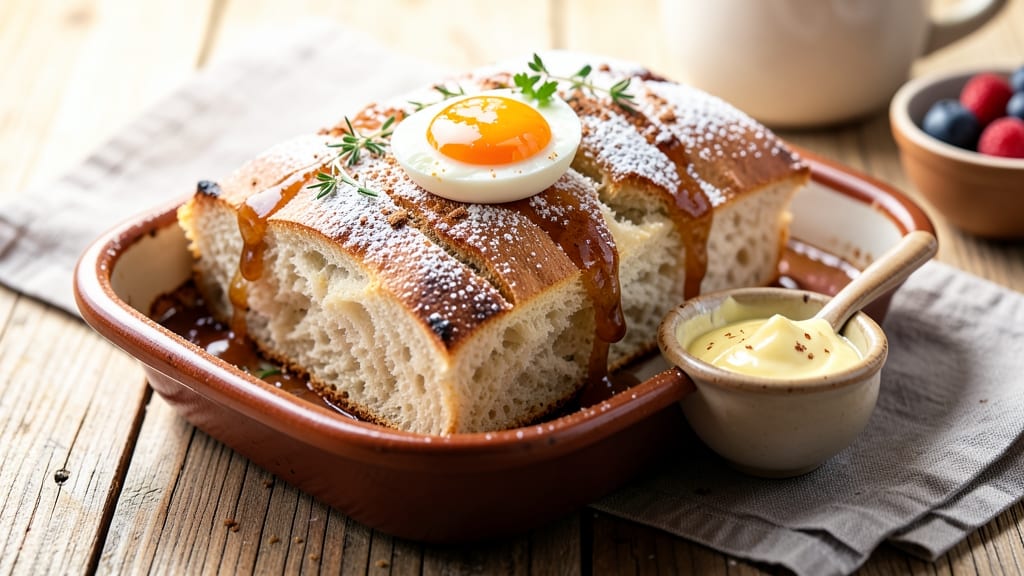
This Azorean sweet bread recipe brings the sun-drenched flavors of Portugal’s Azores straight to your kitchen with its signature cinnamon-spiced swirls and golden, buttery crust. 🌟 The secret lies in the perfect balance of warm spices and tender dough, traditionally shaped into either deep-fried malasadas or baked pão dourado—both equally addictive.
I’ve perfected this recipe over years of baking, ensuring every bite delivers that comforting, slightly crispy exterior with a soft, pillowy center.
The dough is enriched with eggs and a touch of sugar, creating a delicate texture that absorbs the aromatic blend of cinnamon and anise—classic Azorean flavors that make this bread irresistible.
Whether you choose to fry the dough for a crispy finish or bake it for a lighter version, the result is a dish that’s as much about tradition as it is about taste.
The dough requires a rest to develop flavor, and the shaping is simple but precise, making it approachable for home bakers.
What makes this recipe truly special is its versatility. Serve the sweet bread warm with a dusting of powdered sugar for breakfast, or enjoy it as a dessert with a cup of coffee or tea.
The dough can also be shaped into rings or swirls, adding visual appeal to any table. Once you try this, you’ll understand why Azorean sweet bread is a beloved staple at festivals and family gatherings across the islands.
Ready to bake? The process is straightforward, but the reward is unforgettable. Let’s get started on creating these cinnamon-spiced swirls that taste like a piece of the Azores.
Ingredients for azorean sweet bread
Sunshine flavors start with these 12 simple, spiced ingredients for Azorean sweet bread.
| Ingredient | Amount | Notes |
|---|---|---|
| All-Purpose Flour 🌾 | 4 cups | Sifted for light texture |
| Granulated Sugar 🍚 | ¼ cup | White or light brown |
| Active Dry Yeast 🍞 | 2 ¼ tsp | One packet for convenience |
| Large Eggs 🥚 | 2 whole | Room temperature preferred |
| Unsalted Butter 🧈 | ½ cup | Cold, cubed for easier mixing |
| Milk 🥛 | ½ cup | Whole milk for richness |
| Ground Cinnamon 🌶️ | 1 tbsp | Freshly ground for aroma |
| Ground Anise Seeds 🌿 | ½ tsp | Or 0.25 tsp anise extract |
| Salt 🧂 | ½ tsp | Diamond Crystal preferred |
| Vegetable Oil 🫒 | ½ cup | For deep-frying (or use butter) |
| Powdered Sugar 🍚 | ¼ cup | For dusting finished bread |
| Coarse Sugar 🍚 | ¼ cup | For rolling dough (optional) |
The cinnamon and anise are non-negotiable here—they’re the soul of Azorean flavor. Penzeys or bulk bins at Whole Foods have the best quality, but any good grocery store will do. For the dough, King Arthur flour is my go-to for that tender crumb, but all-purpose works fine. The butter matters too—use Plugrá or Land O’Lakes for that rich, European-style taste. If you’re deep-frying, Avocado oil has a higher smoke point than butter, but traditional recipes use butter for that signature flavor.
No anise seeds? Anise extract at half the amount works in a pinch, but the texture will be slightly different. Fresh yeast? Quick-rise yeast works too—just reduce to 1.5 tsp. For the milk, any kind works, but whole milk gives the best texture. The dough needs to rest for at least 1 hour, so plan ahead. If you’re baking instead of frying, brush the dough with egg wash (1 egg + 1 tbsp milk) for that golden crust. And trust me, the powdered sugar dusting at the end is worth the extra minute.
Dough keeps 2 days wrapped in the fridge, or freeze portions for 3 months. For frying, keep oil at 350°F—too hot and it burns, too cool and it’s greasy. Baked versions reheat beautifully in a 350°F oven for 5 minutes. I always make extra—I freeze dough balls and fry them fresh whenever cravings hit. The powdered sugar? Store it in an airtight container away from heat.
Why You'll Love This Recipe
- No-Knead Magic: I swear by this dough—just mix, let it rise, and watch it transform into something golden and pillowy. The butter and sugar work together like a dream, so you don’t even need to fuss over kneading.
- Buttery-Sweet Payoff: That first bite? Pure comfort. The eggs add richness, while the sugar caramelizes just enough to give it a subtle, warm sweetness—like a hug in bread form.
- Breakfast or Snack Hero: Use it for toast in the morning, French toast later, or even as a base for dessert. It’s my go-to for lazy mornings or when I need something quick that still feels special.
- Stays Fresh for Days: Make a batch on Sunday, and you’ll have something delicious all week. The yeast keeps it soft, and the butter seals in moisture—no sad, dry bread here. Plus, it’s cheap to make in bulk.
Step-by-step instructions for Azorean sweet bread
Here's how to make this fragrant, buttery bread with perfect swirls every time.
👨🍳 Step 1: Activate the Yeast and Mix the Dough
In a large bowl, combine the 0.5 cup milk with 0.25 cup granulated sugar and warm it to 110°F (it should feel warm to touch but not hot). Sprinkle the 2.25 tsp active dry yeast over the warm milk mixture and let it sit for 5-10 minutes until it becomes foamy. This tells you your yeast is alive and ready to work.
In a separate bowl, whisk together the 4 cups all-purpose flour, 1 tbsp ground cinnamon, 0.5 tsp ground anise seeds, and 0.5 tsp salt. Make a well in the center and pour in the yeast mixture along with the 2 whole large eggs and 0.5 cup unsalted butter (cold and cubed). Mix with a wooden spoon until a shaggy dough forms. Here's the thing—don't overmix or you'll develop too much gluten, which makes the bread dense instead of light and fluffy.
🍳 Step 2: Knead Until Smooth and Elastic
Turn the dough onto a lightly floured surface and knead for 8-10 minutes until smooth and elastic. You'll know it's ready when it springs back slowly when poked. If the dough feels sticky, add a teaspoon of flour at a time, but don't overdo it—too much flour makes the bread tough.
Shape the dough into a ball, place it back in the bowl, lightly oil the surface with 0.5 cup vegetable oil, cover with a damp towel, and let it rise in a warm place for 1-1.5 hours or until doubled in size. I like to place my oven on low heat with a bowl of hot water inside to create a warm, humid environment—this helps the dough rise evenly and quickly.
🥘 Step 3: Prepare the Filling and Shape the Loaves
While the dough rises, mix together 0.25 cup coarse sugar (if using) and 1 tbsp ground cinnamon in a small bowl. This will be your filling. Once the dough has risen, punch it down to release the air and divide it into two equal parts.
Roll each piece into a rectangle about 10x12 inches on a lightly floured surface. Sprinkle half of the cinnamon-sugar mixture evenly over one rectangle, then roll it up tightly from the long side. Seal the seam and pinch the ends to form a log. Repeat with the remaining dough and filling. Place the loaves seam-side down on a parchment-lined baking sheet.
🔥 Step 4: Proof and Bake to Golden Perfection
Cover the loaves with a damp towel and let them rise for another 30-45 minutes until puffy. Preheat your oven to 375°F while the loaves proof. Brush the tops with a bit of melted unsalted butter for that signature buttery crust. Bake for 25-30 minutes until the bread is deep golden brown and sounds hollow when tapped on the bottom.
For extra shine and flavor, brush the warm bread with melted butter mixed with 0.25 cup powdered sugar while still hot. Let it cool on a wire rack for 10 minutes before slicing—this prevents the bread from getting gummy. The aroma alone will have your kitchen smelling like a bakery in the Azores!
Pro Tips For Making Azorean Sweet Bread
- Soften Butter First: Azorean sweet bread needs butter that melts into the dough, not chunks that fight you. Take that cold stick out 30 minutes before mixing—room temp is your friend here, especially when folding in sugar later. I used to skip this, and my bread always had weird pockets of unmelted butter. Trust me, it’s worth the wait.
- Proof Yeast in Warm Milk: The recipe calls for yeast, but I’ve found it’s more reliable if you proof it in a little warm milk (or water) first. Mix the yeast with ¼ cup warm milk and 1 tsp sugar, let it bubble for 5 minutes—if it doesn’t, your dough will take forever to rise. This small step cuts down on flat, dense bread. (Yes, even if you’re impatient like me.)
- Knead Until Silky: Azorean sweet bread isn’t just about mixing—it’s about developing gluten. Knead until the dough is smooth and just slightly tacky, not sticky. If it’s too wet, add 1 tbsp flour at a time, but don’t overdo it. I learned this the hard way when my first batch turned out gummy instead of fluffy. Aim for 8-10 minutes by hand or until it passes the windowpane test.
- Brush with Egg Wash: That final golden crust isn’t just luck—it’s an egg wash. Whisk 1 egg with 1 tbsp water, brush it on the shaped dough before baking, and watch it turn into a glossy, caramelized masterpiece. Skip this, and you’ll end up with a dull, pale loaf. (Your future self will thank you.)
Best sauces and condiments for this recipe
Cinnamon-Butter Glaze
This signature glaze transforms Azorean sweet bread into a showstopper. Melt 2 tablespoons unsalted butter with 1 tablespoon powdered sugar and ½ teaspoon ground cinnamon in a small saucepan over low heat.
Brush the warm glaze over freshly baked bread while still hot—it caramelizes instantly for that glossy finish. 🌟 For extra richness, add 1 teaspoon heavy cream to the glaze mixture.
Honey-Lemon Drizzle
Brighten the sweetness with a zesty honey-lemon drizzle. Combine 2 tablespoons honey (I love Manuka honey for depth) with 1 teaspoon fresh lemon juice and ¼ teaspoon ground cinnamon.
Warm gently until smooth, then drizzle over sliced bread. The acidity cuts through the richness, balancing the flavors beautifully. This works especially well with baked versions of the bread.
Spiced Whipped Cream
Elevate your serving with spiced whipped cream. Whip ½ cup heavy cream to soft peaks, then fold in 1 teaspoon powdered sugar, ¼ teaspoon ground cinnamon, and a pinch of anise seeds (finely ground).
Pipe dollops alongside slices or use as a topping for deep-fried malasadas. The cream adds a luxurious texture that complements the bread’s buttery crust.
Orange Zest Compote
For a tangy contrast, simmer ½ cup orange juice with 2 tablespoons granulated sugar and 1 teaspoon grated orange zest until reduced by half. Cool and drizzle over warm bread slices.
The citrus notes refresh the palate and pair perfectly with the anise and cinnamon flavors. This compote also works as a filling for stuffed variations of the bread.
Chocolate-Dipped Variations
For a decadent twist, melt ½ cup dark chocolate (at least 60% cocoa) with 1 tablespoon coconut oil for smoothness. Dip half of each bread slice into the chocolate, then sprinkle with crushed hazelnuts or flaky sea salt.
Let the chocolate set before serving—this adds a sophisticated contrast to the sweet bread. 🍫 Perfect for dessert tables or special occasions!
Nutrition facts
Frequently asked questions
Can I make this Azorean sweet bread without anise seeds?
Yes! If you don't have anise seeds, substitute with 0.25 teaspoon anise extract or 0.5 teaspoon fennel seeds for a similar aromatic depth. The cinnamon will still shine through, but anise gives that signature Azorean warmth. For a milder flavor, omit it entirely—the recipe will still taste delicious, just slightly different.
Should I fry or bake this sweet bread?
Both methods work! Deep-frying creates crispy malasadas with a golden crust, while baking yields a lighter, more delicate pão dourado. For frying, use 350°F oil and fry 2-3 minutes per side until golden. Baking at 375°F for 25-30 minutes gives a tender interior. Choose based on your preference—fried is more indulgent, baked is lighter.
Why did my dough not rise properly?
Dough usually fails to rise if the yeast wasn't activated (check by testing in warm milk first) or the environment wasn't warm enough. Place your oven on low heat with a bowl of hot water inside to create a humid, warm space. Also, ensure your yeast is fresh—if it's older than 3-4 months, it may not work. Let the dough rise in a draft-free spot for 1-1.5 hours to see proper expansion.
How do I store leftover Azorean sweet bread?
Store baked bread in an airtight container at room temperature for 2-3 days or freeze for 3 months. For fried malasadas, keep them in a single layer on a cooling rack until fully cooled, then store in an airtight container. Reheat fried versions in a 350°F oven for 5 minutes or toast in a pan for crispiness. Baked bread reheats beautifully with a quick broil for 2 minutes.
Can I make this gluten-free?
Yes, but with adjustments! Replace the all-purpose flour with a 1:1 gluten-free baking flour blend (like Bob's Red Mill) and add ½ teaspoon xanthan gum. You may need to reduce the milk slightly to ¼ cup since gluten-free dough absorbs less liquid. Let the dough rest longer (2 hours) and handle gently to avoid overworking. The texture will be slightly denser but still delicious.