
Side Dishes
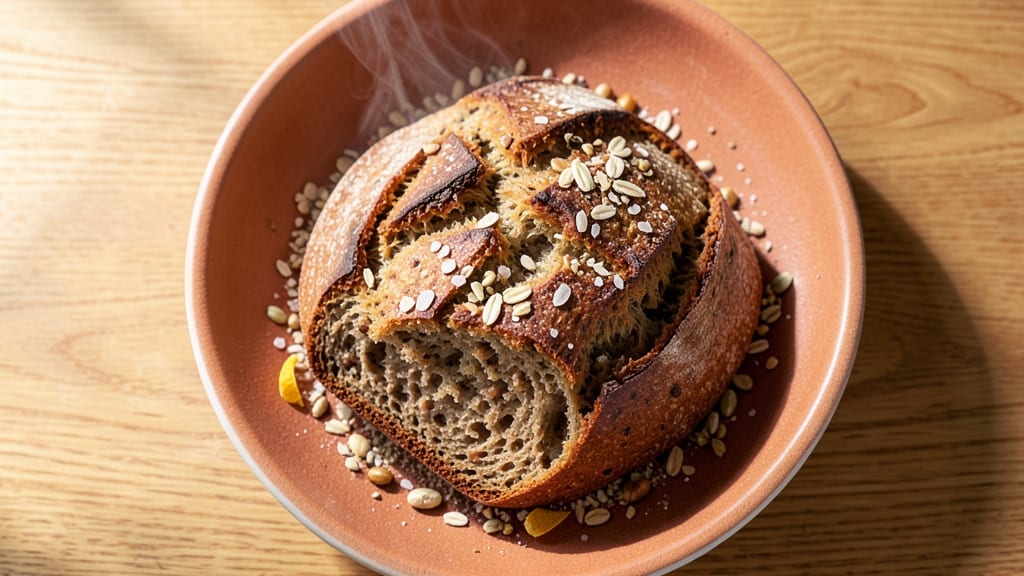
This 7-grain flour bread recipe delivers the perfect balance of hearty texture and wholesome nutrition—ideal for those who crave artisanal bread with a rustic crunch. The blend of seven whole grains creates a nutty, complex flavor that transforms ordinary meals into something special.
What makes this recipe stand out is its foolproof method for developing that signature crusty exterior while keeping the interior soft and airy.
Crafting this bread requires patience and precision, but the results are worth every minute. The dough incorporates a mix of whole wheat, rye, barley, and other grains for added fiber and protein, while proper hydration and kneading ensure a light yet sturdy crumb.
Fermentation is key—allowing the dough to rise slowly enhances flavor and texture, giving you bread that’s far superior to store-bought varieties.
Once baked, you’ll have a loaf with a golden, crispy crust that shatters satisfyingly, while the interior remains tender and slightly chewy. The nutty aroma alone makes it irresistible, perfect for serving with butter, jam, or alongside soups.
This bread also freezes beautifully, so you can enjoy fresh, homemade goodness whenever you need it.
Whether you’re a seasoned baker or just starting out, this recipe simplifies the process without sacrificing quality. The step-by-step instructions guide you through mixing, kneading, shaping, and baking—ensuring a perfect loaf every time. Let’s get started on creating your own wholesome, crusty masterpiece.
Ingredients for 7 grain flour bread
Seven flours blend for nutty richness and rustic texture—perfect for homemade artisan bread.
| Ingredient | Amount | Notes |
|---|---|---|
| Whole Wheat Flour 🌾 | 2 cups | King Arthur brand preferred |
| Rye Flour 🌾 | 1 cup | Dark rye for robust flavor |
| Barley Flour 🌾 | ½ cup | Ground from pearled barley |
| Spelt Flour 🌾 | ½ cup | Lightly toasted for nuttiness |
| Buckwheat Flour 🌾 | ⅓ cup | Rich, earthy flavor profile |
| Oat Flour 🌾 | ⅓ cup | Blended from rolled oats |
| Cornmeal 🌽 | ¼ cup | Fine grind preferred |
| Active Dry Yeast 🍞 | 2 ¼ tsp | Fresh yeast if available |
| Granulated Sugar 🍚 | 1 tbsp | For yeast activation |
| Unsalted Butter 🧈 | ½ cup | Cold, cubed for texture |
| Warm Water 💧 | 2 ½ cups | 105-110°F for yeast |
| Sea Salt 🧂 | 1 ½ tsp | Fine grain preferred |
| Honey 🍯 | 1 tbsp | Wildflower for depth |
| Cornstarch 🌾 | 1 tbsp | For dough strength |
| Sesame Seeds 🌻 | 1 tbsp | For crust decoration |
The flours are the heart of this bread, so buy them in bulk if possible—Bob's Red Mill or King Arthur are my go-tos. Look for stone-ground flours when you can; they’ve got more flavor. The buckwheat and rye add depth, but if you can’t find them, swap in extra whole wheat. For the yeast, check the expiration date—it’s the secret to that perfect rise. Warm the water to 105-110°F before mixing, or the yeast won’t activate properly. And trust me, don’t skip the honey—it feeds the yeast and adds subtle sweetness that balances the nuttiness of the grains.
No buckwheat flour? Substitute with extra whole wheat or spelt—it’ll still taste amazing. Running low on rye? Dark whole wheat works in a pinch. The butter can be swapped for vegan butter or coconut oil if needed, though it’ll change the flavor slightly. If you’re gluten-sensitive, this bread won’t be your best friend, but it’s still packed with fiber. For a lighter loaf, add an extra 0.25 cup of warm water if the dough feels too stiff. And if you’re making this ahead, pre-ferment the dough overnight for even deeper flavor—just like a sourdough starter but easier.
This dough is a beast—it needs time. Let it rise at least 2 hours (or overnight in the fridge) for that perfect texture. Store baked loaves wrapped in a clean kitchen towel for up to 5 days at room temp, or freeze for 3 months. To reheat, pop slices in a 350°F oven for 5-10 minutes until crispy again. The crust gets harder as it cools, so slice it fresh from the oven. And if you bake two loaves? Freeze one immediately—you’ll thank me later when you’re craving fresh bread on a lazy Sunday.
Why You'll Love This Recipe
- I’ll be real: buying specialty flours can feel pricey, but this recipe stretches further than white bread. A single batch feeds my family for days, and the grains add fiber and nutrients without breaking the bank. Plus, you’re not just feeding bodies—you’re feeding better bodies.
- No-Knead Magic: I swear by this—just mix the flours (whole wheat, rye, barley, spelt, buckwheat) with water and yeast, let it rise overnight, and bake. That’s it. No standing at the counter, no overworking the dough. The grains do all the heavy lifting.
- Earthy Depth: Honestly, the flavor is what makes this worth keeping in rotation. The buckwheat adds a nutty bite, the rye brings that tangy richness, and the spelt gives it a subtle sweetness. It’s not just bread—it’s a flavor experience that pairs with everything.
- Meal Prep MVP: Between us, this bread is my go-to for lunches. Toast it for breakfast, use it for sandwiches all week, or even make croutons. The dense texture holds up for days, and the mix of flours means it stays fresh longer than your average loaf.
Step-by-step instructions for 7-Grain flour bread
Transforming these seven flours into a crusty, nutritious loaf requires patience and precision.
Activate the Yeast for Maximum Rise
In a small bowl, combine the 2.5 cups warm water (tested at 105-110°F), 1 tbsp granulated sugar, and 2.25 tsp active dry yeast. Let it sit for 5-10 minutes until frothy—this confirms the yeast is alive and ready to work. I always check for bubbles before proceeding; if nothing happens, your yeast might be dead or the water too hot.
In a separate large bowl, whisk together the 2 cups whole wheat flour, 1 cup rye flour, 0.5 cup barley flour, 0.5 cup spelt flour, 0.33 cup buckwheat flour, 0.33 cup oat flour, and 0.25 cup cornmeal. This blend of flours creates a complex, nutty flavor profile that sets this bread apart. Add the 1 tbsp cornstarch to help strengthen the dough structure, preventing it from becoming too dense.
Mix the Dough and Develop the Gluten
Pour the yeast mixture into the dry ingredients and stir with a wooden spoon until combined. The dough will be thick and shaggy at first—this is normal. Add the 0.5 cup cold unsalted butter, cut into small cubes, and mix until incorporated. The butter adds richness and helps create a tender crumb.
Gradually add the 1.5 tsp sea salt and 1 tbsp honey, mixing until the dough begins to come together. Wet your hands and knead the dough on a lightly floured surface for 8-10 minutes until smooth and elastic. The gluten development is crucial here—you’ll know it’s ready when the dough springs back slowly when poked. If it feels too sticky, add a little more whole wheat flour, but don’t overdo it.
Let the Dough Rest and Rise
Place the dough in a lightly greased bowl, cover it with a damp towel, and let it rise in a warm place for 1-2 hours, or until it has doubled in size. This resting period allows the gluten to relax and the flavors to meld. I often place the bowl near the oven with the light on to create a warm, consistent environment. Avoid disturbing the dough during this time—patience is key to a light, airy loaf.
After the first rise, punch down the dough to release any air bubbles. Shape it into a round loaf and place it in a greased 9x5-inch loaf pan. Cover it again and let it rise for another 30-45 minutes, until it’s just above the rim of the pan. The dough should feel springy and jiggly when gently pressed. This second rise ensures a light texture and helps the bread expand properly in the oven.
Bake for a Crusty Exterior and Soft Interior
Preheat your oven to 375°F. Brush the top of the dough with a little water and sprinkle the 1 tbsp sesame seeds evenly over the surface for a decorative, nutty crunch. Bake for 35-40 minutes, until the bread is golden brown and sounds hollow when tapped on the bottom. The internal temperature should reach 190-200°F—this ensures it’s fully baked without drying out.
Remove the bread from the oven and let it cool in the pan for 10 minutes before transferring it to a wire rack. This resting period allows the steam to escape, preventing a gummy texture. Once cooled, slice into thick pieces to reveal a tender, open crumb with pockets of air—proof that your seven-grain blend worked its magic. Serve warm with butter or your favorite spread for the ultimate crusty, nutritious loaf.
Pro Tips For Making 7 Grain Flour Bread
- Sift the Buckwheat First: Buckwheat flour is dense and gritty—if you mix it in dry, it’ll clump like a stubborn lump of clay. Lightly sift it into the bowl before adding liquids, then whisk it into the wet ingredients. I learned this the hard way after pulling apart a dough that felt like sandpaper.
- Hydrate the Rye Separately: Rye flour absorbs water like a sponge, soaking up moisture faster than the rest. Mix it with just the yeast and warm water first, then let it sit for 10 minutes before combining with the other flours. This keeps your dough from turning into a gloopy mess.
- Skip the Over-Kneading: Seven-grain dough is delicate—knead it just until the ingredients come together (about 3-4 minutes by hand). Overwork it, and the barley and spelt will turn gummy. Stretch and fold instead; it’s gentler and builds structure without wrecking the texture.
- Proof in a Warm Drawer: Your kitchen’s too cold? Proof the dough in a turned-off oven with a bowl of hot water on the bottom—keeps it at a steady 80°F without baking the crust. I used to rush it on the counter, and the bread always came out dense. This guarantees a light, airy rise.
Essential equipment for 7 grain flour bread
Must-Have Mixing Tools
Start with a large stainless steel mixing bowl—I recommend the OXO Good Grips 5-quart—to handle the dense dough without sticking. A wooden spoon works best for initial mixing, but switch to a dough whisk for faster gluten development.
For kneading, use a well-floured surface or a stand mixer with a dough hook attachment (like the KitchenAid Artisan Series) to save your arms. 🌾
Precision Measuring Essentials
Accurate measurements are critical with seven flours. Invest in a digital kitchen scale (I use the OXO Good Grips) for precise gram measurements of each flour type. For liquids, a liquid measuring cup with clear markings ensures you hit the 2.5 cups warm water target.
A fine-mesh strainer helps sift flours evenly, preventing clumps that disrupt dough consistency.
Proofing and Rising Gear
Create an ideal proofing environment with a proofing box (like the Breville Proofing Box) or a simple DIY setup: place your dough bowl inside a turned-off oven with the light on. For shaping, a lightly greased 9x5-inch loaf pan (preferably Nordic Ware) prevents sticking.
A damp kitchen towel keeps dough moist during rises—don’t skip this step, or your crust will dry out prematurely.
Baking and Crust Control
Your oven needs a baking stone (like the Lodge Pre-Heat Baking Steel) to mimic a professional bakery’s heat distribution. A pizza peel helps transfer the dough to the stone without tearing.
For steam, place a small metal bowl of water on the lower rack during the first 10 minutes of baking—this creates that signature crusty exterior. A thermometer (like the Thermoworks Thermapen) ensures your bread reaches 190-200°F internally.
Cooling and Storing Setup
Let your bread cool on a wire cooling rack (I love the OXO Good Grips) to prevent sogginess. For storage, use an airtight container (like the Ziploc Bread Bag) to maintain freshness for up to 5 days.
A sharp bread knife (like the German-style sourdough knife) ensures clean slices without crushing the crumb. For freezing, wrap cooled loaves in plastic wrap followed by foil—this preserves moisture and texture for up to 3 months. 💡
Nutrition facts
Frequently asked questions
Why does my 7-grain bread dough feel too sticky?
This happens because whole grains absorb more moisture than white flour. Gradually add 1-2 tablespoons of whole wheat flour while kneading, but avoid overdoing it—too much can make the bread dense. If the dough is still too wet, try chilling it for 30 minutes before shaping to firm it up.
Can I substitute any of the flours if I can't find them?
Yes! For buckwheat flour, use extra whole wheat or spelt. If you're missing rye flour, dark whole wheat works well. Just reduce other flours by 1/4 cup total to maintain the right hydration. The flavor will change slightly, but the texture will stay similar.
How do I know when the bread is fully baked?
Look for three signs: the crust should be deep golden brown, it sounds hollow when tapped on the bottom, and the internal temperature reaches 190-200°F. If unsure, bake 5 more minutes—underbaked bread continues cooking as it cools.
Why did my 7-grain bread turn out dense instead of light? Density usually comes from underdeveloped gluten or insufficient rising time.
Can I make this bread without a stand mixer?
Knead by hand on a well-floured surface for 10-12 minutes until smooth and elastic. The extra effort develops gluten just as effectively. For tough spots, use the heel of your hand to press and fold the dough. Patience is key—don't rush this step!