
Side Dishes
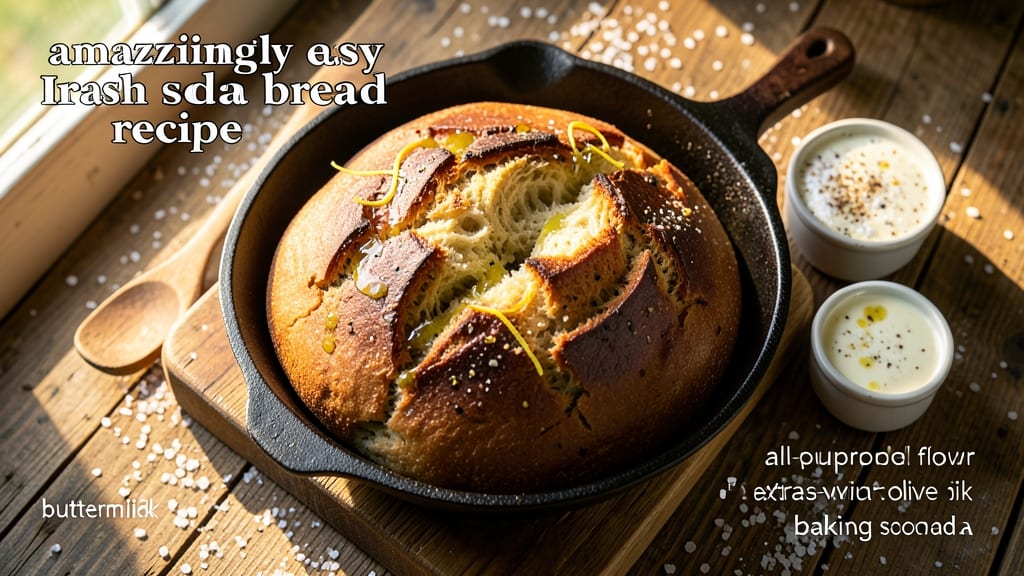
This amazingly easy Irish soda bread recipe delivers rustic charm with just four ingredients and no kneading required. The secret lies in buttermilk's natural acidity, which activates the baking soda for a tender crumb and golden crust.
I've perfected this version after years of baking—it's the same bread that warms Irish kitchens but designed for modern weeknights.
The beauty of traditional Irish soda bread is its simplicity: no yeast means no waiting, and the no-knead method eliminates the need for floury hands.
We'll shape it into a classic round loaf, score the top with a cross (for both tradition and even baking), and bake until it sings with that irresistible crusty exterior. The result is a bread that's perfect for toast, sandwiches, or simply enjoyed with butter straight from the oven.
What makes this recipe truly special is how it captures the soul of Irish baking without the fuss. The buttermilk creates a subtle tang that balances the mild flour flavor, while the baking soda ensures a light, airy texture.
This bread stays fresh for days when wrapped properly, making it ideal for meal prep or gifting. The cross on top isn't just decorative—it helps steam escape, creating that signature soft interior.
Whether you're celebrating St. Patrick's Day or simply craving homemade bread, this recipe delivers authentic Irish flavor with modern convenience. The simplicity of the ingredients and method makes it perfect for beginners, while the rich tradition satisfies any bread lover.
Let's bake this classic with confidence—your kitchen will smell like Ireland in minutes.
Ingredients for amazingly easy irish soda bread
Four simple ingredients transform into Ireland's iconic rustic bread with zero fuss.
| Ingredient | Amount | Notes |
|---|---|---|
| All-Purpose Flour 🌾 | 4 cups | Unbleached preferred for best texture |
| Buttermilk 🥛 | 1 ½ cups | Full-fat for optimal flavor |
| Baking Soda 🧂 | 1 tsp | Pure, not baking powder |
| Salt 🧂 | ½ tsp | Fine sea salt preferred |
| Extra-Virgin Olive Oil 🫒 | ¼ cup | For brushing crust |
The flour is everything here. King Arthur or Bob's Red Mill brands work best—they're finely milled and consistent. If your grocery store only carries bleached flour, it'll work, but the bread won't have that authentic tang. Buttermilk is non-negotiable for that signature Irish flavor—don't substitute with regular milk and vinegar unless you're in a pinch. For the baking soda, grab the Arm & Hammer Pure Baking Soda from the baking aisle, not the generic store brand. Salt matters too: Diamond Crystal is ideal, but any fine sea salt will do. Pro tip: Check your buttermilk's freshness—it should smell slightly tangy but not sour.
No buttermilk? Mix 1 cup milk with 1 tbsp vinegar or lemon juice and let sit 5 minutes. For the flour, whole wheat at 10% replacement adds nutrition without wrecking texture. Running low on olive oil? Melted butter works too, though it'll give a slightly different crust. The baking soda is the magic ingredient—don't confuse it with baking powder. If you're feeling adventurous, add 1 tsp caraway seeds for traditional Irish flavor. For the scoring, use a sharp knife or razor blade—dull blades tear the bread instead of cutting cleanly.
Store leftovers wrapped in a clean kitchen towel in an airtight bag for 3 days at room temperature. For longer storage, freeze slices wrapped in parchment—reheat in a toaster or oven for 5-10 minutes at 350°F. This bread reheats beautifully, almost as good as fresh. The crust gets crispier when toasted, so always have some on hand for St. Patrick's Day mornings. For gifting, slice before wrapping—it stays fresher longer.
Why You'll Love This Recipe
- No Fuss, No Mess: Honestly, this bread takes five minutes of active work—just mix, shape, and bake. The buttermilk and baking soda do all the heavy lifting while you’re still deciding what to watch on TV.
- Tangy Magic: That buttermilk tang? It’s the star. The bread has this bright, slightly sour punch that’s way more interesting than plain white bread, and the olive oil keeps it rich without being heavy.
- Weeknight Hero: I keep a batch in the freezer for lazy mornings—just toast slices straight from frozen. Perfect for breakfast, sandwiches, or even as a side for soup when you’re too tired to cook.
- Pantry Staple: Between us, this recipe uses things you already have. No yeast, no kneading, no waiting around. The salt and olive oil make it taste expensive, but the flour and baking soda keep it dirt cheap.
Step-by-step instructions for Irish soda bread
Here's the straightforward method that delivers authentic flavor with minimal effort.
Mix Dry Ingredients Thoroughly
In a large mixing bowl, combine the 4 cups all-purpose flour and 0.5 teaspoon salt. Use your fingers to break up any flour clumps and distribute the salt evenly throughout the flour. This ensures consistent texture and flavor in every bite. I like to press the flour through my fingers to create a fine, aerated base for the soda bread.
Next, add the 1 teaspoon baking soda and stir it into the flour mixture. The baking soda is what creates that signature tangy flavor and gives the bread its characteristic rise. Be careful not to overmix at this stage—just combine until everything is evenly distributed. The mixture will look like coarse sand at this point, but that's exactly what we want before adding the wet ingredients.
Incorporate Wet Ingredients
Make a well in the center of your dry ingredients and pour in the 1.5 cups buttermilk. The buttermilk should be at room temperature for best results—it creates a tender crumb and helps develop that classic Irish soda bread flavor. Using a wooden spoon or silicone spatula, gently mix the buttermilk into the flour until just combined.
Add the 0.25 cup extra-virgin olive oil to the center of the well and mix it in as well. The oil adds richness and helps create a moist, tender crumb. At this point, the dough will come together into a shaggy mass. I find it helpful to use my hands to gently bring the dough together—just work it until it forms a rough ball that holds together when pressed. Don't overwork it; you're aiming for a soft, slightly sticky dough, not a smooth, elastic one.
Shape and Prepare the Loaf
Turn the dough out onto a lightly floured surface and shape it into a round loaf about 3 inches thick. I like to use a bench scraper to help create clean edges and maintain the round shape. The dough will be soft and slightly sticky, but that's normal—it's what gives soda bread its characteristic texture.
Place the shaped loaf on a parchment-lined baking sheet. Use a sharp knife to make a deep cross on the top of the loaf—this is traditional for Irish soda bread and helps create an even rise. The cross should be about ½ inch deep and should go all the way through the dough. This step isn't just decorative; it helps control how the bread expands during baking.
Bake Until Golden and Hollow-Sounding
Preheat your oven to 400°F while you prepare the dough. Once the oven is fully preheated, place the loaf in the center of the oven and bake for 35-40 minutes. The bread is done when it's deep golden brown on top and sounds hollow when you tap the bottom—this is your best indicator of doneness rather than relying solely on time.
During the last 5 minutes of baking, you can brush the top with a little more olive oil if you'd like an extra-shiny crust. The bread should rise nicely but not puff up dramatically—it's more about even baking than dramatic expansion. If the top browns too quickly, tent the loaf with aluminum foil to prevent over-browning while it continues to bake through.
Cool Before Slicing
Remove the bread from the oven and transfer it to a wire rack to cool completely. This is crucial—soda bread is at its best when served slightly warm but fully cooled. I know it's tempting to slice into that warm, fragrant loaf immediately, but cutting it too soon will result in a dense, gummy texture.
Let the bread cool for at least 30 minutes before slicing. The internal temperature should drop to about 100°F before you cut into it. The bread will firm up as it cools, making it easier to slice and serve. Once cooled, you'll have a perfectly textured loaf with a crisp crust and a tender, slightly crumbly interior—just like traditional Irish soda bread.
Pro Tips For Making Amazingly Easy Irish Soda Bread
- MEASURE THE BUTTERMILK FAST: Dump the powdered buttermilk mix into a measuring cup, add exactly the amount of water it calls for, then stir like you’re angry—it dissolves faster than you’d think. No waiting for room temp; just mix and go. (I learned this the hard way when my first batch sat too long and turned weirdly thin.)
- STOP OVERMIXING THE DOUGH: The moment you add the baking soda, count to five and stop—the dough will look shaggy, but that’s perfect. Overmixing makes soda bread dense and tough. Drop it on the counter, fold it once, and call it done. (Yes, it’ll look like a mess. That’s the point.)
- USE A DAMP CLOTH FOR CRUST: Slash the bread with a knife, then cover it with a damp kitchen towel while baking. The steam keeps the crust soft instead of cracking like a dried-out riverbed. Remove the towel for the last 10 minutes—just enough to get a golden top without burning.
- SALT THE FLOUR FIRST: Sprinkle the salt directly into the flour before mixing—it dissolves better and distributes evenly. Skipping this step means you’ll end up with random salty pockets or bland bites. (Trust me, your taste buds will notice.)
Serving suggestions for this dish
Classic Irish Pairings
Serve your soda bread warm with Irish butter straight from the fridge—it melts beautifully into the tender crumb. I love pairing it with smoked salmon and cucumber slices for a classic Irish breakfast spread. The buttermilk's tang cuts through the richness perfectly. 🥓
Cheese Board Elegance
Create a rustic cheese board with sharp cheddar, brie, and Gouda alongside your soda bread. Add apple slices, walnuts, and honey drizzle for a sweet-savory contrast.
The bread's sturdy texture holds up well against soft cheeses. For an Irish twist, include Irish farmhouse cheddar like Murphy's.
Soup Companions
This bread is perfect with Irish stew or potato leek soup—its hearty texture soaks up broth beautifully. I recommend a beef and Guinness stew for maximum flavor. For a lighter option, try creamy tomato soup with a sprinkle of Parmesan. The bread's slight tang enhances the soup's richness.
Breakfast Versatility
Toast thick slices and top with scrambled eggs, crispy bacon, and sautéed mushrooms for a hearty Irish breakfast. The bread's density keeps it sturdy under toppings. For a sweet option, spread with Irish cream cheese and sliced strawberries—a popular treat in Irish cafés.
Tea Time Tradition
Serve with Irish breakfast tea or chamomile tea for a cozy afternoon treat. The bread's mild flavor lets the tea shine. Add clotted cream and jam for a proper British-Irish afternoon tea experience. I prefer Earl Grey or Irish breakfast blend for the best pairing.
Modern Twists
For a contemporary touch, serve with avocado toast (mash avocado on bread and sprinkle with flaky salt and red pepper flakes). Or try it with hummus and roasted vegetables for a Mediterranean-Irish fusion. The bread's versatility makes it perfect for any meal or snack. 🌟
Nutrition facts
Frequently asked questions about Irish soda bread
Why does traditional Irish soda bread have a cross on top?
The cross isn't just decorative—it's functional! Cutting the cross allows steam to escape during baking, creating that signature tender interior. It also helps the bread bake more evenly. Historically, it was said to ward off evil spirits, but today it's mainly about texture and tradition.
Can I make this without buttermilk?
Yes! Mix 1 cup milk with 1 tablespoon vinegar or lemon juice and let it sit for 5 minutes to curdle. This mimics buttermilk's acidity, which activates the baking soda for proper rise. For best flavor, use full-fat milk.
How do I know when it's fully baked?
Your bread is done when it's deep golden brown and sounds hollow when tapped on the bottom. A toothpick inserted should come out clean. Baking times vary by oven—start checking at 35 minutes if yours runs hot.
Why did my soda bread turn out dense?
Overmixing the dough or cutting into it too soon are common culprits. The dough should be sticky but not elastic—just combine until no dry bits remain. Always let it cool 30 minutes before slicing for that perfect crumb.
Can I freeze Irish soda bread?
Wrap slices in plastic wrap and store in a freezer bag for up to 3 months. To reheat, toast in a toaster or warm in a 350°F oven for 5-10 minutes until crispy again. The texture stays just as good as fresh!