
Side Dishes
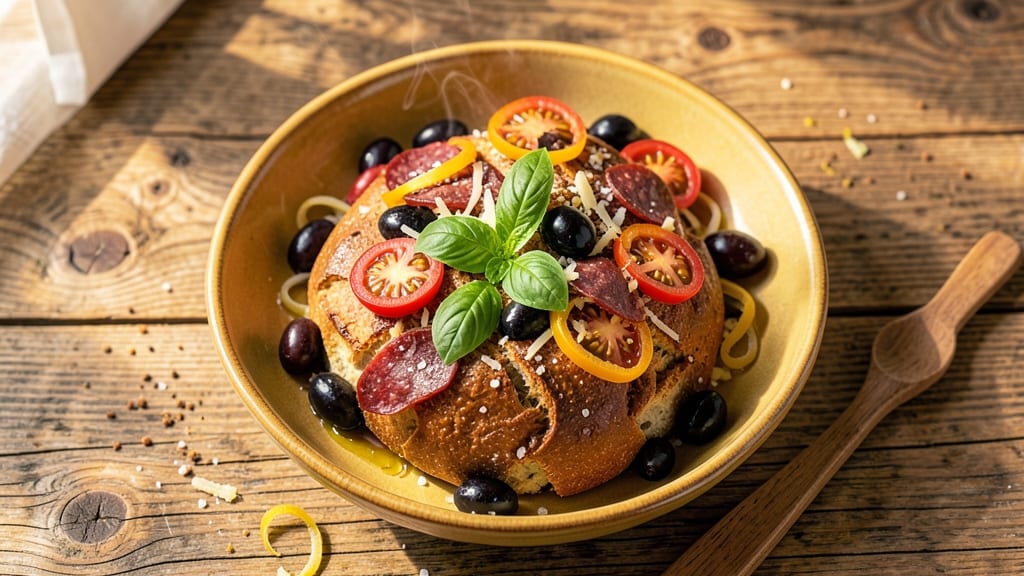
This antipasto bread recipe transforms simple dough into a cheesy, pull-apart masterpiece that steals every party. The secret lies in a rich, herbed olive oil base layered with melted mozzarella and briny Kalamata olives—each bite delivers crispy, golden edges and a gooey, savory center.
I developed this after craving something hearty yet elegant for game day, and it became an instant crowd favorite. The dough gets its signature texture from a slow rise and strategic stretching, creating those coveted air pockets that make it irresistibly crispy.
Topped with a mix of sun-dried tomatoes, fresh rosemary, and a sprinkle of flaky sea salt, this bread tastes like a Mediterranean vacation in every pull. The best part? It’s versatile enough to serve as an appetizer, side dish, or even a base for charcuterie boards.
What sets this apart is the pull-apart perfection—no need for fancy techniques, just a well-seasoned dough and a hot oven. The result is a golden, herby loaf with pockets of melted cheese and briny olives, perfect for tearing into with your hands.
Serve warm with marinara or olive tapenade for dipping, and watch it disappear faster than you can say "antipasto." Whether you're hosting a gathering or just craving a satisfying snack, this recipe delivers restaurant-quality results in under an hour. Let’s get baking!
Ingredients for antipasto bread
Pantry staples meet Mediterranean flavors in this cheesy, pull-apart masterpiece.
| Ingredient | Amount | Notes |
|---|---|---|
| All-Purpose Flour 🌾 | 4 cups | Spooned and leveled for accuracy |
| Instant Yeast 🍞 | 0.02 oz | Or 2 1/4 tsp |
| Granulated Sugar 🍚 | ¼ cup | For yeast activation |
| Extra-Virgin Olive Oil 🫒 | ½ cup | High quality, fruity |
| Warm Water 💧 | 1 ¼ cups | 110°F for yeast activation |
| Large Eggs 🥚 | 2 whole | Room temperature preferred |
| Sea Salt 🧂 | 1 ½ tsp | Fine grain preferred |
| Fresh Rosemary 🌿 | ¼ cup | Finely chopped, stems removed |
| Shredded Mozzarella Cheese 🧀 | 2 cups | Part-skim or whole milk |
| Kalamata Olives 🫒 | ½ cup | Pitted and halved |
| Sun-Dried Tomatoes 🍅 | ¼ cup | Chopped, oil-packed |
| Flaky Sea Salt 🧂 | 1 tbsp | For finishing |
| Garlic Cloves 🧄 | 2 cloves | Minced for dough |
The flour is non-negotiable here—King Arthur or Gold Medal bakers flour gives the best texture. Bulk bins at Whole Foods often have the freshest, but regular grocery store bags work fine. For the olive oil, California Olive Ranch or Trader Joe's brands are my go-tos—they've got that fruity punch. Rosemary? Fresh is best, but if you're using dried, cut the amount to one-third. The mozzarella should be the good stuff—Sargento or BelGioioso shreds melt beautifully. Kalamata olives add that briny kick, and I always grab mine from the Mediterranean aisle at Whole Foods—they're fresher than the regular grocery store selection.
No fresh rosemary? Dried works at one-third the amount, but it won't have that same bright flavor. Short on mozzarella? Parmesan mixed in adds a nice depth. The sun-dried tomatoes can be oil-packed or dried—just chop them small. No Kalamata olives? Green olives or even capers work in a pinch. For the dough, if you're short on time, instant yeast is your friend—it activates faster. But if you've got the time, active dry yeast gives a more complex flavor. The eggs should be room temperature for best mixing—just take them out 15 minutes before you start.
This dough doubles in size during the first rise, so don't overpack the bowl. Cover with a damp towel to keep it from drying out. The bread keeps well for 2 days at room temperature, wrapped in foil. For longer storage, freeze portions—3 months is no problem. I like to reheat slices in a 350°F oven for 5 minutes to get that crispy crust back. The cheese topping? Add it right before baking so it melts perfectly—no pre-shredded stuff here, that gets gummy.
Why You'll Love This Recipe
- No-Fuss Dough: I swear, the mix comes together faster than a microwave dinner. Just toss flour, yeast, sugar, olive oil, and warm water—no kneading, no waiting around. That’s right, no standing over a sticky counter while your bread refuses to cooperate.
- Olive Oil Magic: Between us, the extra-virgin olive oil makes this bread ridiculously good. It keeps the crust golden and crispy while the inside stays soft—like a little Mediterranean hug in every bite. Honestly, I’ve tried other breads, but this one? It’s my secret weapon for dipping.
- Party in a Loaf: This bread is the ultimate sidekick. Serve it with charcuterie for a fancy spread, tear it up for sandwiches, or just eat it plain—it’s that versatile. I’ve even used it to soak up pasta sauce like a sponge. (Yes, even on a Tuesday night.)
- Budget-Friendly Staple: Five ingredients, zero guilt. The yeast and sugar are minimal, the flour’s a pantry staple, and olive oil stretches further than you’d think. Plus, it keeps well for days—so you’re not scrambling to use it up before it goes stale. My wallet and my taste buds thank me.
Step-by-step instructions for antipasto bread
Here's how to make this irresistible pull-apart bread with Mediterranean flair.
Activate the Yeast and Mix the Dough
In a large bowl, combine the 1.25 cups warm water (about 110°F) with the 0.25 cup granulated sugar and 0.015 oz instant yeast. Let it sit for 5 minutes until it becomes frothy—this tells you the yeast is active. If it doesn't bubble, your yeast may be dead, and you'll need to start over.
In a separate bowl, whisk together the 4 cups all-purpose flour, 1.5 tsp sea salt, the 2 cloves minced garlic, and the 0.25 cup finely chopped fresh rosemary. Make a well in the center and pour in the yeast mixture along with the 0.5 cup extra-virgin olive oil and 2 whole eggs. Mix with a wooden spoon until a shaggy dough forms, then turn it out onto a lightly floured surface.
Knead and Let the Dough Rise
Knead the dough for about 8-10 minutes until it becomes smooth and elastic. You'll know it's ready when it springs back slowly when poked. If the dough feels too sticky, add a little more flour, but don't overdo it—this bread needs moisture for that tender texture.
Place the dough in a lightly oiled bowl, cover it with a damp towel, and let it rise in a warm place for 1-2 hours, or until it has roughly doubled in size. The kitchen should feel warm and cozy—this helps the dough rise properly. If your kitchen is cold, place the bowl near a warm oven or under a light bulb to speed up the process.
Shape and Add the Cheese Filling
Once the dough has risen, punch it down to release the air and divide it into two equal pieces. Roll each piece into a 12-inch circle on a floured surface. Sprinkle half of the 2 cups shredded mozzarella cheese, 0.5 cup kalamata olives, and 0.25 cup chopped sun-dried tomatoes evenly over one circle, leaving a 1-inch border around the edges.
Top with the second circle of dough and press the edges together to seal tightly. Place the sealed dough on a parchment-lined baking sheet, seam-side down. Cover it with a towel and let it rise again for 30-45 minutes until it's puffy and nearly doubled in size. This second rise ensures a light, airy texture that pulls apart beautifully.
Bake to Golden Perfection
Preheat your oven to 375°F while the dough is rising. Once it's ready, bake the bread for 25-30 minutes until it's deep golden brown and sounds hollow when tapped on the bottom. The edges should be crisp, and the cheese should be bubbly and melted.
Remove the bread from the oven and immediately sprinkle it with the 1 tbsp flaky sea salt. Let it cool on a wire rack for 10 minutes before slicing—this helps the cheese set and makes it easier to pull apart. Serve warm with your favorite antipasto dishes or as a standalone appetizer.
Pro Tips For Making Antipasto Bread
- MEASURE OIL BY WEIGHT: I learned this the hard way—using a tablespoon measure for olive oil in this dough leads to inconsistency. Weigh it instead: 225 grams for the whole recipe. Olive oil’s density varies by brand, and this ensures your bread stays reliably tender without turning greasy.
- LET THE YEAST REST: Skip the "mix and bake" rush—dissolve the yeast in the warm water with sugar first, then wait 5 full minutes until it’s frothy. Cold water kills it, and warm water that’s too hot (above 110°F) does too. This step guarantees your dough rises properly, not just somewhat.
- KNEAD LESS, STRETCH MORE: Antipasto bread doesn’t need a punishing knead. After the initial mix, do 3 sets of 30-second stretches—grab the dough, pull one side toward you, then fold it over. This develops gluten without overworking it, so your bread stays light and doesn’t turn tough. (Yes, it’ll look weird. That’s fine.)
- PROOF IN A COOLER: If your kitchen’s warm, proof the dough in the fridge overnight instead of at room temp. The slow rise (12–16 hours) deepens flavor and makes shaping easier. Pull it out 1–2 hours before baking to let it warm up—your bread will be more uniform and less likely to collapse. (I know, fridge space is precious. Make room.)
Make-ahead tips for this dish
Prep Ahead Dough
Mix the dough up to 24 hours in advance and store it in an airtight container in the fridge. The cold slows fermentation, giving you more control over the rise when you're ready to bake.
When you're ready to use it, let the chilled dough sit at room temperature for 30-45 minutes before shaping—this prevents over-proofing. I often prep dough the night before game day so it's ready to go in the morning. 💫
Freeze Fully Assembled
Shape the bread with toppings and freeze it on a parchment-lined tray for 1 hour to firm up. Then transfer to a zip-top freezer bag for up to 3 months.
When ready to bake, thaw overnight in the fridge, then bake as directed—just add 5-10 minutes to the baking time since it'll be colder. The cheese stays perfectly melty this way. 🧊
Cheese Topping Prep
Prep your cheese mixture the night before and store it in an airtight container in the fridge. Mix the 2 cups shredded mozzarella, 0.5 cup chopped Kalamata olives, and 0.25 cup sun-dried tomatoes with a pinch of salt.
This saves time on baking day and keeps all ingredients handy. I like to add a splash of olive oil to the mix to prevent the cheese from drying out. ✨
Oven Preheating Hack
Preheat your oven while the dough is doing its final rise—this ensures maximum crispiness. For even better results, place a tray of water in the lower oven rack during the first 10 minutes of baking.
The steam creates a perfect oven spring, and the bread develops that beautiful golden crust. I always do this for my antipasto bread—it makes all the difference. 🔥
Make-Ahead Serving
Bake the bread completely, then let it cool. Wrap tightly in foil and store at room temperature for up to 2 days. To reheat, wrap slices in foil and warm in a 350°F oven for 5 minutes or microwave for 20 seconds.
The cheese stays gooey and the crust gets crispy again. Perfect for last-minute gatherings! 🍽️
Double Batch Strategy
Make two loaves at once for parties—just double the dough and cheese mixture. Use two baking sheets, and rotate them halfway through baking for even browning. I always make extras because this bread disappears fast.
Store the second loaf in the fridge for up to 3 days—it reheats beautifully for sandwiches or appetizers. 💪
Nutrition facts
Frequently asked questions
Can I make this antipasto bread without cheese?
The cheese is what makes this bread truly special, but you can substitute with 2 cups shredded fontina or pecorino romano for a different flavor profile. For a dairy-free version, try 2 cups chopped roasted red peppers and 0.25 cup sun-dried tomato pesto instead. The texture will be slightly different, but still delicious!
How do I prevent the dough from sticking during kneading?
Lightly flour your work surface and your hands as needed, but don't overdo it—this bread needs moisture for that tender texture. For extra insurance, use a stand mixer with a dough hook attachment on medium speed for 5-6 minutes. If the dough feels too sticky, add flour 1 tablespoon at a time until it's just manageable.
What's the best way to reheat leftover antipasto bread?
For best results, wrap slices in foil and reheat in a 350°F oven for 5-7 minutes until the cheese is bubbly and the crust is crispy again. A microwave works in a pinch (15-20 seconds), but it won't restore that perfect oven-fresh texture. The bread keeps well for 2 days at room temperature.
Can I use dried herbs instead of fresh rosemary?
Yes, but reduce the amount to 1 teaspoon dried rosemary (about one-third the fresh amount). Dried herbs are more concentrated, so they can overpower the delicate flavors of this bread. If using, mix them directly into the flour before combining with other ingredients. For extra flavor, add 0.5 teaspoon dried oregano along with the rosemary.
Why did my bread not rise properly?
This usually happens when the yeast is dead (water wasn't warm enough), the dough didn't rise in a warm enough environment, or it was overproofed. Always check your yeast by mixing it with warm water and sugar—it should bubble within 5 minutes. Keep your rising dough in a 75-80°F spot (like near a warm oven with the light on) and don't let it rise longer than 2 hours for the first rise.