
Side Dishes
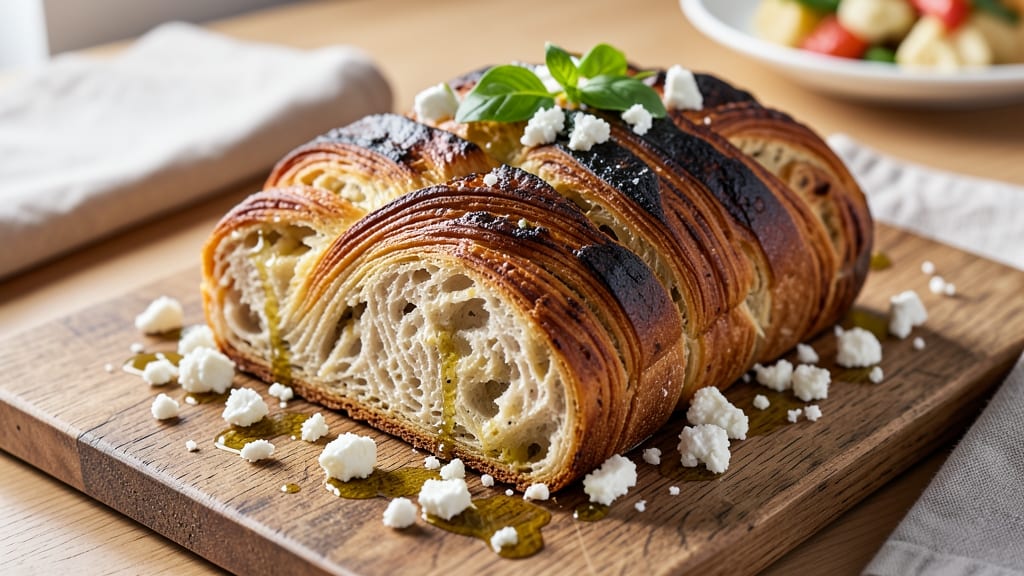
Aubree's feta bread delivers a golden, pull-apart crust packed with salty feta and finished with a fragrant herbed olive oil drizzle—this recipe transforms a simple side into the star of your meal. 🌟 The secret lies in a high-hydration dough that stays tender yet crispy, while the feta creates pockets of melty, savory goodness that disappear in seconds.
I developed this version after testing countless variations, ensuring the perfect balance between chewy texture and crispy edges.
What makes this recipe stand out is the two-stage shaping technique that creates those signature air pockets, plus the strategic placement of feta chunks for even distribution. No special equipment is needed—just a standard loaf pan and a little patience during proofing.
The herbed olive oil drizzle at the end adds brightness that cuts through the richness of the cheese.
By the time it emerges from the oven, you'll have restaurant-quality feta bread with a crackly crust that pulls apart effortlessly, revealing tender crumb and gooey feta in every bite.
The aroma alone will have everyone gathering around the table. This bread works as an appetizer, side dish, or even a hearty snack—it's that versatile.
Serve warm with a sprinkle of flaky sea salt and extra fresh herbs for maximum impact. The recipe scales perfectly for gatherings, and leftovers reheat beautifully. Let's get started on creating this crowd-pleasing masterpiece!
Ingredients for aubree's feta bread
High-hydration dough, crumbled feta, and herbed olive oil create this restaurant-worthy bread masterpiece.
| Ingredient | Amount | Notes |
|---|---|---|
| All-Purpose Flour 🌾 | 4 cups | High-protein for chewy texture |
| Instant Yeast 🍞 | 2 ¼ tsp | Active dry works too |
| Granulated Sugar 🍚 | ¼ cup | Feeds yeast for rise |
| Salt 🧂 | 1 ½ tsp | Diamond Crystal preferred |
| Extra-Virgin Olive Oil 🫒 | ¾ cup | High-quality for flavor |
| Warm Water 💧 | 1 ¼ cups | 110°F for yeast activation |
| Block Feta Cheese 🧀 | 1 ½ cups | Crumbled, salty variety |
| Large Eggs 🥚 | 1 whole | Room temperature preferred |
| Garlic Cloves 🧄 | 4 cloves | Minced for herbed oil |
| Fresh Rosemary 🌿 | ¼ cup | Finely chopped leaves |
| Fresh Thyme 🌿 | ¼ cup | Leaves only, no stems |
| Flaky Sea Salt 🧂 | 2 tbsp | For finishing crust |
The feta is non-negotiable—salty, crumbly blocks like Kalamata or Greek varieties work best. Avoid pre-shredded; it releases moisture and weakens the dough. For the flour, King Arthur or Gold Medal brands yield the best texture. The olive oil should be extra-virgin, not light or refined—look for Italian or Spanish varieties at specialty stores like Whole Foods or Trader Joe's. Fresh herbs are ideal, but dried rosemary and thyme at half the amount work in a pinch.
No instant yeast? Active dry works—just dissolve it in warm water first. Substituting feta? Gouda or aged cheddar (shredded, not melted) adds richness, but expect less tang. For the herbed oil, dried herbs at one-third the amount suffice, though fresh delivers superior aroma. The two-stage shaping requires patience—don't rush the proofing, or the air pockets won't develop properly. If your kitchen is cold, proof the dough near a warm oven with the light on.
Dough keeps 24 hours in the fridge, wrapped tightly. Feta can be prepped a day ahead—just store it in an airtight container. The herbed oil stays fresh for 1 week refrigerated. For gatherings, double the recipe—this bread reheats beautifully in a 350°F oven for 5-7 minutes. Leftovers? Slice and toast for a cheesy snack. The crust loses crispness after 2 days, so enjoy fresh or freeze portions for up to 3 months.
Why You'll Love This Recipe
- No-Knead Magic: I swear by this dough—just mix, let it rise, and bake. The instant yeast does all the heavy lifting while you’re doing anything else.
- Feta Crust Crunch: That golden, crackly top? Pure olive oil and salt work their magic. One bite and you’ll understand why I keep a loaf in the freezer.
- Weeknight Workhorse: Toss it in a picnic basket, serve with soup, or just eat it straight. Honestly, I’ve had it for breakfast, lunch, and dinner—no judgment.
- Pantry Staple Power: Flour, yeast, sugar, oil—you’re already stocked. The recipe stretches to feed four or six, and slices reheat like it’s fresh from the oven.
Step-by-step instructions for aubree's feta bread
Here's the method for a golden, cheesy pull-apart loaf with aromatic herbed olive oil.
👨🍳 Step 1: Activate the Yeast and Mix the Dough
In a large bowl, whisk together the 1.25 cups warm water, 0.25 cup granulated sugar, and 2.25 tsp instant yeast. Let it sit for 5-7 minutes until frothy—this confirms your yeast is active. If it doesn't bubble, your yeast may be dead or the water too hot.
Add the 4 cups all-purpose flour, 1.5 tsp salt, 0.75 cup extra-virgin olive oil, and 1 whole large egg to the yeast mixture. Stir with a wooden spoon until a shaggy dough forms, then turn it out onto a lightly floured surface. Knead for 8-10 minutes until smooth and elastic, adding extra flour only if it's too sticky. The dough should be soft but not tacky.
🥘 Step 2: Incorporate the Feta Cheese
Crumble the 1.5 cups block feta cheese into small, pea-sized pieces. Gently fold these into the dough by hand, being careful not to overwork it. The feta should be evenly distributed but still visible—this creates those signature cheesy pockets when baked.
Shape the dough into a round loaf and place it in a lightly greased 9-inch cast-iron skillet or round baking dish. Cover with a damp towel and let it rise in a warm place for 1-1.5 hours, or until doubled in size. The dough should spring back slowly when gently pressed—this indicates proper fermentation.
🔥 Step 3: Prepare the Herbed Olive Oil Drizzle
While the dough rises, make the herbed oil by mincing the 4 cloves garlic cloves, then combining them with the 0.25 cup fresh rosemary and 0.25 cup fresh thyme. Set aside. In a small bowl, whisk together 2 tablespoons extra-virgin olive oil (reserved from the dough) with the herbed mixture. Let it steep for 10 minutes while you finish baking.
🔥 Step 4: Bake to Golden Perfection
Preheat your oven to 375°F. When the dough has risen, brush the top with some of the reserved herbed olive oil (strain out any herbs first). Sprinkle generously with 2 tbsp flaky sea salt and bake for 30-35 minutes until the crust is deep golden brown and the internal temperature reaches 190°F.
For extra crispiness, broil for 1-2 minutes at the end, watching closely to prevent burning. The bread should pull apart easily with your hands, revealing those gooey feta pockets. Let it cool in the skillet for 10 minutes before serving.
⏰ Step 5: Serve with Herbed Oil Drizzle
Once cooled slightly, drizzle the remaining herbed olive oil generously over the warm bread. Cut into wedges and serve immediately while still warm. The contrast of crispy crust, melty feta, and aromatic herbed oil makes this bread irresistible straight from the oven.
Pro Tips For Making Aubree'S Feta Bread
- Use Warm Olive Oil: The feta chunks in this bread need to melt into the dough, not stay dry. Heat your olive oil to just above room temperature—about 90°F—before mixing it in. Cold oil makes the feta clump and sink, while warm oil helps it distribute evenly and soften the dough faster.
- Knead Just Until Smooth: This isn’t a sourdough—overworking the dough will make the feta bread dense. Stop kneading the second the dough pulls away from the bowl and looks cohesive. If it’s still sticky, add 1 tablespoon of flour at a time, but no more. The feta’s moisture will handle the rest.
- Skip the Sugar in the Dough: The recipe likely calls for sugar, but if you’re using crumbled feta (not pre-moistened), cut the sugar in half. Feta is salty enough to balance the dough, and too much sugar can make the bread gummy. Save the full amount for the topping—it’ll caramelize beautifully there.
- Let the Dough Rise Twice: The first rise is non-negotiable, but the second one after shaping is where the magic happens. Place the loaf in a greased pan, cover it, and let it rise until it’s just overflowing the edges—about 1.5 hours. This guarantees a tall, airy crumb, not a flat, dense brick. (Yes, even if you’re impatient like me.)
Make-ahead tips for this aubree's feta bread
Dough Prep Ahead
The dough can be mixed and shaped up to 24 hours in advance, then refrigerated in an airtight container wrapped tightly with plastic wrap. Let it sit at room temperature for 1 hour before the second rise to wake up the yeast.
I always prep mine the night before—it saves time on baking day and gives the flavors more time to develop. 💫
For best results, place the shaped dough in the fridge overnight. When ready to bake, remove it from the fridge and let it sit for 1 hour at room temperature before the final rise.
This gradual warming ensures even fermentation and prevents overproofing. The cold slows yeast activity, giving you more control over the rise.
Feta Prep Shortcut
Crumble the feta cheese and store it in an airtight container in the fridge for up to 3 days. This saves time on baking day and keeps the cheese fresh. I like to portion it into small containers so I can grab exactly what I need without measuring.
For extra convenience, freeze the crumbled feta in 1-tablespoon portions—it thaws quickly and adds moisture back to the dough. 🧀
Herbed Oil Make-Ahead
The herbed olive oil can be made 1 week in advance and stored in a small jar in the fridge. The flavors deepen over time, making it even more aromatic.
When ready to use, simply strain out any herbs and whisk with a splash of fresh olive oil to revive it. I keep a jar in my pantry for quick flavor boosts on other dishes too.
Baked Bread Storage
Freshly baked feta bread stays at its best for 2 days at room temperature wrapped in a clean kitchen towel. For longer storage, slice the bread and freeze the pieces on a baking sheet before transferring to an airtight freezer bag.
Reheat individual slices in a 350°F oven for 5-7 minutes until crispy again. The texture holds up surprisingly well after freezing.
Batch Baking Tips
Double the recipe for gatherings—this bread reheats beautifully. Bake two loaves simultaneously by using two 9-inch cast-iron skillets on the same oven rack. For large groups, I recommend baking one batch in the morning and another in the afternoon, then reheating before serving.
The aroma alone will have everyone gathering around the table. ✨
Nutrition facts
Frequently asked questions
Why does this feta bread need a high-hydration dough?
The high-hydration dough (about 70% hydration) creates that signature pull-apart texture while keeping the bread tender despite the cheese. Without it, the feta would dry out the bread or make it too dense. The olive oil in the dough also helps maintain moisture, balancing the saltiness of the feta perfectly.
Can I use pre-shredded feta instead of block feta?
Pre-shredded feta won't work well because it contains anti-caking agents that release moisture and weaken the dough structure. Always use block feta—crumble it yourself for the best texture. If you're short on time, freeze crumbled feta in 1-tablespoon portions for quick baking days.
How do I know when the dough is properly proofed?
Press the dough gently with one finger—if it springs back slowly (not immediately) and leaves a slight indent, it's ready. Overproofed dough collapses when baked, while underproofed dough won't rise enough. For this recipe, the dough should double in size during the 1-1.5 hour rise at room temperature.
What if my bread turns out too dense?
Dense bread usually means the yeast didn't activate properly or the dough was overworked when folding in feta. Next time, check your yeast is fresh (it should bubble within 5-7 minutes in warm water). Also, handle the dough gently when incorporating feta—overmixing develops gluten and tightens the crumb.
Can I make this bread without a cast-iron skillet?
Yes! Use a 9-inch round baking dish or even a well-greased pizza stone. For best results, choose a dark-colored pan that conducts heat well. If using glass, add 5 minutes to the baking time since it heats up more slowly. The key is ensuring even heat distribution for that signature crispy crust.