
Side Dishes
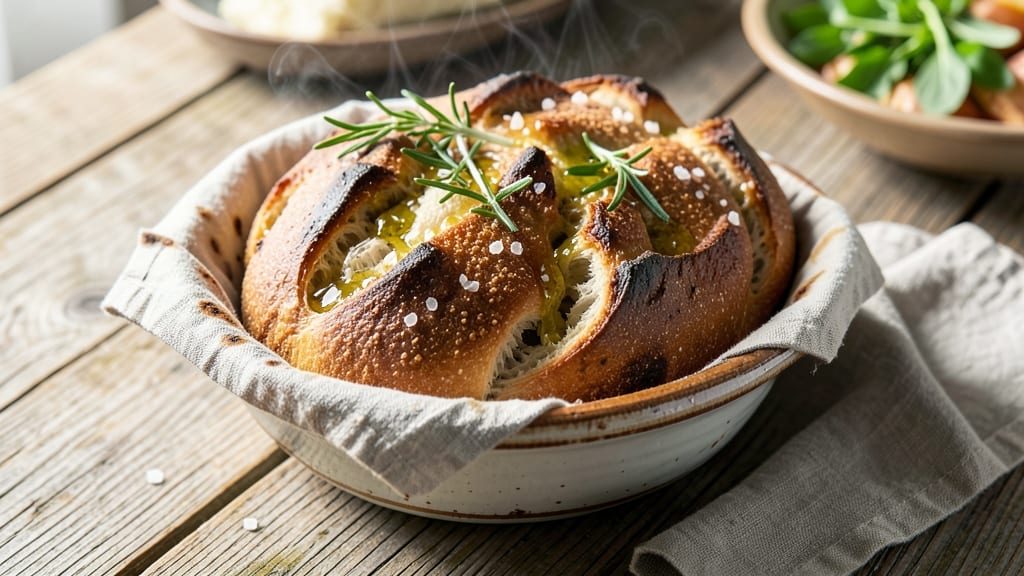
This authentic Tuscan bread recipe brings the rustic charm of Italy’s countryside to your kitchen with its signature olive oil crust and fragrant herby crumb. 🌟 The secret lies in using semiola flour—a high-protein Italian flour that creates a tender yet sturdy texture—paired with just enough yeast and salt for a clean, slightly tangy flavor.
Unlike commercial breads, this version relies on minimal ingredients and traditional techniques to deliver that iconic Tuscan crunch and chew.
The dough comes together in just 10 minutes but requires a 24-hour cold fermentation—a key step for developing deep flavor and a light, airy crumb. No fancy equipment is needed; simply mix, knead gently, and let time do the work.
The shaping is where the magic happens: flattening the dough into a round loaf creates that signature olive oil crust when baked, while a sprinkle of rosemary or fennel seeds adds an aromatic touch inspired by Tuscan country bakeries.
Baked in a hot oven, this bread develops a golden, crackly crust that’s perfect for tearing into chunks to dip in olive oil or soups. The interior remains soft and slightly chewy, with pockets of air that make every bite satisfying.
It’s the kind of bread that elevates simple meals—think grilled meats, fresh tomatoes, or even just a wedge with cheese and cured meats.
Once you master this recipe, you’ll understand why Tuscan bread is a staple in Italian homes. The beauty lies in its simplicity: flour, water, yeast, salt, and olive oil—just enough to create something extraordinary. Let’s get started on your journey to authentic Tuscan baking.
Ingredients for authentic tuscan bread
Five simple ingredients transform into Tuscan magic with that iconic olive oil crust.
| Ingredient | Amount | Notes |
|---|---|---|
| Semiola Flour 🌾 | 3 ½ cups | High-protein Italian bread flour |
| Active Dry Yeast 🍞 | ¼ tsp | Or 1 packet instant yeast |
| Extra-Virgin Olive Oil 🫒 | ¼ cup | Fruity, Italian variety preferred |
| Warm Water 💧 | 1 ¼ cups | 105°F-110°F for yeast activation |
| Fine Sea Salt 🧂 | 1 ½ tsp | Diamond Crystal preferred |
| Fresh Rosemary 🌿 | 1 tbsp | Finely chopped leaves only |
| Fennel Seeds 🌱 | ½ tsp | Toasted for enhanced aroma |
| All-Purpose Flour 🌾 | ¼ cup | For dusting work surface |
| Coarse Sea Salt 🧂 | ½ tsp | For crust sprinkle |
Semiola flour is non-negotiable here—it's the secret behind that signature Tuscan texture. Find it at Italian specialty stores or order online if your local market doesn't carry it. I grab mine from Eataly when I'm in the city, but Amazon delivers it reliably too. The yeast should be fresh—if it smells off or takes more than 5 minutes to activate, toss it. For the olive oil, look for Italian varieties like Bertolli or Filippo Berio—they've got that authentic flavor. And that rosemary? Fresh is best, but dried works in a pinch if you're in a hurry.
No semiola flour? King Arthur Bread Flour is the closest substitute—just know the texture will be slightly less rustic. Running out of rosemary? Thyme or oregano at the same amount works beautifully. The fennel seeds can be skipped entirely if you don't have them, but trust me—they add that subtle anise note that makes this taste truly Tuscan. For the water, use warm but not hot—you want to activate the yeast without killing it. And that extra-virgin olive oil? Don't skimp—this is where the magic happens in both flavor and that signature crust.
This dough needs time—24 hours in the fridge is non-negotiable for that authentic flavor. Store it in an airtight container with plastic wrap pressed directly on the surface to prevent drying. The shaped loaf keeps 3 days at room temperature wrapped in a towel, or 1 week in the fridge. For freezing, shape the dough, freeze solid, then thaw overnight in the fridge before baking. The crust stays crisp for 2 days if you store it in a paper bag—perfect for dipping in olive oil.
Why You'll Love This Recipe
- Four-Ingredient Magic: This bread starts with just flour, yeast, olive oil, and salt—no fancy add-ins, just pure Tuscan simplicity. Honestly, that’s what makes it so special: no clutter, just the good stuff.
- Crusty Gold Edge: That crispy, golden crust? It’s all thanks to the semiola flour and a hot oven—no fancy bread machine required. Between us, it’s the kind of crust that disappears faster than you can say "second slice."
- Weeknight Workhorse: Toss it in a basket with soup, tear it over pasta, or just eat it straight—this bread handles everything. I’ve used it for breakfast, lunch, and even as a makeshift plate for charcuterie. It’s the ultimate blank canvas.
- Pantry Staple: A single batch lasts me days, and the dough keeps well in the fridge for up to 48 hours. Plus, semiola flour is cheap and shelf-stable, so you’re not breaking the bank for a loaf that tastes like a Tuscan bakery.
Step-by-step instructions for authentic Tuscan bread
Here's the traditional method that delivers that signature Tuscan crunch and herby aroma.
👨🍳 Step 1: Activate the Yeast with Olive Oil and Water
In a large bowl, combine the 1.25 cups warm water (between 105°F-110°F) with the 0.25 cup extra-virgin olive oil and 1.5 tsp fine sea salt. Stir until the salt dissolves completely. This oil-water mixture creates the bread's signature moist, tender crumb.
Sprinkle the 0.25 tsp active dry yeast over the surface and let it sit for 5-10 minutes until it forms a foamy head. You'll see tiny bubbles forming on top—this confirms your yeast is active. If it doesn't bubble, your water might be too hot or your yeast expired.
👨🍳 Step 2: Mix the Dough with Herbs and Fennel
Add the 3.5 cups semiola flour to the yeast mixture and stir with a wooden spoon until a shaggy dough forms. The semiola flour gives this bread its signature chewy texture and rustic appearance. Press the dough down and let it rest for 10 minutes—this helps the flour absorb the moisture.
In a small bowl, toast the 0.5 tsp fennel seeds in a dry skillet over medium heat for 1-2 minutes until fragrant. Let them cool slightly, then grind them with the 1 tbsp fresh rosemary using a mortar and pestle or spice grinder. Add this herb-fennel mixture to the dough along with the 0.25 cup all-purpose flour and knead by hand for 8-10 minutes until smooth and elastic.
🥘 Step 3: Let the Dough Rise Until Doubled
Lightly oil a large bowl, place the dough inside, and cover with a damp kitchen towel. Let it rise in a warm place for 1.5-2 hours until it has doubled in size and feels spongy when pressed gently. The dough should spring back slowly when poked—this indicates proper fermentation.
Here's the thing—don't rush this step. The longer the rise, the more developed the gluten and the better the flavor. I like to place my oven light on to create a warm environment, or I'll use my proofing box if I have one. The ideal temperature is 78°F-80°F.
🔥 Step 4: Shape and Second Rise for Crust Development
Turn the dough onto a lightly floured surface and shape it into a round loaf about 8 inches in diameter. The edges should be slightly thicker than the center to create that classic Tuscan shape. Place the shaped dough on a parchment-lined baking sheet, seam-side up.
Cover loosely with the damp towel and let it rise again for 30-45 minutes until it puffs up noticeably. Preheat your oven to 425°F during this final rise. The dough should have expanded by about 25-30%—this second rise is crucial for that airy crumb.
🔥 Step 5: Bake with Olive Oil Brush for Crispy Crust
Brush the top of the dough generously with more extra-virgin olive oil, then sprinkle with the 0.5 tsp coarse sea salt. This creates that signature Tuscan olive oil crust. Bake for 25-30 minutes until the crust is deep golden brown and the internal temperature reaches 205°F.
For that authentic rustic look, I like to bake it on the middle rack. The bread is done when it sounds hollow when tapped on the bottom and the crust has that beautiful crackly texture. Let it cool on a wire rack for at least 30 minutes before slicing—this prevents a gummy crumb.
Pro Tips For Making Authentic Tuscan Bread
- Measure Flour by Weight: Semiola flour is dense—don’t scoop it from the bag or you’ll end up with a dough that’s either too dry or too wet. Use a kitchen scale for precision, aiming for 500g (plus or minus 10g). I learned this the hard way when my first loaf turned out dense as a brick—turns out, volume measurements with this flour are a gamble.
- Bloom Yeast in Olive Oil: Skip the warm water for blooming yeast—mix the active dry yeast directly with 1 tablespoon of extra-virgin olive oil (from the recipe) and let it sit for 5 minutes. The oil feeds the yeast faster and adds a subtle richness that translates into a more flavorful crust. My grandmother swore by this, and she was right: the bread develops a deeper, nuttier taste.
- Autolyse Before Kneading: Mix the Semiola flour and warm water (no yeast or salt yet) and let it rest for 20–30 minutes. This step hydrates the flour fully, making the dough easier to handle and giving you a lighter, more open crumb. I was skeptical until I tried it—now I can’t imagine skipping it.
- Steam the Oven: Before baking, place a metal tray on the bottom rack and pour in 1 cup of water. The steam mimics a wood-fired oven and guarantees a crisp, golden crust without burning the bread. Sounds weird, but it works: my first loaf without this trick turned out pale and sad by comparison.
Flavor customization for these flavors
Herb Variations
Swap the rosemary for 1 tbsp fresh thyme or 1 tsp dried oregano for a different Tuscan touch. I often make a batch with 1 tbsp chopped sage—it adds a slightly peppery note that pairs beautifully with roasted meats.
For a brighter twist, try ½ tsp crushed savory leaves (available at Italian markets), which are a classic in some Tuscan regions. 🌿
Spice Infusions
Add ½ tsp ground coriander to the dough for warmth, or a pinch of crushed black pepper for depth. I love using ½ tsp fennel pollen (if you can find it) for an extra aromatic punch.
For a subtle sweetness, mix in 1 tsp honey or agave with the yeast activation—it balances the salt beautifully.
Crust Enhancers
For an extra-crispy crust, brush the baked loaf with garlic-infused olive oil before serving. I also like sprinkling toasted sesame seeds or crushed black peppercorns on top before baking for added texture. For a savory finish, a pinch of smoked paprika adds a subtle smokiness that complements the herby notes.
Sweet Adaptations
Make a sweet version by reducing the salt to 1 tsp and adding 2 tbsp honey to the dough. Finish with a sprinkle of crushed pistachios or orange zest for a festive touch.
This works wonderfully with breakfast or dessert pairings. The honey keeps the bread moist while adding subtle sweetness.
Gluten-Free Option
Replace 1 cup semiola flour with a 1:1 gluten-free bread flour blend (like King Arthur's). Add 1 tsp xanthan gum to improve texture, but expect a denser crumb.
The olive oil crust will still form beautifully, though you may need to bake it 5-10 minutes longer at 375°F for even cooking. 💫
No-Yeast Version
For a quick rise, replace the yeast with 1 tsp baking soda and 1 tbsp lemon juice (mixed with the warm water). Skip the first rise and bake immediately after shaping.
While it won’t have the same depth of flavor, it’s a great option when you’re short on time. The crust will still be crispy, though the crumb will be denser.
Nutrition facts
Frequently asked questions about authentic Tuscan bread
Why does this recipe use semiola flour instead of regular bread flour?
Semiola flour is the secret to authentic Tuscan bread's signature texture—it's a high-protein Italian bread flour that creates a chewy yet tender crumb with that perfect rustic crunch. Regular all-purpose flour lacks the gluten structure needed for the bread's signature open crumb and crispy crust. Think of it as the difference between store-bought bread and artisanal bakery loaves.
Can I make this bread without the 24-hour cold fermentation?
You can shorten it to 8-12 hours in the fridge, but the flavor won't be as developed. The cold fermentation is what creates that deep, slightly tangy taste and light crumb. For best results, don't skip it—if you're short on time, at least do a 4-hour cold proof after the initial room-temperature rise for better flavor than no cold fermentation at all.
How do I know when the bread is fully baked?
Your bread is done when the crust is deep golden brown and sounds hollow when tapped on the bottom. The internal temperature should reach 205°F in the center. Look for those signature cracks forming on the surface—this indicates proper baking. If you're unsure, slice into the center: it should be fully set with no raw dough spots.
What's the best way to store leftover Tuscan bread?
Wrap the bread in a clean kitchen towel and store it in a paper bag at room temperature for 3 days to maintain that crispy crust. For longer storage, freeze the bread (unwrapped) for up to 1 month. To revive, warm it in a 350°F oven for 5-10 minutes or toast it in a skillet with a little olive oil until crispy again.
Can I make this bread without rosemary or fennel seeds?
The herbs add flavor but aren't essential. Skip them for a basic version, or substitute with 1 tsp dried thyme or ½ tsp crushed savory leaves for that Tuscan touch. The bread will still taste amazing—just more neutral. For extra flavor, try adding ½ tsp garlic powder to the dough during mixing.